
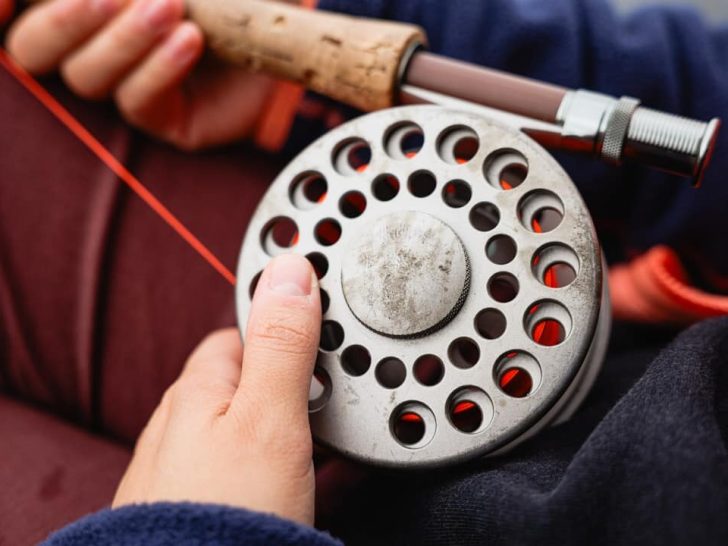
You finally bought that baitcaster you have been eyeing, but now you are staring at the spool, wondering what to do with it. Learning how to spool a baitcaster the right way can feel frustrating at first. This is especially true after you experience a few ugly bird nests and wasted line.
The good news is that the process is straightforward once you understand the simple steps. How to spool a baitcaster becomes routine with a little practice. Your casts will start to feel smooth and controlled very quickly.
If you have ever launched a lure and heard that grinding sound as the line dug into itself, this guide is for you. We will walk through every step from line choice to tension management. By the end, spooling your fishing reel will feel as easy as tying on your favorite bait.
Table Of Contents:
- Why Spooling a Baitcaster Correctly Matters
- Choosing The Right Line Before You Spool
- Gear and Prep for Spooling Your Baitcaster
- Step By Step: How to Spool a Baitcaster
- Using Braid Backing, Leaders, and Hybrid Setups
- Common Mistakes People Make Spooling a Baitcaster
- Storing and Maintaining Your Spooled Baitcaster
- Conclusion
Why Spooling a Baitcaster Correctly Matters
Most problems people blame on a baitcast reel usually start with how the reel was spooled. Loose wraps, cheap line, and overfilling the spool can lead to backlashes that ruin a whole morning. A properly packed spool gives you better performance in every aspect.
You will notice that a good spool job reduces casting effort significantly. It also prevents the line from digging in when you set the hook on a heavy fish. This is different from a spinning reel, where line management is slightly more forgiving.
Good line and a clean, even spool also help your drag work the way it should. That matters when a heavy fish surges next to the boat, and you need steady pressure. This is even more critical for kayak fishing, where stability is limited while fighting a fish.
Brands that focus on high-performance line products hold up to this kind of pressure. Options like monofilament, fluorocarbon, and braid from Strike King are designed for abuse. These lines maintain their integrity over time.

Choosing The Right Line Before You Spool
Before you learn how to spool a baitcaster step by step, you need the right line for your situation. Each type of line behaves differently on the reel’s spool and in the water. Your choice affects both casting distance and hook setting power.
Using the wrong line can lead to frustration. For example, using stiff fluorocarbon on a reel designed for light line might cause coiling. Here is a breakdown to help you choose.
| Line Type | Characteristics | Best Used For |
|---|---|---|
| Monofilament | High stretch, floats, easy to handle | Topwater, crankbaits, beginners |
| Fluorocarbon | Low stretch, sinks, invisible | Jigs, ned rig, clear water |
| Braid | Zero stretch, high strength, visible | Heavy cover, frogs, flipping |
Monofilament
Monofilament is forgiving and stretches under load. It is usually the most affordable option at any reels shop. It handles backlashes better and is easier for newer baitcaster users to manage.
Mono is great for topwaters and treble hook baits where you want a bit of stretch during the fight. It floats, which keeps your lure action consistent. It is a classic choice for a general-purpose setup.
If you are shopping for a good mono that balances strength and manageability, look at Strike King. Their Tour Grade and Contra series of monofilament lines are solid choices. They give you distance while still being friendly on a baitcaster spool.
Fluorocarbon
Fluorocarbon sinks and is more sensitive. This helps you feel soft bites in deeper water. It has less stretch than mono and works very well with contact baits.
Techniques like the ned rig benefit greatly from fluorocarbon. You can detect subtle ticks as the bait moves along the bottom. The tradeoff is that it can be a little stiffer to handle.
You need to spool fluorocarbon with steady tension to prevent it from jumping off the reel. You can find fluorocarbon aimed at bass and freshwater use in Strike King’s fluorocarbon line range. Look at the pound tests that match the cover you fish.
Braid
Braided line shines when you want cutting power through grass or thick cover. It has almost zero stretch and offers very high strength for a small diameter. Braid is an amazing tool for heavy-duty fishing.
However, spooling braided line can be tricky. It can dig into itself if you spool it loosely. This causes the reel to lock up mid-cast.
For braid setups, use quality options such as Strike King’s braided line selection. Most anglers use braid with a leader. This setup changes how you prepare the base of the spool.

Gear and Prep for Spooling Your Baitcaster
Spooling a baitcaster does not need fancy equipment. A little preparation helps you avoid headaches later on. A clutter-free space and the right tools are all it really takes.
You can purchase necessary items from your local rod shop or online. Buying online often gives you access to product reviews to verify quality. Checking reviews helps avoid poor-quality gear.
Basic Tools You Need
- Baitcasting reel and rod.
- New spool of fishing line.
- Sharp scissors for cutting line and terminal tackle.
- Small piece of tape, if spooling braid directly.
- Something to hold the line spool under tension.
- A spooling station if available.
For holding your filler spool, many anglers use simple household items. A good trick is to take a cylindrical item like a pen or screwdriver. Run it through the center of your line spool.
Then you can hold the ends of the pen with your feet or knees. This keeps pressure while you crank line onto your baitcaster. This homemade method works just as well as expensive tools.
Step By Step: How to Spool a Baitcaster
Now let’s walk through the actual spooling process in clear steps. This method works for most freshwater baitcasters. There are only small tweaks needed for the braid and leaders.
1. Mount The Reel and Run The Line
Attach the baitcast reel to your rod before you do anything else. This keeps everything stable during the process. It also lines up the guides for you perfectly.
Set the reel on a flat surface or in a holder. It should not tip while you crank. Open the package on your new line spool and find the tag end.
Run the line through the first big guide on the rod tip. Work it down through every guide to the reel. Take your time to miss no guides.
Make sure the line passes under the level wind bar on the baitcaster. This is the small guide that moves back and forth. It keeps the line tracking evenly as you fill the spool.
2. Attach The Line to The Spool
With the line passed through the level wind, you need to tie it to the reel spool. A simple arbor knot works great here. It is fast to tie and holds securely.
Wrap the line around the spool once. Tie an overhand knot in the tag end around the standing line. Snug it down gently.
Next, tie another overhand knot a short distance up the tag end. This second knot acts as a stopper. Pull on the main line to cinch the first knot against the spool.
Pull tight until the knot locks in completely. Trim off the extra tag with your cutters. You want the knot to be as flush as possible.
If you are filling the reel with braid, be careful. Braid can slip around the smooth metal without backing. Place a small piece of tape over the knot or use monofilament backing.
3. Set The Filler Spool Orientation
The direction the line comes off the filler spool affects twist. For baitcasters, you generally want the line to come off the top of the spool. This should match the rotation of the reel.
Place the line spool flat or on a tool so it feeds straight. Avoid creating big loops as the line exits. The twisted line leads to headaches on the water.
Remember that simple hack using a pen or screwdriver. Run it through the middle of your line spool. Hold that between your feet or knees.
Pinch the spool slightly with your toes or hands. This creates nice steady tension. You are now ready to crank the handle on your baitcaster.
4. Keep Tension and Start Cranking
This is the part most people rush and then regret. Put slight pressure on the line between the reel and the first guide. Use your fingers to pinch the line gently.
Start turning the reel handle slowly. You want firm tension on the line. It should not be so hard that it burns your fingers.
Watch the level wind as it goes side to side. The line should lay tight with no loose loops. There should be no gaps across the spool.
If you see a gap form or a loop of slack, stop immediately. Strip that section back off and rewind with more pressure. Loose line on the spool reduces casting performance.
The first twenty turns are the most important. You are building a foundation for the rest of the line. After you get a tight base, you can pick up your cranking pace.
5. Fill To The Right Level
Most baitcasters work best when you stop filling the spool about one-eighth of an inch below the lip. Filling more than that makes backlashes worse. It gives the line too much momentum.
Underfilling is also a problem. Fewer lines means the spool diameter is effectively smaller. This reduces casting distance because the line has more friction going out.
Keep an eye on the edges as you near the limit. The line should stay flat across the width. It should not taper up on one side.
If the line stacks on one end, check your alignment. You might be angling your rod to the side. There could also be an issue with the level wind mechanism.
Stop and cut the line once you hit the sweet spot. Use a lure or a rubber band to secure the tag end. This prevents it from unspooling while you transport your gear.
Using Braid Backing, Leaders, and Hybrid Setups
Many anglers run a mix of line types on a single baitcaster. This strategy can save money and improve performance. That often means using backing and leaders with knots between sections.
Monofilament or Fluorocarbon Backing For Braid
Because a braid can slip on a smooth metal spool, a short section of backing helps. Monofilament backing locks the entire line mass to the spool pin. Start by adding 20 to 30 yards of cheap mono.
Use the same arbor knot process to attach the mono. Pack that down tight with steady tension. This base layer prevents the “ghost drag” effect, where the spool spins but the line does not.
Then tie your braid to the backing with a connection knot. A double uni or FG knot works well here. Now you can fill the rest of the reel with braid as normal.
Leader Knots for Braid to Fluoro or Mono
You might run a straight braid on the spool and use a leader. This is common for flipping and punching. The spool process stays simple in this case.
You just stop short of full capacity with the braid. You need space so the leader knot does not sit too deep. Then tie your leader with a clean connection knot.
Knots like the FG, Alberto, or improved double uni are popular. You want a knot that slides through your guides easily. Big knots cause clunks that damage guides.

Common Mistakes People Make Spooling a Baitcaster
Even experienced anglers fall into the same bad habits. A quick look at the biggest mistakes will help you avoid them.
Letting Line Go on Without Tension
Loose line wraps are the number one cause of deep backlashes. If you ever pull line down into the spool on a snag, loose wraps are why. Tension while spooling matters just as much as tension during a fight.
Keep two fingers on the line as you wind. Press the filler spool slightly with your feet or hands. Take your time to get it right.
If the line feels loose or bouncy when you squeeze it on the reel, stop. You will want to strip and respool immediately. Do not wait for a disaster mid-cast.
Overfilling or Underfilling
Some anglers think packing the reel to the rim helps. They believe it will give more distance. However, that often backfires and causes trouble.
There is less room for error with a full spool. A small overrun at the start of the cast turns into a major mess. Leaving a small gap gives you more forgiveness.
Underfilling causes the line to slap against the reel lip. Your casts come up short and accuracy suffers. You also burn more energy trying to force the cast.
Ignoring Line Condition
Old, chalky line will twist and coil no matter what. Even if you spool it perfectly, it will fail. Nicks or frayed sections build up over trips.
At that point, you are gambling with every fish. It is better to strip the line and start over with fresh product. Use a reliable maker like Strike King.
Treat the line as part of your tackle maintenance. It is just as important as cleaning your reel or sharpening hooks. Fresh line is vital for confidence.
Storing and Maintaining Your Spooled Baitcaster
Spooling is not a one-time job for the life of the reel. How you store rods and reels affects lon