
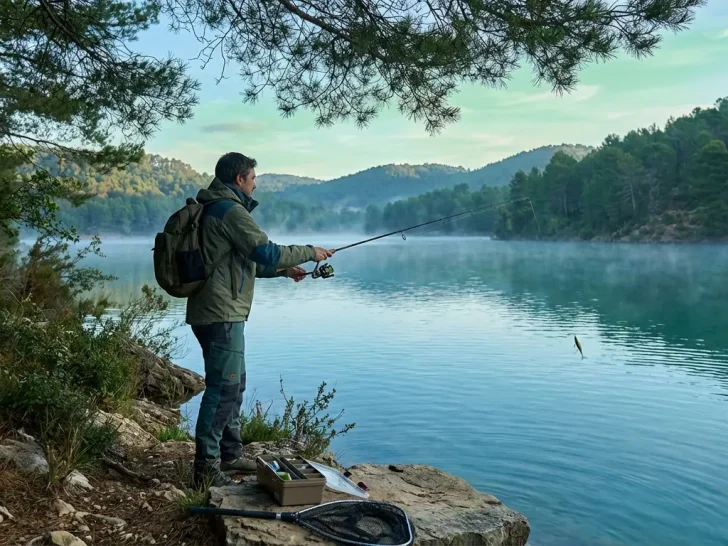
Mastering how to catch bass from shore offers an accessible and exciting way to enjoy America’s favorite game fish without needing an expensive boat. Millions of anglers cast their lines from the banks of local ponds, rivers, and large reservoirs daily to find success. Learning to target these areas effectively ensures you can land trophy-sized largemouth or smallmouth bass from any accessible shoreline.
Successful shoreline fishing requires a specific strategic approach to maximize your productivity on the water while maintaining a low profile. Anglers must learn to read the water, select versatile equipment, and approach the bank with stealth to avoid alerting wary fish. This comprehensive guide provides data-driven strategies to improve your catch rate through better shallow water bass fishing habits.
We will explore seasonal bass movements, optimal lure selection, and essential gear for mobile anglers who prefer fishing from the bank. You will discover how to locate high-percentage strike zones without relying on expensive electronic fish finders or complex sonar equipment. Mastering these fundamental techniques will dramatically increase your confidence and success during your next shore bass fishing trip.
Bass are ambush predators that heavily rely on the shoreline environment for feeding and reproduction throughout the various seasons. Research from fishery biologists shows that largemouth bass spend most of their lives in shallow water environments. They push baitfish against the bank to trap them, making the shoreline a natural feeding boundary for bank fishing for bass.
Water temperature dictates how and when these fish move into shallow coastal zones to hunt for their next meal. During the spring spawn, bass migrate directly to shallow flats to build their nests and reproduce in protected areas. Summer heat pushes them deeper during the day, but they frequently return to the shallows to feed at night.
Fall triggers a massive feeding frenzy as bass chase shad and bluegill into shallow creeks to prepare for winter. Winter slows their metabolism, causing them to hold near steep drop-offs adjacent to the bank for easy access to depth. Understanding these seasonal migrations helps you predict where the fish will hold during your shoreline fishing excursions.
Targeting Structure and Cover: The Importance of Structure and Cover
Aquatic predators require physical objects in the water to hide behind while waiting for unsuspecting prey to pass by. Cover refers to temporary or movable objects like submerged vegetation, fallen trees, and boat docks that provide immediate concealment. Structure defines the permanent bottom contours, such as rocky points, creek channels, and submerged humps that guide fish movement.
Shoreline anglers must constantly search for areas where cover and structure intersect near the bank to find active fish. A fallen oak tree resting on a shallow mudflat holds fewer fish than one resting near a steep ledge. Bass use these physical features to conceal themselves from baitfish and conserve energy while fishing from the bank.
You should prioritize casting at visible targets like laydown logs, lily pad fields, and concrete bridge pilings for better results. Scientific tracking studies indicate that bass rarely roam open water without a specific destination or piece of cover in mind. They travel along structural breaklines, moving methodically from one piece of heavy cover to the next.
- Bass use the shoreline as a natural barrier to trap and consume fleeing baitfish during shore bass fishing.
- Seasonal water temperatures dictate whether bass hold in shallow flats or deep drop-offs for bank fishing.
- Always target areas where physical cover intersects with permanent bottom structure to find largemouth bass.
Bank Fishing Gear: Essential Fishing Gear and Tackle for Shore Bass Fishing
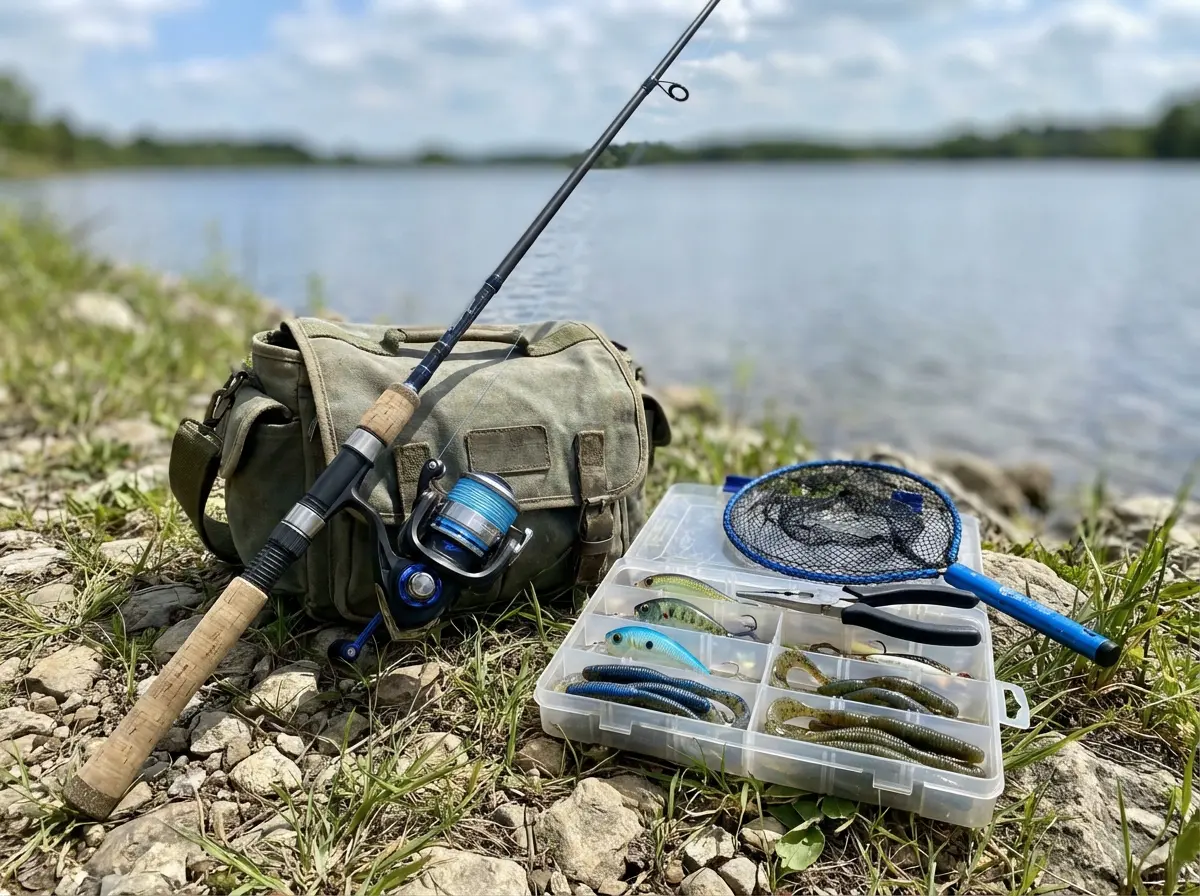
Bank anglers must carefully balance mobility with having enough fishing gear to handle various fishing situations encountered along the bank. Carrying five different rod and reel combos will quickly exhaust you during a long walk between productive fishing spots. You need versatile gear that performs well across multiple lure categories and varying weather conditions for shore bass fishing.
A medium-heavy action casting rod offers the perfect balance of power and sensitivity for most bank fishing applications. This rod power allows you to drive single hooks home while providing enough backbone to pull fish from heavy cover. Pairing it with a high-speed baitcasting reel helps you quickly retrieve lures and keep bass away from snags.
Spinning gear also plays a crucial role for throwing lightweight finesse baits in clear water or high-pressure conditions. A medium action spinning rod works exceptionally well for skipping soft plastics under overhanging branches where bass hide. This setup handles wind better than a baitcaster and excels when bass demand smaller, more subtle presentations.
Best Fishing Line: Line Selection for Bank Anglers
Choosing the correct fishing line directly impacts your casting distance and lure presentation when fishing from the bank. Braided line offers incredible strength, zero stretch, and exceptional durability when dragging baits through thick shoreline vegetation. However, its high visibility can spook wary bass in clear lakes or heavily pressured public ponds.
Fluorocarbon line sinks quickly and remains virtually invisible underwater, making it perfect for clear water shoreline fishing applications. Many professional anglers use a braided main line attached to a fluorocarbon leader for optimal performance and stealth. This combination provides the long casting distance of braid with the invisible presentation of fluorocarbon.
Monofilament line stretches under pressure, which prevents fish from tearing treble hooks out of their mouths during the fight. You should spool monofilament when throwing topwater lures because it floats on the water surface and aids lure action. Selecting the proper line type maximizes your lure performance and increases your overall hookup ratio.
Mobile Angler Tools: Essential Tools for Mobility
Successful shore bass fishing requires a well-organized tackle management system that keeps your hands free for casting and climbing. A comfortable fishing backpack allows you to carry essential lures, tools, and hydration without straining your shoulders during long treks. Traditional hard-sided tackle boxes are often too bulky and loud for a mobile approach along uneven terrain.
You must pack reliable pliers for removing hooks safely and quickly from the fish to ensure a healthy release. A pair of sharp line cutters or scissors is mandatory for tying knots and changing lures efficiently while on the move. Bringing a compact digital scale allows you to accurately document your catches before releasing them back into the water.
Do you have the right gear to hike the shoreline comfortably for hours while searching for the best spots? Proper footwear dictates how far you can comfortably walk and explore new territory along the water’s edge. Waterproof hiking boots provide necessary ankle support and keep your feet dry in damp morning grass or mud.
Always wear polarized sunglasses when fishing from the bank. They cut through the surface glare, allowing you to spot underwater stumps, grass beds, and cruising bass that you would otherwise miss.
Top Lure Choices: Best Lures for Bass and Fishing from the Bank
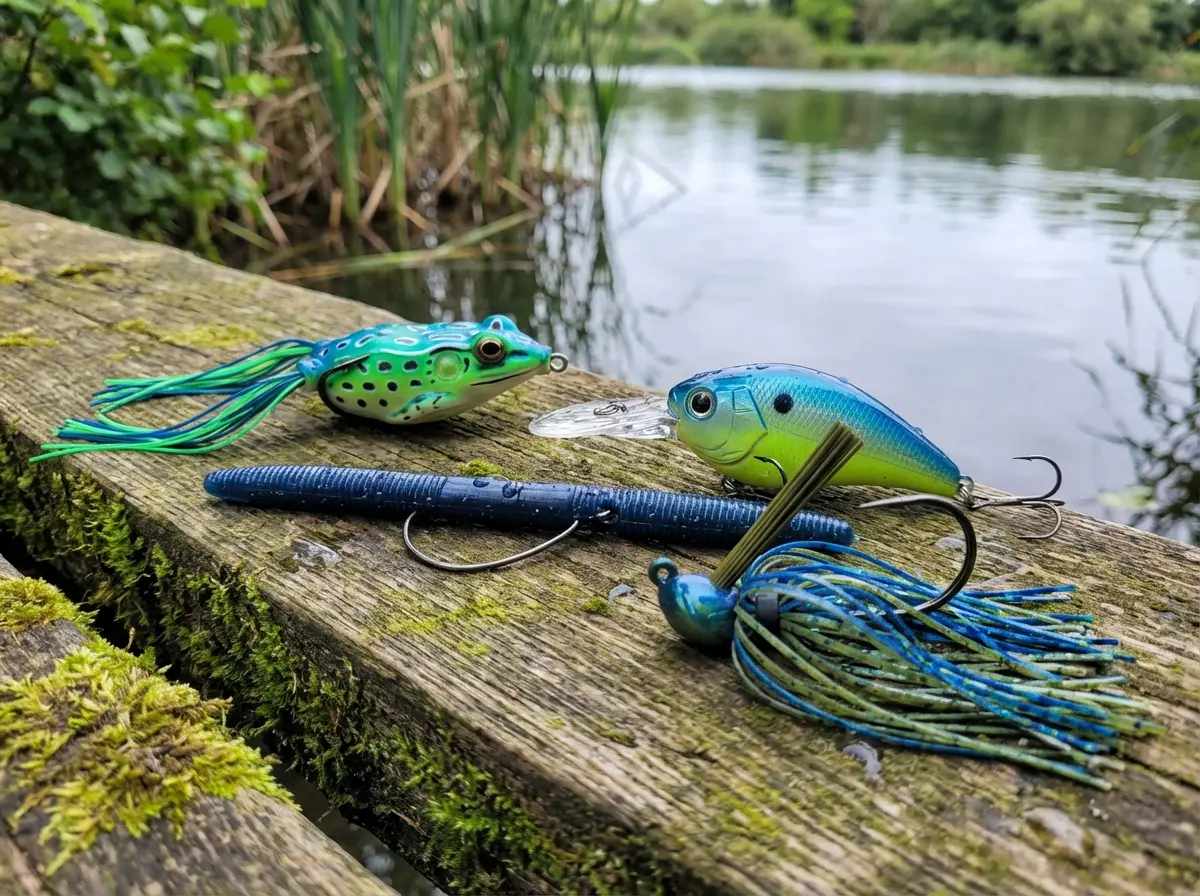
Lure selection for bank fishing focuses on baits that cast far and resist snagging on various underwater obstacles. Since you cannot maneuver a boat to retrieve a stuck lure, weedless presentations become absolutely critical for shoreline fishing. You want baits that can effectively probe different depths while maintaining an enticing action to attract largemouth bass.
Which baits should you tie on first when arriving at a new spot to maximize your chances of success? Moving baits help you quickly cover expansive stretches of shoreline to locate active, feeding fish in the area. Bottom-bouncing lures allow you to slow down and carefully pick apart isolated pieces of cover where big bass hide.
Seasonal forage changes also dictate which artificial lures will generate the most strikes from hungry predators in the shallows. Matching the size and color of local baitfish or crawfish drastically improves your chances of success when fishing from the bank. We recommend carrying a few confidence baits rather than lugging around hundreds of unproven options.
Effective Soft Plastics: Soft Plastic Worms and Creature Baits
Soft plastic baits rigged on wide-gap hooks offer the most weedless presentation available to shore bass fishing enthusiasts. The Texas rig remains the gold standard for dragging plastic worms through thick brush and submerged grass. You bury the hook point into the plastic body, allowing the bait to slide over obstacles effortlessly.
Creature baits imitate crawfish or bluegill and excel when pitched directly into heavy shoreline cover where bass ambush prey. The wacky rig presents a finesse worm with a tantalizing fluttering action that triggers strikes from inactive fish. These soft plastic presentations require patience, but they consistently fool the largest fish in the lake.
You should match your sinker weight to the depth of the water and the thickness of the cover you are targeting. A lightweight tungsten sinker creates a slow, natural fall rate that appeals to suspended bass in the water column. Heavier weights punch through thick vegetation mats to reach fish hiding in the dark water below the surface.
Reaction Baits: Spinnerbaits and Chatterbaits
Spinnerbaits feature flashing metal blades that mimic a school of fleeing baitfish in the upper water column for bank fishing. The single upturned hook design deflects beautifully off wooden laydowns and rocky points without snagging on the structure. These lures produce heavy vibrations that help bass locate the bait in muddy or stained water conditions.
Chatterbaits, or vibrating jigs, combine the flash of a spinnerbait with the erratic action of a shallow-running crankbait. They perform exceptionally well when retrieved just above the tops of submerged hydrilla or milfoil beds along the shore. You can alter the retrieve speed to bump the bait against stumps, which often triggers aggressive reaction strikes.
White and chartreuse skirts work perfectly for imitating shad during the spring and fall feeding migrations in most lakes. Black and blue color combinations provide a distinct silhouette that bass can easily track in dirty or stained water. Adding a soft plastic trailer to the back of these lures increases their profile and adds secondary action.
Surface Action: Topwater Frogs and Buzzbaits
Topwater fishing provides the most visual and exhilarating strikes you will ever experience as a shoreline fishing angler. Hollow-body frogs feature double hooks pressed tight against the plastic body, making them virtually snag-proof in heavy cover. You can twitch these frogs directly over dense lily pads or thick algae mats where monster bass hide.
Buzzbaits utilize a churning metal propellor to create a loud, sputtering commotion on the water surface to attract predators. This aggressive presentation excels during low-light conditions at dawn, dusk, or on heavily overcast days throughout the year. The steady retrieve allows you to cover massive amounts of shallow water quickly to locate aggressive bass.
You must pause for a split second before setting the hook on a topwater strike to ensure the fish has the bait. Anglers often pull the lure away from the fish if they react immediately to the visual splash on the surface. Waiting to feel the weight of the fish on your line dramatically improves your landing percentage.
Locating Fish: Reading the Water: Finding Bass Fishing Spots Without Electronics
Boat anglers rely heavily on expensive sonar units to locate depth changes and underwater structure hidden beneath the surface. Shoreline fishing enthusiasts must develop their visual observation skills to identify these hidden fish-holding features without electronic assistance. Learning to read the surface of the water provides vital clues about the environment below for bass fishing from the bank.
Wind direction plays a massive role in positioning bass near the bank on large bodies of water and reservoirs. Wind pushes microscopic plankton into the shoreline, which attracts baitfish and ultimately draws in the predatory bass to feed. Fishing the wind-blown banks often yields better results than fishing calm, protected coves during the day.
The presence of aquatic birds like herons or kingfishers indicates an abundance of shallow baitfish in the immediate area. You should also watch for “nervous water,” which looks like small ripples created by fleeing minnows near the surface. These visual indicators help you eliminate dead water and focus your efforts on productive zones for shore bass fishing.
Identifying Depth: Spotting Drop-offs and Depth Changes
Bass use underwater ledges and drop-offs as highways to transition between deep and shallow water throughout the day. You can often spot these depth changes by observing color shifts in the water surface from your vantage point. Lighter green or brown water typically indicates shallow flats, while darker blue or black water signifies deeper holes.
Pay close attention to the slope of the dry land adjacent to the water’s edge for clues about the bottom. A steep, rocky bank usually continues dropping sharply underwater, creating a deep vertical wall that holds fish. Conversely, a flat grassy meadow likely extends into the lake as a shallow, slowly tapering flat for bank fishing.
You can use a heavy jig to manually map the bottom contours and determine the depth of the area. Cast the jig out and count how many seconds it takes to hit the bottom to estimate the water depth. Dragging the bait slowly reveals whether the bottom consists of soft mud, hard gravel, or chunk rock.
River Fishing Tips: Identifying Current Breaks and Eddies
Moving water in rivers and creeks forces bass to find sheltered areas where they can rest and ambush prey. Fish position themselves behind large boulders, log jams, or sharp bends in the bank to avoid fighting the constant current. These current breaks allow them to conserve energy while waiting for food to drift past their position.
Eddies form when the main current flows past an obstacle, creating a slow-moving, circular reverse flow near the bank. Foam, leaves, and helpless insects gather in these swirling pools, creating a natural buffet for hungry smallmouth bass. Casting your lure upstream and letting it drift naturally into the eddy often produces vicious strikes.
Seams occur where fast-moving water meets slow-moving water, creating a distinct visible line on the surface of the river. Smallmouth bass frequently stack up along these seams to intercept baitfish struggling in the turbulent flow of the main channel. Targeting these specific flow irregularities drastically increases your success rate in river and creek environments.
Never ignore the signs of a rapidly dropping water level in a reservoir. Falling water pulls bass away from the shoreline cover and forces them into deeper, inaccessible water, ruining the bank fishing bite.
Stealth Tactics: Shoreline Approach: Stealthy Shoreline Fishing Techniques
Many beginners ruin their chances of catching bass from shore before they even make their first cast into the water. Bass possess incredibly sensitive lateral lines that detect the slightest vibrations on the bank caused by heavy footsteps. Stomping heavily to the water’s edge will instantly spook every fish within fifty yards of your position.
Your physical profile against the skyline can also alert wary bass to your presence in shallow water environments. Wearing bright clothing or standing tall on a high bank makes you highly visible to fish looking up from below. You must employ stealthy tactics to approach productive spots without sounding the alarm to the resident fish.
Implementing a systematic approach to breaking down a shoreline maximizes your efficiency and overall catch rate for bank fishing. You must discipline yourself to fish the closest targets first before casting for maximum distance into the lake. The following steps outline the most effective method for dissecting a stretch of bank.
Proper Shoreline Casting Sequence
Stay Back from the Edge
Approach the water slowly and stop at least ten feet away from the actual shoreline for better shoreline fishing. Many large bass hunt right at your feet, and walking directly to the edge will scare them away before you cast.
Cast Parallel to the Bank
Make your initial casts parallel to the shoreline, keeping your lure in the shallow strike zone longer. This angle allows you to target fish holding tightly to the shoreline grass or mud line.
Fan Cast the Area
Methodically cast outward in a fan-like pattern to cover different depths and angles from your standing position. This systematic approach guarantees you present your lure to any fish holding in the immediate vicinity.
Move Quietly Between Spots
Walk softly when transitioning to your next location to minimize ground vibrations during bank fishing. Avoid casting a shadow over the water you intend to fish, especially during bright, sunny days.
Environmental Strategy: Adapting to Different Shallow Water Shoreline Environments
Every body of water features distinct characteristics that require slightly different tactical approaches when fishing from the bank. A strategy that dominates at a massive reservoir might fail miserably at a small neighborhood pond during the summer. You must analyze the specific environment and adjust your lure selection and presentation accordingly for shallow water bass fishing.
Small ponds heat up much faster in the spring than large, deep lakes do because of their limited volume. This rapid temperature change means pond bass often spawn several weeks earlier than reservoir bass in the same region. Recognizing these environmental differences helps you time your fishing trips for peak seasonal activity and success.
Public waterways experience heavy fishing pressure, which makes the resident bass incredibly cautious and difficult to fool. Private ponds or remote creeks receive less traffic, resulting in aggressive fish that eagerly attack larger lures. Downsizing your line and using natural colors works best in highly pressured public waters for shore bass fishing.
Pond Fishing: Ponds and Small Lakes
Neighborhood ponds provide some of the best shore fishing opportunities for anglers across the country. These small bodies of water lack deep water sanctuaries, forcing bass to live relatively close to the bank year-round. You can easily walk the entire perimeter of a pond in a single afternoon to find the best spots.
Pond bass frequently relate to man-made features like concrete drainage pipes, decorative fountains, and retaining walls. These structures absorb heat from the sun, drawing fish to them during the cooler spring and fall months. Algae growth on these concrete surfaces also attracts baitfish, creating a complete food chain for bank fishing for bass.
Muck and soft bottom sediment dominate the center of most aging residential ponds and small lakes. Fishing a heavy jig in this soft mud will only result in dragging up pounds of decaying leaves and debris. Weightless soft plastics or shallow-running crankbaits perform much better by staying above the bottom debris to attract fish.
Moving Water: River Banks and Creeks
River fishing demands a firm understanding of how water current dictates fish positioning and feeding habits. Smallmouth bass thrive in moving water and aggressively hunt in the shallow, rocky shoals of the main river. Largemouth bass prefer the slower water found in backwater sloughs and deep outside river bends near the bank.
Water levels in river systems fluctuate constantly based on recent rainfall and upstream dam generation. High, muddy water pushes bass tightly against the shoreline cover to escape the roaring current of the main channel. Low, clear water forces them to retreat into deeper pools and shaded areas for protection and comfort.
Wading into the water gives you a massive advantage when fishing shallow creeks from the bank. This approach allows you to reach angles that are inaccessible from the dry land while keeping a low profile. Always move upstream when wading to prevent your sediment trail from alerting fish to your presence in the water.

- Understanding Pier Fishing for Beginners: Fundamentals and Strategy - September 10, 2026
- Why Connection Selection and the Right Fishing Knot Matters - August 10, 2026
- Understanding Topwater Lure Types for Successful Bass Fishing - July 10, 2026