
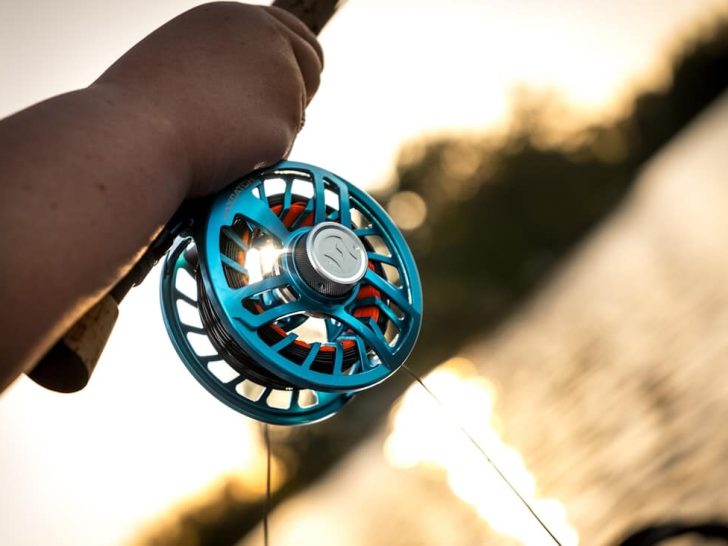
You’re standing there with a brand new fishing pole. It feels good in your hands, full of potential. But there’s one small problem stopping you from hitting the water; it has no line.
Figuring out how to string a fishing pole can feel a little tricky the first time. You don’t want to mess it up and deal with a tangled mess on your first cast.
This guide will walk you through exactly how to string a fishing pole the right way, so you can fish with confidence.
Table Of Contents:
- Before You Start: What You’ll Need
- Choosing Your Fishing Line
- How to String a Fishing Pole, Step by Step
- Tips for Spinning Reels vs. Baitcasting Reels
- Common Mistakes to Avoid When Spooling
- Conclusion
Before You Start: What You’ll Need
Getting your fishing gear ready ahead of time makes the whole process smooth. You don’t need much, which is great news. It’s more about having the right things within reach.
You will need your fishing rod and reel, of course. Make sure the fishing reel is properly attached to the rod’s reel seat.
You will also need a spool of fishing line, which we will talk about next.
Lastly, grab a pair of nail clippers or small scissors for trimming the excess line after tying knots.
Having a rag or a small cloth handy can be useful too. It can help you apply a bit of tension to the line as you reel it in. This prevents loose loops from forming on the spool.

Choosing Your Fishing Line
Walking into a tackle shop can be overwhelming with walls of fishing line in different colors and materials. The type of line you choose really does matter. It affects casting distance, knot strength, and how you feel the bite from different water fish.
Monofilament: The All-Around Choice
Monofilament, or mono, is what most people start with. It’s a single strand of nylon material. Because of its stretch, it’s very forgiving, which is great for beginners.
That stretch acts like a shock absorber when a big fish hits hard. Mono is also known for its good knot strength and it is generally less expensive. This makes it a popular choice for all sorts of fishing situations, from freshwater to light saltwater applications.
Braided Line: Strength and Sensitivity
Braided line is made of multiple strands of material woven together. Think of it like a very thin, very strong rope. It has almost zero stretch, which means you can feel every little nibble on your lure.
Braid is also incredibly strong for its diameter, letting you use a much thinner line than a monofilament line of the same strength. It is more visible to fish in clear water and can be a bit trickier to tie knots with. The Palomar knot is a great choice for braided lines and is relatively easy to master.

Fluorocarbon: The Invisible Option
Fluorocarbon line is made from a material that has a light-refractive index very close to water. This means it’s nearly invisible to fish underwater. This can give you a big advantage when fishing in super clear conditions or targeting line-shy species.
Like braid, it has very low stretch, so you get great sensitivity. It’s also very abrasion-resistant, making it good for fishing around rocks or wood. However, it can be stiffer and more expensive than monofilament, and it is often used as a leader material attached to a braided main line.
Line choice can also depend on the season. For example, some anglers prefer specific lines that perform better in cold temperatures for ice fishing.
| Line Type | Pros | Cons |
|---|---|---|
| Monofilament | Forgiving stretch, good knot strength, affordable. | Less sensitive, can weaken over time with sun exposure. |
| Braided Line | Very strong, super sensitive, great casting distance. | No stretch, more visible, can be slippery for knots. |
| Fluorocarbon | Nearly invisible underwater, low stretch, abrasion resistant. | Can be stiff, more expensive. |
How to String a Fishing Pole, Step by Step
Alright, you have your gear ready and you have selected your line. Now we get to the main event. We will break this down into a few simple parts so it is easy to follow.
Part 1: Setting Up Your Rod and Reel
First, make sure your reel is firmly attached to the rod. Most rods have a threaded locking mechanism on the handle. Just slide the foot of the reel into place and screw it down until it’s snug, but don’t overtighten it.
Next, flip open the bail on your spinning reel, which is the thin metal arm that rotates around the spool. If you have one of the versatile baitcasting reels, you will press the thumb bar to release the spool instead. This is the first step before the line can be attached.
This initial step is critical. Opening the bail or freeing the spool allows you to wrap the line around it and get started.
Part 2: Tying the Arbor Knot
Now you need to attach the line to the reel’s spool. The best knot for this job is called an arbor knot. It’s a simple knot that snugs down on itself and won’t slip under pressure.
Take the end of your new fishing line and wrap it around the arbor, which is the center part of the spool. Then, tie a simple overhand knot around the main part of the line. Think of it as the first step of tying your shoes.
After that, tie a second overhand knot in the very end of the line, just a few inches from the first knot. Pull the main line tight, and the first knot will slide down and get stopped by the second knot. Trim the extra tag end with your clippers to keep things neat.
Part 3: Spooling the Line the Right Way
This is where many people run into problems with line twist later on. How the line comes off the filler spool and goes onto your reel is important. It needs to come off in the same direction that your reel’s bail is turning.
Place the new spool of line on the floor with the label facing up. Thread the line through the first large guide on your fishing rod, the one closest to the reel. Now, pull some line down and tie your arbor knot to the reel’s spool as we just discussed.
Close the bail of your spinning reel and start turning the reel handle slowly. After about ten cranks, stop and look at the line between the reel and the first rod guide. If it is coiling and twisting, you need to flip the filler spool over so the label is facing down.
Once you see the line is going straight, you can continue spooling. Use a cloth to hold the line with gentle pressure before it gets to the reel. This keeps the line tight on the spool and prevents problems down the road.
Continue reeling until the line fills the spool to about one-eighth of an inch from the lip. Overfilling will cause the line to jump off and create a tangled mess. Underfilling will reduce your casting distance significantly.
Part 4: Threading Through the Rod Guides
You are almost there. Once the reel is full, cut the line from the filler spool. Now you have to thread it through the rest of the rod guides.
Starting with the guide closest to the reel, carefully feed the line through each one. Work your way all the way to the very tip of the rod. Sometimes it helps to bend the rod slightly to make it easier to see the guides.
Once you’ve threaded the line through the final guide at the tip, you’re officially done. All that’s left is to tie on your favorite lure or hook. You’re ready to go fishing.

Tips for Spinning Reels vs. Baitcasting Reels
The process is mostly the same for both common types of reels. But there are a few small differences to keep in mind. Knowing them can make the job a little bit easier.
Stringing a Spinning Reel
Spinning reels are what most beginners use. As we discussed, the key is making sure the line comes off the filler spool the same way the bail rotates. For most spinning reels, this means the filler spool should be on the floor with its label facing up.
The reel’s bail turns counter-clockwise, and the line uncoils from the filler spool in a counter-clockwise direction. This matches up and prevents line twist. This simple trick will save you a lot of frustration on the water.
Stringing a Baitcasting Reel
Baitcasting reels are a little different. Instead of a rotating bail, the spool itself rotates to gather line. This means you want the filler spool to also rotate as you wind the line onto the reel.
The easiest way to do this is to put a pencil or dowel through the center of the filler spool. Have a friend hold the pencil, or you can prop it up so the spool can spin freely. Make sure the line comes off the top of the filler spool and goes onto the top of your baitcasting reel.
Whether you have a Kestrel baitcasting reel or a Royale Legend Pro, this method keeps everything in alignment and avoids any unwanted twisting. High-end baitcaster reels, like the MG-TI Elite magnesium baitcasting model, often feature a true titanium spool. This lightweight design helps with casting distance, but proper spooling is still essential for top performance.
The advanced KastKing MG-TI Elite baitcasting reel features show how materials like an aluminum alloy frame can provide superior strength while maintaining ultra-lightweight performance.
The Megajaws Elite baitcasting reels are another example where a solid frame and smooth spool are complemented by correctly spooled line. The process remains the same for a pro baitcasting model or a more standard baitcaster, delivering exceptional durability and function when done right.

Common Mistakes to Avoid When Spooling
The biggest mistake is not putting enough tension on the line as you spool it. If the line goes on too loosely, it can dig into itself on the spool. This causes tangles and terrible backlashes, especially with baitcasters. Always keep steady, light pressure on the line as you wind it.
Another common issue is overfilling or underfilling the spool. As mentioned earlier, filling the line all the way to the edge of the spool is a recipe for disaster. The line will practically fly off in huge knots. Leaving too much space on the spool will dramatically cut down your casting ability.
Finally, forgetting to check for line twist is a mistake you will pay for on the water. Taking ten seconds to check for twists after the first few cranks saves you ten minutes of untangling a bird’s nest.
Conclusion
There you have it. You took a new rod and reel and turned it into a fish-catching tool. The process is straightforward when you break it down into simple steps.
From picking the right line to tying that first knot and winding it on correctly, you now know how to string a fishing pole. So go on, tie on a lure, and get out on the water.
