
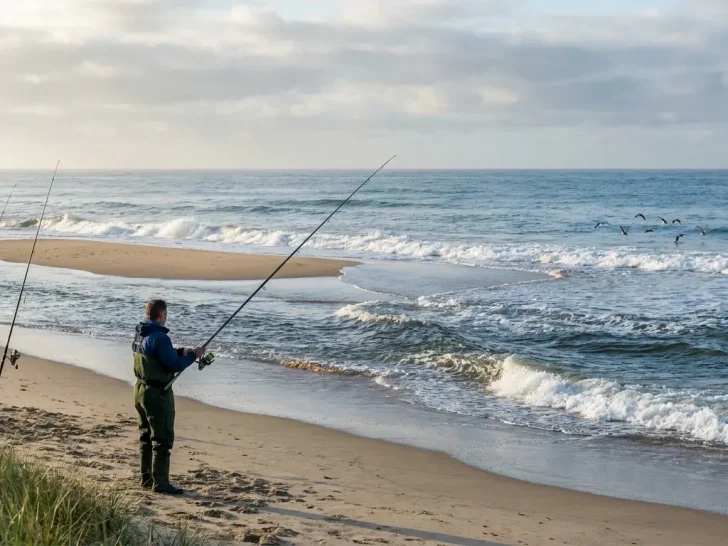
Surf fishing offers an exciting challenge, combining crashing waves, shifting currents, and aggressive saltwater predators. Unlike freshwater fishing, it requires specialized gear and a strong understanding of ocean conditions and fish behavior. Learning how tides, sandbars, and water movement affect feeding zones can turn a simple beach trip into a productive fishing experience.
Success in surf fishing comes from preparation, observation, and adapting to changing coastal conditions. Anglers must study tides, wind, moon phases, and subtle signs of fish activity to improve their chances of landing catches consistently. With experience and the right techniques, anyone can progress from casual shore fishing to mastering the demanding art of surf angling.
You cannot just walk up to the ocean and cast blindly into the churning white water if you want to surf fish successfully. Successful anglers spend time observing the beach at low tide to map out the underlying sand structure and hidden holes. Look for cuts, troughs, and sandbars where saltwater fish naturally congregate to ambush their unsuspecting prey in the wash. These structural elements serve as the primary architecture of the underwater world, directing the flow of both predators and baitfish. Identifying these features during a low tide cycle allows you to visualize exactly where your bait should sit when the water returns.
These structural features create natural highways for bait fish moving parallel to the shoreline during significant tidal shifts throughout the day. Taking time to scout the area and learn how to beach fish effectively greatly improves your overall success rate on the sand. When you surf fish, you must pay attention to the “color” of the water, as deeper water often appears darker than the surrounding shallows. Polarized sunglasses are an essential tool for this process, as they cut through the surface glare and reveal the subtle transitions in depth. A sudden change from light turquoise to deep blue often indicates a drop-off where larger fish are likely to be patrolling for a meal.
Furthermore, observing the behavior of the waves can provide critical clues about the submerged topography that remains hidden from the naked eye. Waves will typically break over shallow sandbars and then reform or flatten out as they pass over deeper troughs or “sloughs.” By targeting the areas where the waves stop breaking, you are essentially placing your lure in a protected zone where fish can swim without fighting the full force of the surf. This strategic placement is a cornerstone of advanced surf fishing techniques, ensuring that your presentation remains natural and enticing to passing predators. Always remember that the ocean is constantly changing, so a spot that was productive last week may have shifted due to recent storm activity or heavy currents.
Identifying Troughs and Sandbars to Surf Fish Effectively
A trough is a deeper depression running parallel to the beach between the shore and an offshore sandbar where many fish species hide. These areas are prime locations to surf fish because they provide a sanctuary for smaller species and a hunting ground for big fish. To beach fish these areas, aim your fishing rig just past the break, where the water begins to settle into the trough. The turbulence created by the waves breaking on the outer bar often dislodges small crustaceans and mollusks, creating a natural “chum line” that flows directly into the trough. This concentrated food source makes troughs the most reliable places to find active feeders throughout the entire tidal cycle.
If you want to surf fish like a pro, you must recognize that the “slough” or trough is where the current pulls nutrients from the sand. This attracts crustaceans and small baitfish, which in turn draws in the game species you are hoping to hook. When you beach fish, always look for “white water” breaking over a bar and then flattening out, indicating a deeper zone perfect for a surf rod setup. These deeper pockets often hold cooler, more oxygenated water, which is particularly attractive to fish during the summer heat. Understanding the relationship between wave energy and depth will allow you to “read” any beach in the world with a high degree of accuracy.
In addition to troughs, you should look for “points” where the sand extends further into the ocean, creating a natural barrier that deflects the longshore current. These points often create eddies or swirling water patterns that trap baitfish and disorient them, making them easy targets for larger predators. When you encounter a point, try casting your fishing rig into the turbulent water on the down-current side, as this is often where the most aggressive strikes occur. By combining your knowledge of troughs, bars, and points, you can develop a comprehensive map of the surf zone that guides every cast you make. This level of detail is what separates the masters of surf fishing techniques from those who simply hope for a bite.
Essential Surf Fishing Gear: Choosing Your Fishing Rod and Fishing Reel
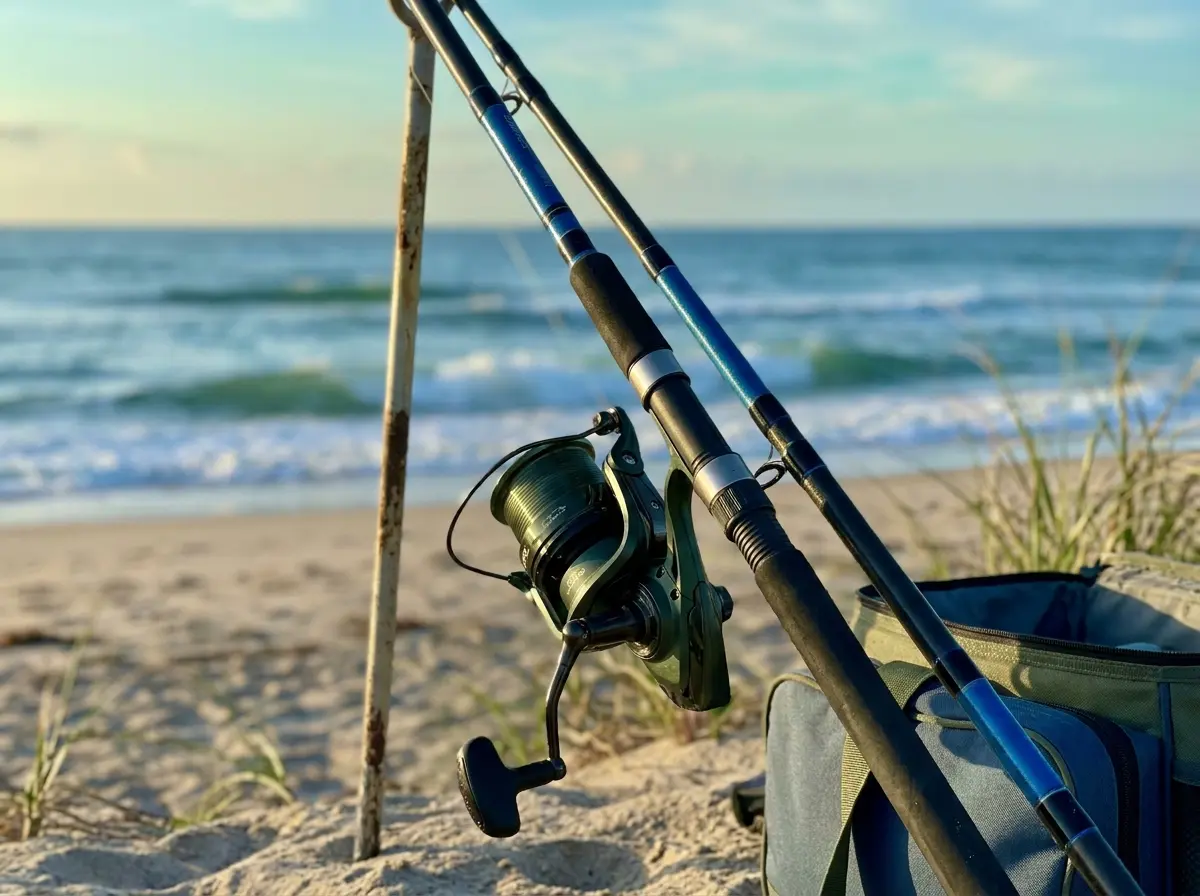
Selecting the right fishing gear is the foundation of any successful coastal outing, especially when dealing with heavy surf and wind. A high-quality fishing rod designed specifically for the salt will provide the necessary backbone to pull a big fish through the crashing waves. You will also need a durable fishing reel that can withstand the corrosive effects of salt spray and fine sand particles. The harsh environment of the beach is notoriously unforgiving on mechanical equipment, making it imperative to invest in gear with sealed bearings and corrosion-resistant materials. Without the proper equipment, even the most skilled angler will struggle to manage the physical demands of the surf environment.
Most experts recommend a spinning reel for beginners because it is easier to manage and less prone to “birds’ nests” during long casts. However, experienced anglers who surf fish may prefer conventional spinning reels or overhead reels for better casting distance and line capacity. Your fishing tackle should always be rinsed with fresh water after every trip to ensure it remains in peak operating condition. Salt crystals can quickly accumulate inside the reel’s drag system or along the rod guides, leading to friction that can snap your line during a critical fight. A disciplined maintenance routine is just as important as the initial purchase when it comes to long-term success on the water.
When evaluating a fishing reel, pay close attention to the maximum drag pressure and the line retrieval rate, as these factors determine your ability to control a powerful fish. In the surf, you often need to reel quickly to keep pace with a fish swimming toward the shore, or apply heavy pressure to stop a run toward a submerged reef. A reel with a high gear ratio allows you to recover slack line rapidly, which is essential when the waves are pushing your fishing rig back toward your position. Furthermore, ensure that the reel’s spool is large enough to hold several hundred yards of high-test line, providing you with a safety margin for those unexpected long-distance runs. Quality gear provides the confidence needed to engage with the ocean’s most formidable inhabitants.
Selecting Surf Fishing Rods and High-Quality Fishing Lines
When browsing your local tackle shop, look for surf fishing rods that range from 10 to 15 feet in length for maximum leverage. A longer surf rod allows you to keep your fishing lines above the breaking waves, preventing the current from dragging your fishing rig out of the strike zone. Using specialized fishing lines, such as braided line, offers a thinner diameter and higher strength, which is crucial for cutting through heavy wind. Braided lines also provide superior sensitivity, allowing you to feel the slightest tap from a fish even when there is a significant amount of line out in the water. This immediate feedback is vital for timing your hook set perfectly in the turbulent surf.
In addition to the rod, you must invest in sturdy rod holders, often called sand spikes, to keep your gear out of the abrasive sand. These rod holders allow you to set your drag and wait for a strike while you prepare your next live bait or check the latest news on weather patterns. Proper fishing gear management is what separates the casual hobbyist from the dedicated angler who knows how to surf fish in all conditions. Make sure your sand spikes are driven deep into the moist sand near the water’s edge to prevent a large fish from pulling your entire setup into the ocean. A secure rod holder is your best insurance policy against losing expensive equipment during a sudden, violent strike.
The action of the rod—whether it is fast, medium, or slow—will also dictate how well you can cast different weights and how the rod responds to a fighting fish. A fast-action rod bends primarily at the tip, providing excellent casting accuracy and a powerful hook set, which is ideal for using lures. Conversely, a medium-action rod offers more flexibility throughout the blank, which can be beneficial when using delicate live bait that might fly off the hook during a high-velocity cast. Choosing the right combination of rod length and action is a personal preference that often develops after spending many hours practicing various surf fishing techniques. Ultimately, your gear should feel like an extension of your body, allowing you to react instinctively to the movements of the sea.
Bait and Lure Selection for Beach Fishing and Terminal Tackle
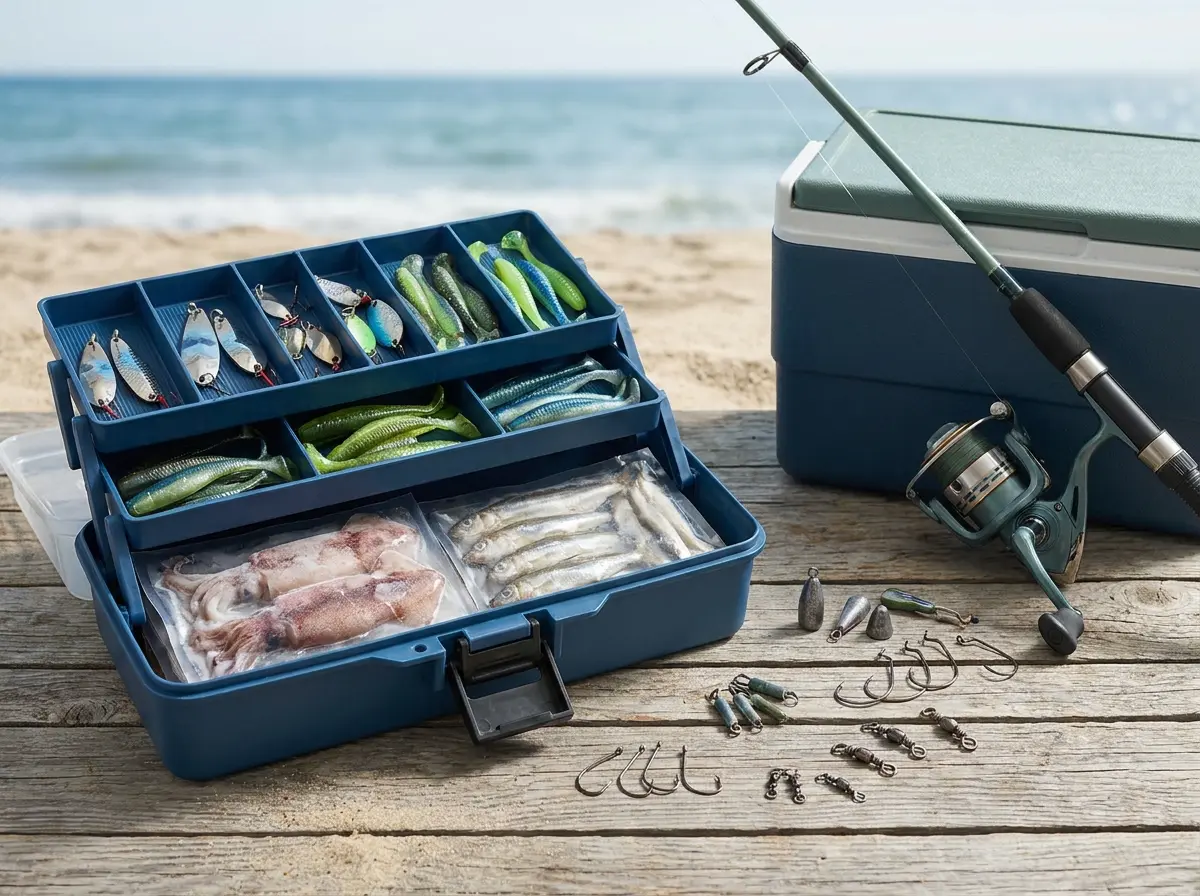
The choice between live bait and artificial lures often depends on the specific saltwater fish you are targeting and the current water clarity. Using live bait, such as sand fleas, shrimp, or mullet, is a time-tested method to surf fish because the natural scent is irresistible to predators. You should secure your bait using a high-quality circle hook, which ensures a better hook-up ratio and is safer for the fish during catch and release. Circle hooks are designed to slide to the corner of the fish’s mouth, preventing deep hooking and making it much easier to return the fish to the water unharmed. This conservation-minded approach is essential for maintaining healthy fish populations for future generations of anglers.
If you prefer an active approach, a soft plastic lure or a heavy metal spoon can be very effective when you surf fish near schools of bait. For those targeting cephalopods near rocky outcrops, squid jigs are an essential part of your terminal tackle kit. Always ensure your fishing tackle is organized so you can quickly swap out a fishing rig when the bite changes. Artificial lures allow you to cover a vast amount of water quickly, which is particularly useful when you are trying to locate roaming schools of bluefish or striped bass. The key is to “match the hatch” by choosing lures that mimic the size and color of the local forage species currently present in the surf.
When using lures, the speed and style of your retrieval can be just as important as the lure itself. A fast, erratic retrieval often triggers a predatory strike from aggressive fish, while a slow, steady crawl along the bottom might be more effective for species like flounder or red drum. Experimenting with different depths and speeds is a fundamental part of developing successful surf fishing techniques. Additionally, consider the light conditions; bright, reflective lures often work best in clear water and sunny skies, while darker or more vibrant colors may be necessary in murky water or during low-light periods. Being versatile with your presentation will ensure that you are prepared for whatever the ocean throws your way.
The Perfect Fishing Rig and Terminal Tackle Setup
A standard fishing rig for the surf usually involves a pyramid sinker to hold your position in the shifting sands of the shallow water. You must master several fishing knots, such as the Palomar or Improved Clinch knot, to ensure your terminal tackle doesn’t fail under the pressure of a heavy strike. When you surf fish, the “fish-finder rig” is a popular choice as it allows the fish to take the live bait without feeling the weight of the sinker. This rig consists of a sliding sleeve for the weight, a swivel, and a leader of fluorocarbon or monofilament, providing a natural presentation that doesn’t spook wary fish. Using high-quality components in your rigging is the best way to prevent the heartbreak of a lost trophy fish.
Don’t forget to include fishing rigs that utilize multiple hooks, often called “high-low rigs,” to test different depths of the water column simultaneously. This strategy helps you identify if the saltwater fish are feeding near the bottom or higher up in the surf. Having a variety of terminal tackle options in your bag ensures you are prepared for any fish species that might be cruising the shoreline. For example, if you notice birds diving on baitfish near the surface, you might quickly switch to a float rig to keep your bait suspended in the upper water column. Flexibility in your rigging strategy is a hallmark of an experienced angler who understands the dynamic nature of the coastal environment.
Furthermore, the length and strength of your leader material can significantly impact your success rate. In very clear water, a long fluorocarbon leader is often necessary to hide your line from keen-eyed predators. However, if you are fishing in areas with sharp rocks or targeting fish with teeth, a heavier monofilament or even a wire leader might be required to prevent bite-offs. Always inspect your leader for nicks or abrasions after every catch, as the abrasive sand and fish teeth can quickly weaken the material. Taking the time to re-tie your fishing knots and refresh your terminal tackle is a small investment that pays huge dividends when the big one finally bites. Precision in your rigging is the final piece of the puzzle in mastering surf fishing techniques.
Mastering Surf Casting Techniques for Maximum Casting Distance
To surf fish effectively, you must master the art of surf casting to reach the deeper troughs located far from the shore. Achieving a significant casting distance is often the difference between a dry day and a successful haul of game species. You should practice your surf casting motion in an open area before hitting the beach to ensure your timing and release are consistent. A proper cast involves more than just arm strength; it requires the coordinated movement of your entire body, using your legs and core to generate the necessary power. As you refine your technique, you will find that a smooth, rhythmic motion is far more effective than trying to muscle the rod with brute force.
When you surf fish, use the weight of the sinker to load the rod tip, creating a catapult effect that launches your fishing rig into the horizon. Keep your tight lines as a priority; once the bait hits the water, reel in the slack immediately to maintain contact with your lure. This technique is vital when you beach fish in heavy winds where the line can easily bow and lose sensitivity. A bowed line not only makes it harder to detect strikes but also increases the drag on your bait, potentially pulling it out of the desired strike zone. By maintaining a direct connection to your terminal tackle, you ensure that every vibration from the underwater world is transmitted directly to your hands.
Advanced casters often employ specialized techniques like the “off-the-ground” cast or the “pendulum” cast to achieve extreme distances. While these methods require significant practice and safety precautions, they can be game-changers when the fish are holding far beyond the secondary breaker line. Regardless of the specific style you choose, consistency is the key to accuracy and distance. Pay attention to your foot placement and the angle of your release, as even minor adjustments can lead to significant improvements in your overall performance. Mastering these surf fishing techniques will give you the reach needed to exploit every potential honey hole along the coast, regardless of how far it is from the dunes.