
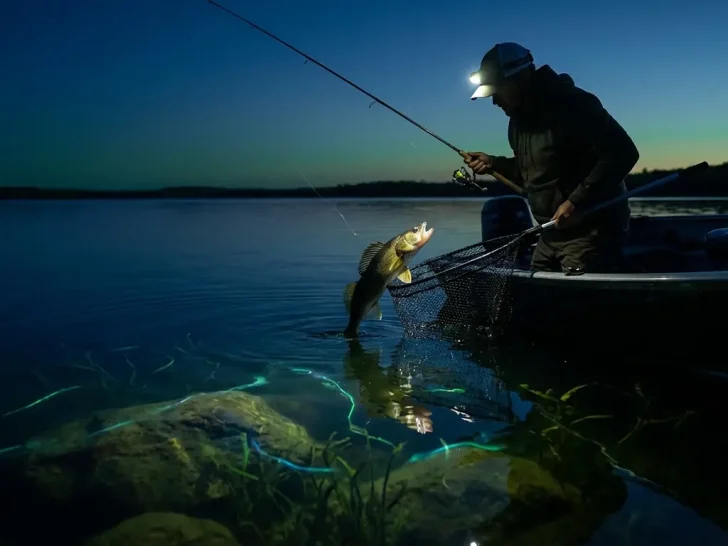
Catching walleye after dark requires a thorough understanding of their specific predatory habits and biological advantages. Learning how to catch walleye at night involves mastering their exceptional low-light vision, which provides them with a distinct tactical advantage over their natural prey. While many anglers struggle during bright daylight hours, the feeding activity often ignites rapidly once the sun finally sets over the horizon.
You must adapt your approach to match the specific biological traits these predators rely on for survival. Implementing the correct strategies and utilizing the right equipment will significantly increase your success rate on the water. Many anglers abandon the lake just as the prime feeding windows begin to open up.
The following information details the exact tactics, gear, and locations necessary to consistently boat fish throughout the night. By adjusting your presentation and understanding seasonal movements, you can capitalize on this highly productive timeframe. How do you consistently locate these roaming predators in complete darkness? The answer lies in understanding their fundamental biology and applying proven tactical approaches.
Walleye behavior changes drastically as daylight fades, driven entirely by their highly specialized optical anatomy. These fish avoid bright sunlight because their sensitive eyes cannot process intense ultraviolet rays comfortably. As evening approaches, they migrate from deep basins into shallow water to ambush unsuspecting baitfish.
Their vision provides an overwhelming predatory advantage that dictates their entire daily routine. Understanding this biological imperative helps you predict their movements and position your boat accordingly. You can read more about specific fish vision characteristics through resources provided by the Minnesota Department of Natural Resources.
The Tapetum Lucidum Advantage
Walleye possess a specialized reflective layer in their eyes called the tapetum lucidum. This structure gathers ambient light from the moon and stars, amplifying it significantly within the eye. Because of this biological advantage, these predators actively hunt while their prey remains practically blind in the dark.
This reflective layer causes the classic “glowing eye” effect you see when shining a light into the water. The tapetum lucidum allows them to perceive colors and distinct shapes even in heavily stained water conditions. You must leverage this trait by selecting lures that create contrasting silhouettes against the night sky.
Temperature and Light Sensitivity
Water temperature directly influences how active these fish become after sunset, especially during the summer months. Surface temperatures drop slightly at night, creating a much more comfortable feeding environment for cold-blooded predators. This thermal shift triggers massive movements of baitfish, with the predators following closely behind.
Cloud cover and moon phases also dictate the intensity of the nighttime bite. A full moon provides tremendous illumination, allowing fish to hunt deeper than they would on a completely dark night. Conversely, heavy cloud cover pushes them incredibly shallow, often into water less than three feet deep.
- Walleye use their tapetum lucidum to amplify moonlight and hunt effectively in the dark.
- Fish migrate from deep water to shallow flats at dusk to ambush visually impaired prey.
- Moon phases and cloud cover dictate how shallow the fish will move to feed.
How to Catch Walleye at Night: Essential Gear
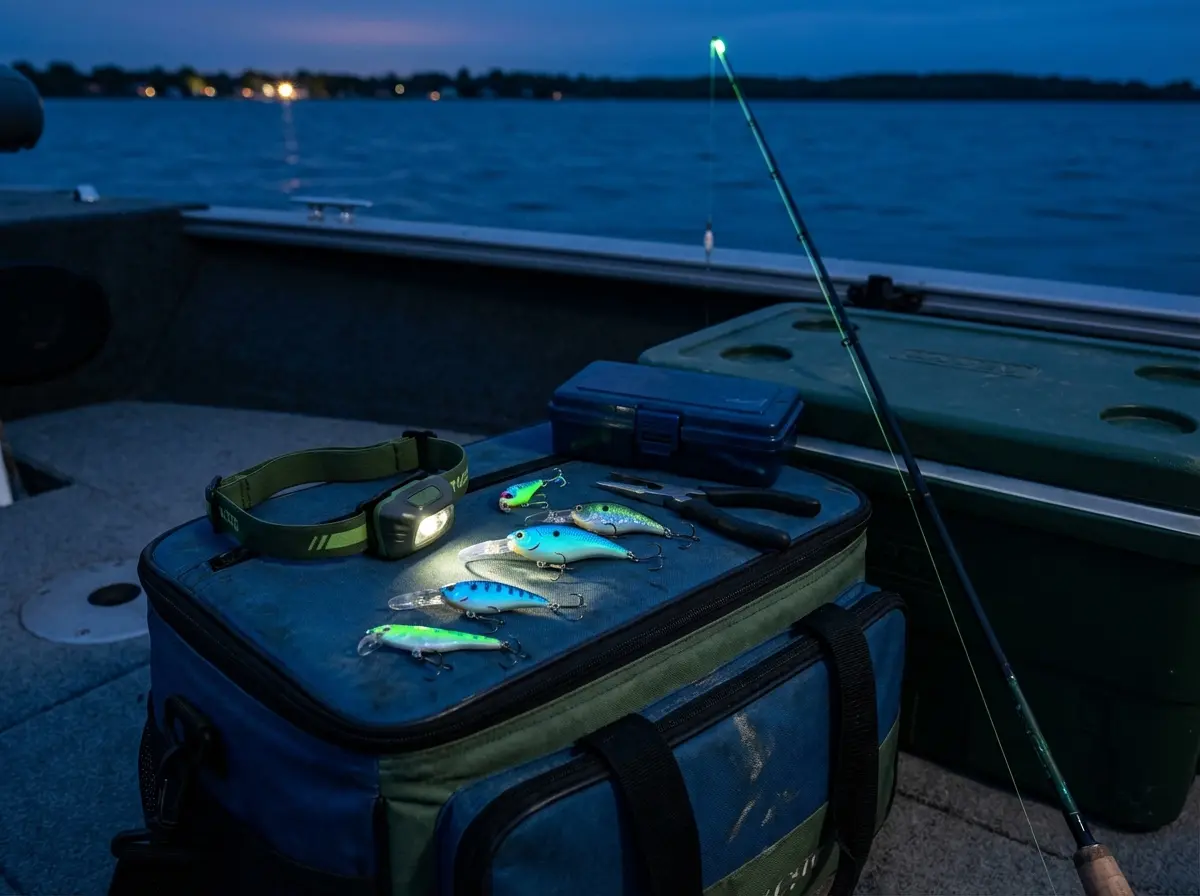
Selecting the proper walleye fishing gear makes a massive difference when operating in complete darkness. You cannot rely on watching your rod tip, so tactile sensitivity becomes your primary strike indicator. Finding the best walleye fishing rods will help you feel the subtle bites that occur after sunset.
Organization remains a critical component of successful nighttime angling. You must know exactly where your tools, lures, and safety equipment are located before leaving the dock. Fumbling around in the dark often leads to lost fish, broken equipment, or unnecessary accidents.
Rods and Reels
High-modulus graphite rods transmit subtle underwater vibrations directly to your hand. A medium-light power rod with a fast action tip provides the perfect balance for casting lightweight lures. This setup allows you to detect light bites while maintaining enough backbone to drive the hook home.
Braided fishing line offers zero stretch, providing immediate and direct feedback from your lure. Attach a high-quality fluorocarbon leader to maintain invisibility while providing a slight shock absorber for aggressive strikes. This specific combination guarantees solid hooksets even when you cannot visually verify the fish taking the bait.
Lighting Equipment
Proper illumination prevents accidents and helps you manage your fishing equipment efficiently. You must avoid shining bright white lights directly into the water, as this will immediately spook cautious fish. Red or green headlamps preserve your natural night vision while providing enough light to tie knots safely.
Electronics and Sonar
Modern sonar units provide a massive advantage for nighttime anglers searching for active schools. Dimming your screens reduces eye strain and prevents your boat from glowing like a lighthouse. Utilize side-imaging technology to locate pods of baitfish before you ever make your first cast.
GPS mapping proves invaluable when navigating hazardous structural elements in the dark. You should mark dangerous rock piles and shallow shoals during daylight hours to prevent nighttime collisions. Relying on accurate contour maps helps you position your boat perfectly along productive drop-offs.
Lower the backlight brightness on your sonar units to the lowest readable setting. Bright screens destroy your natural night vision and make it incredibly difficult to spot hazards on the water.
Best Lures for Night Walleye: Top Baits and Lures
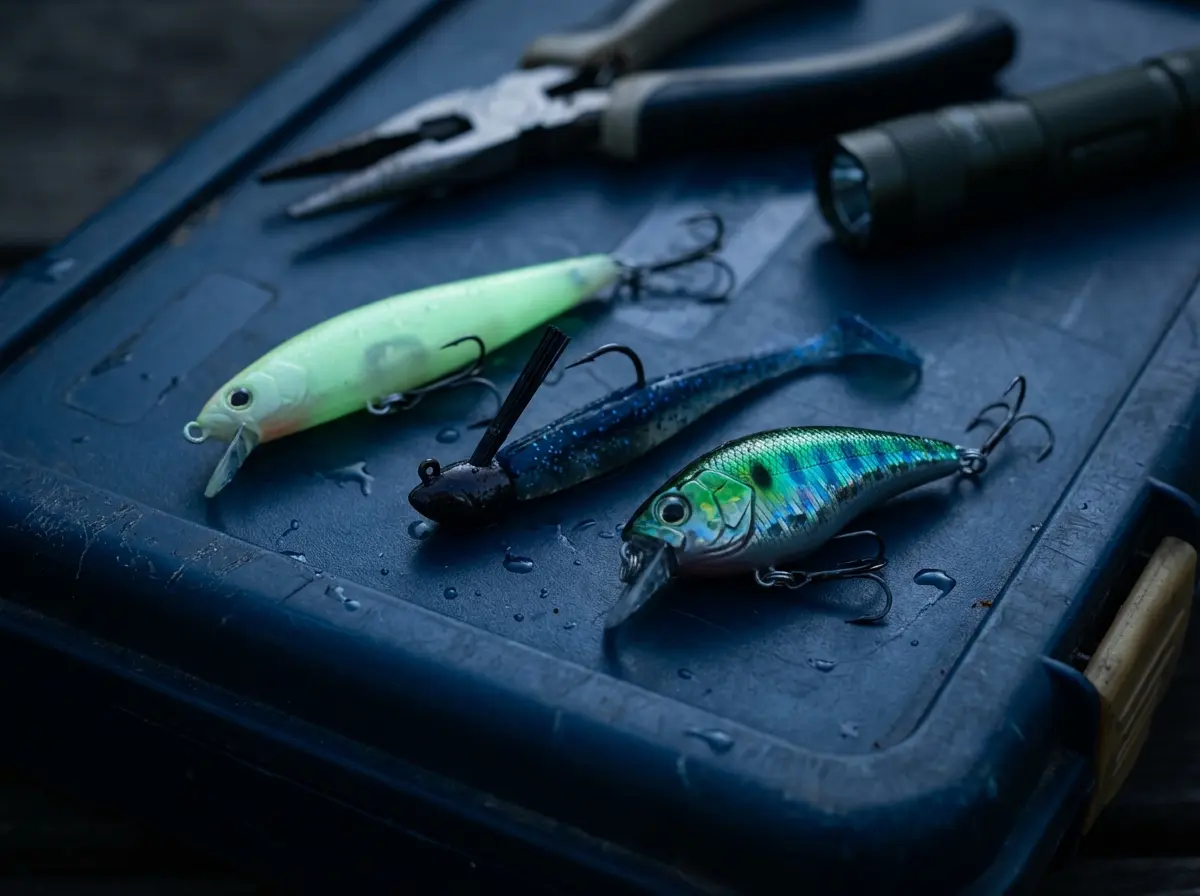
Selecting the right presentation dictates your success rate during nighttime excursions. Walleye rely heavily on their lateral lines to detect vibration when visual conditions are poor. You need best lures for night walleye that displace water effectively and create a noticeable acoustic footprint.
Color selection also plays a significant role, despite the lack of sunlight. Solid black, dark purple, and chrome finishes create strong silhouettes against the ambient light above. Experimenting with different profiles and retrieve speeds helps you determine exactly what the fish want.
Suspending Jerkbaits
Suspending jerkbaits dominate the nighttime walleye scene across the United States. Lures like the Husky Jerk or Smithwick Perfect 10 mimic dying baitfish exceptionally well. Retrieve these baits with a slow, steady pull followed by a long pause.
Strikes almost always occur while the lure sits motionless in the water column. The fish trail the bait, studying its profile, before aggressively attacking during the pause. You must maintain a tight line during these pauses to feel the subtle tick of a bite.
Jigs and Plastics
Soft plastics paired with a specialized jig head offer excellent versatility for targeting structural elements. Paddle tail swimbaits generate significant vibration, helping fish locate the bait through their sensitive lateral lines. Cast these jigs over shallow rock reefs and retrieve them just above the bottom.
Heavier jigs work well in river systems where current pushes lightweight baits out of the strike zone. You should utilize a slow, swimming retrieve rather than aggressive hops off the bottom. A smooth and consistent swimming action closely mimics the natural movement of local forage.
Live Bait Rigs
Live bait remains highly effective for sluggish fish during severe cold weather periods. Slip bobber rigs tipped with lively leeches or large minnows present an easy meal for roaming predators. You can attach a small chemical light stick to the bobber stem to track your presentation.
Nighttime Walleye Tactics: How to Troll for Night Walleye
Trolling allows you to cover vast amounts of water quickly, making it highly effective for locating scattered fish. This tactic requires careful boat control and precise depth management to keep your lures in the strike zone. Mastering night trolling for walleye dramatically increases your catch rates on large bodies of water.
Preparation remains the most critical factor when trolling in the dark. Tangled lines and disorganized equipment will quickly ruin an otherwise productive evening. Follow these specific steps to execute a flawless nighttime trolling strategy.
How to Execute a Night Trolling Pass
Scout Your Trolling Route During Daylight
Always drive your planned trolling route during daylight hours to map the area. Mark waypoints on your GPS for any shallow hazards, weed beds, or sharp structural transitions.
Deploy Your Planer Boards
Attach illuminated planer boards to your lines to spread your lures away from the boat noise. Stagger the distance of your lures behind the boards to cover multiple depths simultaneously.
Dial in Your Boat Speed
Maintain a consistent trolling speed between 1.0 and 1.5 miles per hour. Make wide, sweeping “S” turns to speed up the outside boards and slow down the inside boards.
Monitor and Adjust
Watch the illuminated lights on your planer boards for any sudden backward movement indicating a strike. Reel the fish in smoothly and steadily to prevent the hooks from tearing out.
Prime Locations for Night Fishing for Walleye After Dark
Fish abandon their deep-water sanctuaries at dusk and move toward specific structural elements to feed. Identifying these high-percentage locations saves you hours of aimless casting