
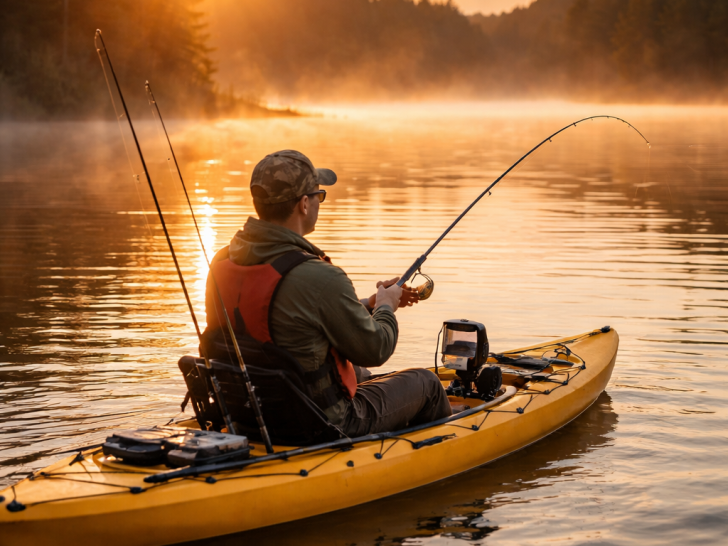
Kayak fishing offers something you just can’t get from a big bass boat: the ability to sneak into tight spots where fish feel safe and undisturbed. Instead of roaring across the water with a gas motor, you’re paddling quietly into shallow creeks, back into overgrown coves, and right up to structures that most anglers can’t touch.
The trade-off is that fishing from a kayak comes with its own set of challenges. You’re dealing with limited space, constant balance adjustments, and the need to manage your gear efficiently while staying safe on the water. But with the right techniques and a little practice, you can turn these challenges into advantages that put more fish in your cooler.
In this guide, we’ll walk through essential kayak fishing tips that make a real difference on the water. From staying stable while fighting fish to rigging your kayak for maximum efficiency, these proven strategies will help you fish more effectively and enjoy your time on the water even more.
Let’s dive into what you need to know to become a better kayak angler.
Essential Kayak Fishing Gear for Anglers
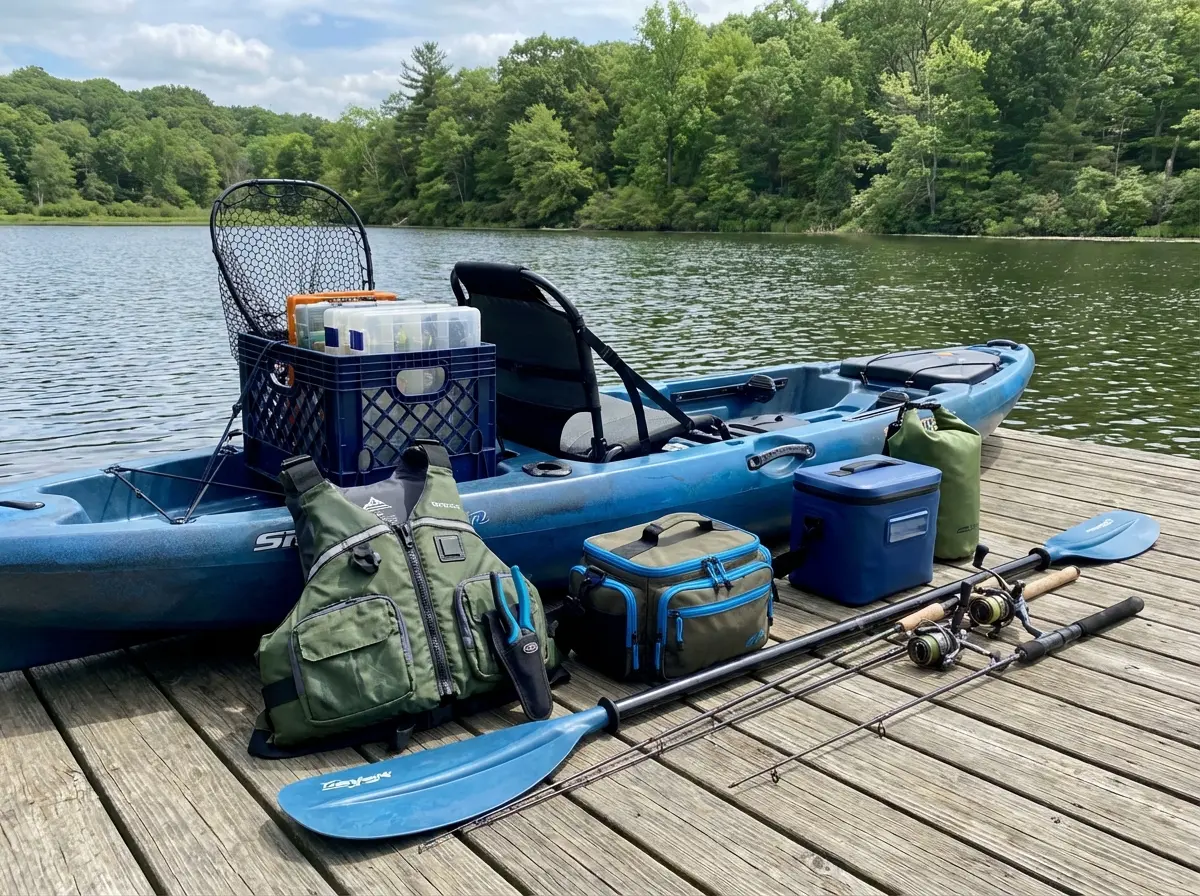
Selecting the proper kayak fishing gear ultimately dictates your overall comfort and effectiveness while out on the water. Fatigue ruins fishing trips, so choosing high-quality components is essential for maintaining your stamina during long sessions. A heavy, inexpensive paddle will quickly drain your physical energy during a long day of continuous casting against strong river currents.
You should strongly consider investing in a lightweight carbon-fiber or fiberglass paddle with a proper ferrule system. The significantly reduced swing weight protects your shoulders from fatigue and extends your effective fishing time significantly. Your personal flotation device (PFD) requires equal attention before you ever decide to launch your fishing kayak into the current.
Standard boating life jackets often bunch up awkwardly against the tall framed seats found in modern fishing kayaks. Anglers should deliberately select a high-back paddling PFD that cleanly accommodates the standard kayak seat structure for maximum comfort. These specialized vests also feature integrated storage pockets for quick access to essential pliers and spare leader lines.
Always tether your expensive rod and reel combos to the kayak using flexible leashes. A sudden flip or dropped rod can easily cost you hundreds of dollars in lost equipment. This simple precaution provides essential security for your gear during unexpected capsizes or rough water conditions.
Beyond the paddle and PFD, you need a highly reliable anchor system for holding your position securely in moving water. A standard three-pound folding grapnel anchor works perfectly for most inland lakes and slow-moving river systems. Attach this grapnel anchor to an anchor trolley system running parallel along the side of your hull.
This adjustable setup allows you to shift the anchor tie-off point from the bow to the stern with ease. Controlling this pivot point helps you face the optimal direction depending on the prevailing wind and water current.
Kayak Fishing Tips for Stability and Positioning
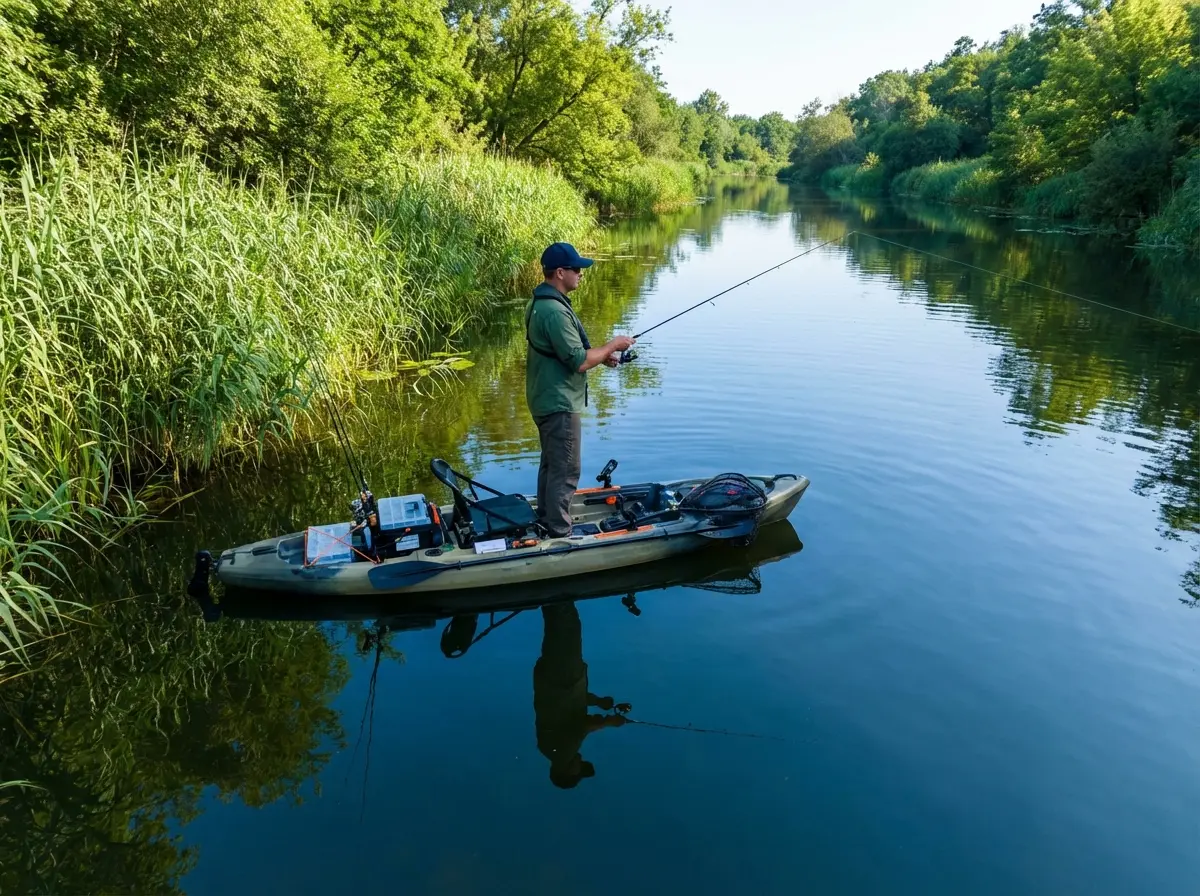
Maintaining proper balance while fighting a heavy fish challenges even the most experienced kayak angler on the water.
Most modern anglers prefer a sit-on-top kayak for its superior drainage and ease of movement during active fishing sessions. Fishing kayaks feature two distinct types of stability that dictate how the vessel handles under pressure.
Secondary stability matters more because it describes how the kayak hull resists flipping over when you lean heavily. You must learn to read the wind and current accurately to maintain an advantageous fishing position at all times. This skill ensures you stay upright while trying to net a thrashing fish in difficult conditions.
- Invest in a lightweight carbon fiber paddle to reduce shoulder fatigue during long trips.
- Install an anchor trolley system to control your boat’s positioning in strong currents.
- Rely on your kayak’s secondary stability by keeping your head centered over the keel.
Kayaks sit high on the water surface and naturally catch the breeze exactly like a small sail. A drift chute or drift sock effectively slows your movement across open-water flats on exceptionally windy days. Deploying this simple tool lets you thoroughly work a productive area rather than blowing past it in seconds.
Body positioning matters immensely when you finally manage to hook a substantial fish near submerged structure or heavy cover. Keep your head centered directly over the keel of the kayak to maintain your optimal center of gravity. If you lean too far over the gunwale to net a fish, you severely risk capsizing the vessel.
Bring the exhausted fish to the center of the kayak rather than stretching your arms out to reach it. Practicing controlled leaning in shallow water helps you understand the exact tipping point of your specific boat.
How to Rig Your Fishing Kayak for Maximum Efficiency
A cluttered deck quickly leads to lost fish and mounting frustration during the most crucial moments of your trip. You must organize your workspace systematically to keep essential tools and rod holders within immediate reach at all times. The limited square footage demands a highly strategic approach to accessory mounting and overall tackle storage.
Professional anglers regularly spend hours configuring their kayaks in the garage before ever touching the actual water. They carefully simulate the motions of casting, paddling, and landing fish to identify potential obstruction points. You can completely avoid tangled lines by keeping the front deck area entirely clear of unnecessary equipment.
Step-by-Step Guide: How to Rig Your Kayak Fishing Deck
Plan Your Layout on Dry Land
Sit in the kayak while it rests on the grass and practice your natural casting motions. Mark optimal locations for rod holders where they will not obstruct your normal paddle stroke.
Install Versatile Track Systems
Mount aluminum or heavy-duty plastic gear tracks along the flat gunwales of your vessel. These sliding tracks allow you to attach and reposition accessories easily without drilling new holes into the hull.
Organize Your Tackle Storage
Place your most frequently used lures in a small plastic crate directly behind your seat. Secure the storage crate tightly with bungee cords so it stays firmly planted if the water gets rough.
Proper rigging keeps your primary deck space entirely clear for safely landing and unhooking your fish. You should store excess tackle boxes in the front hatch where they remain completely dry and out of the way.
Secure all loose items with sturdy bungee cords or heavy-duty carabiners attached directly to the hull rigging. A sudden wake from a passing powerboat can easily bounce unanchored pliers or expensive lure boxes into the river. Taking the extra minute to tie everything down saves you from costly equipment replacements down the road.
Advanced Casting and Catching Techniques for Kayak Fishing
Casting from a seated position requires a significantly different mechanical approach than standing on a standard boat deck. You completely lose the powerful leverage generated by your legs and lower back during the traditional casting motion. Every kayak angler must rely on shorter, highly specialized rods measuring between exactly six and seven feet in total length.
These shorter rod blanks allow for tight roll casts and highly precise underhand pitching under low overhanging branches. You will often encounter situations where you must execute a perfect cast using only one hand. Your other hand might be actively holding the paddle blade in the water to maintain a steady heading.
Never “high-stick” your rod when landing a fish near the side of the kayak. Lifting the rod straight up past a ninety-degree angle puts immense stress on the tip and will shatter the graphite. Always maintain a safe angle to ensure the longevity of your high-performance fishing equipment while on the water.
Practice side-arm and backhand casts repeatedly to deliver your lures accurately without dangerously shifting your body weight. Mastering these varied casting angles increases your overall ability to hit tight strike zones. Setting the hook from a fishing kayak also demands a heavily modified technique to compensate for the natural boat movement.
When you aggressively jerk the rod backward, the lightweight kayak will naturally slide forward across the water surface. You must execute a sharp, sweeping hook set to drive the metal point home securely into the fish. Braided fishing line helps tremendously here because its zero-stretch property transfers maximum kinetic energy directly to the hook.
Critical Kayak Fishing Safety Protocols
Water safety requires strict adherence to established protocols and constant situational awareness, regardless of your experience level. A sudden change in weather patterns can turn a tranquil lake into a highly hazardous environment within minutes. You must check detailed marine forecasts and advanced wind models before finalizing your plans.
Always file a detailed float plan with a trusted friend or family member outlining your expected locations. Include a specific return time so they know exactly when to contact emergency authorities if you fail to report back. Visibility presents a highly significant challenge for small kayaks operating near much larger, fast-moving motorized vessels.
Your incredibly low profile makes you quite difficult to spot among the rolling waves and blinding sun glare. Mount a high-visibility orange flag on a flexible fiberglass pole directly at the stern of your kayak. You should also purposefully wear bright neon clothing to increase your visual footprint on heavily trafficked waterways.
- Always file a detailed float plan with a friend before launching your kayak.
- Mount a high-visibility flag on your stern to alert larger motorized vessels of your presence.
- Wear a dry suit or paddling pants if the water temperature drops below sixty degrees Fahrenheit.
Cold water immersion poses the most severe threat to any kayak angler throughout the entire calendar year. The actual water temperature dictates your protective clothing choices much more than the ambient atmospheric air temperature. You must wear a dry suit or specialized paddling pants if water temperatures drop below 60° Fahrenheit.
Keep a complete change of warm, dry clothes safely stored inside a reliable waterproof bag securely inside the hull. Hypothermia degrades your motor skills rapidly, making it virtually impossible to climb back into a flipped kayak. Preparing for the worst possible scenario allows you to fish with absolute confidence and total peace of mind.
Conclusion
Mastering kayak fishing requires immense patience, deliberate practice, and a strong willingness to adapt your traditional angling methods. The initial transition from shore fishing or powerboats to a small plastic vessel presents a notably steep learning curve. However, the ultimate reward of silently gliding into completely untouched fishing holes makes the effort worthwhile.
Implementing these essential kayak fishing tips will effectively build a highly solid foundation for all your future trips. You should aggressively focus on mastering fundamental boat control and safety protocols before worrying about advanced tackle techniques. A stable, properly organized fishing kayak naturally leads to vastly better casting accuracy and significantly higher catch rates.
Respect the dynamic water conditions and always prioritize your personal safety above the pursuit of fish. The most successful anglers recognize their physical limitations and make highly calculated decisions regarding weather and water currents. With dedicated time and experience, you will discover that kayak fishing offers an absolutely unparalleled connection to the outdoors.

- Understanding Pier Fishing for Beginners: Fundamentals and Strategy - September 10, 2026
- Why Connection Selection and the Right Fishing Knot Matters - August 10, 2026
- Understanding Topwater Lure Types for Successful Bass Fishing - July 10, 2026