
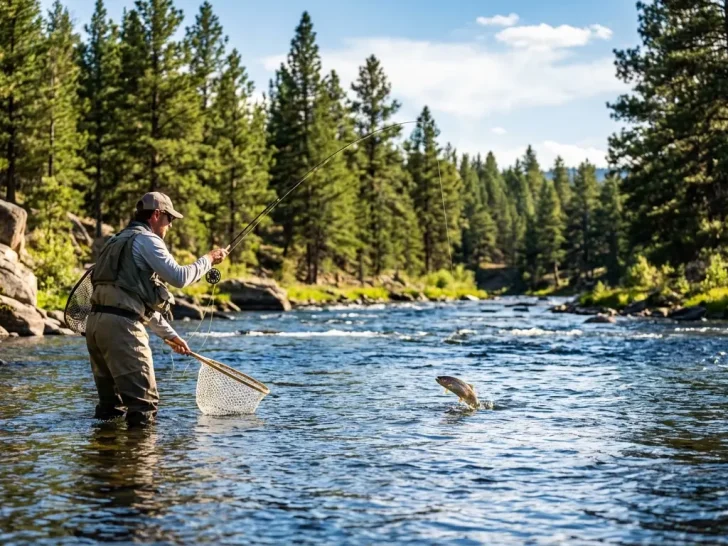
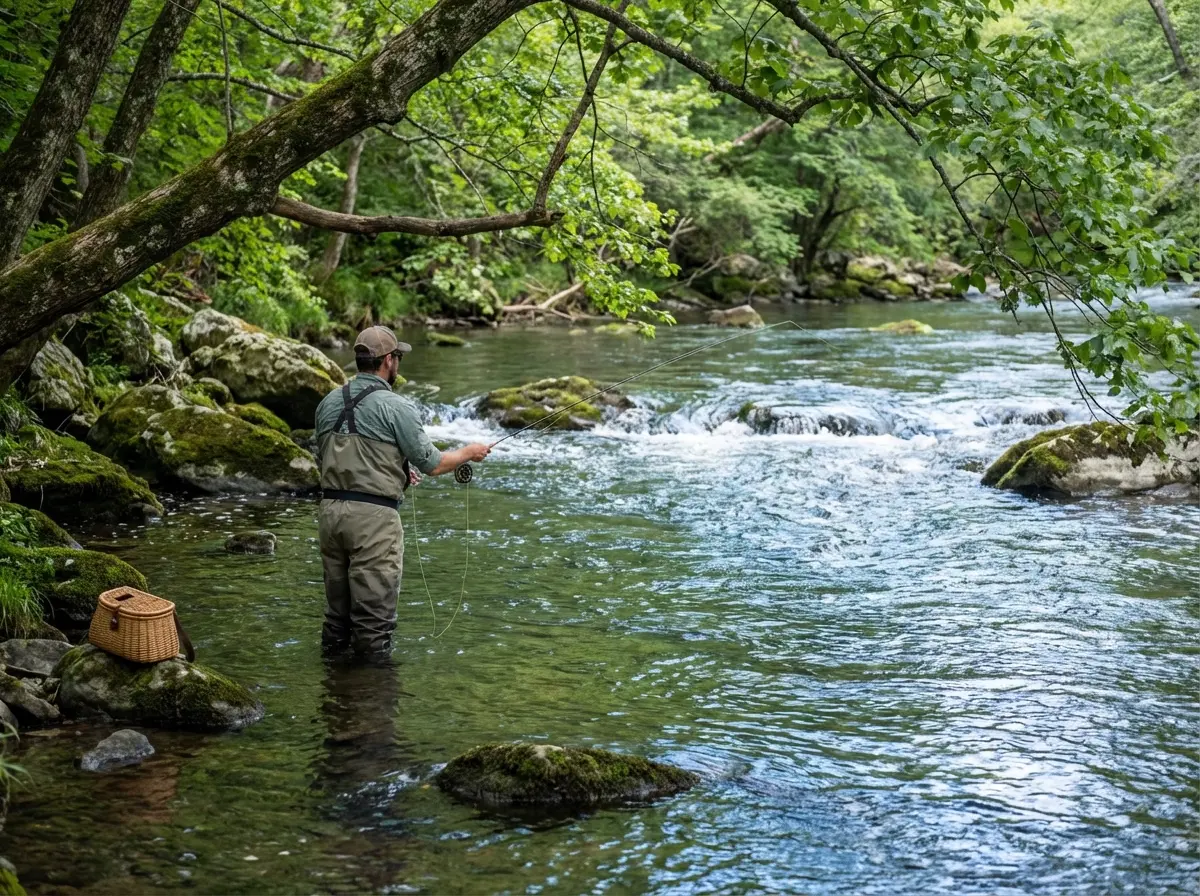
Learning how to catch trout in a river presents a specific set of challenges that differ significantly from casting on a still lake or pond.
Moving water acts as a conveyor belt of food, but it also dictates where fish can hold without exhausting their energy reserves.
Success requires you to read the currents and understand how trout interact with their fluid environment. You must approach the river with a strategy based on observation rather than random casting.
Many anglers struggle because they fail to account for the drag that currents place on their fishing line and lure. A trout will rarely strike an offering that moves unnaturally against the flow or faster than the surrounding water.
Mastering the drift is often more critical than having the exact fly pattern or the most expensive fly rod in your collection. This guide examines the fundamental skills and trout fishing tips required to consistently land fish in moving water.
Understanding Behavior and Feeding Patterns
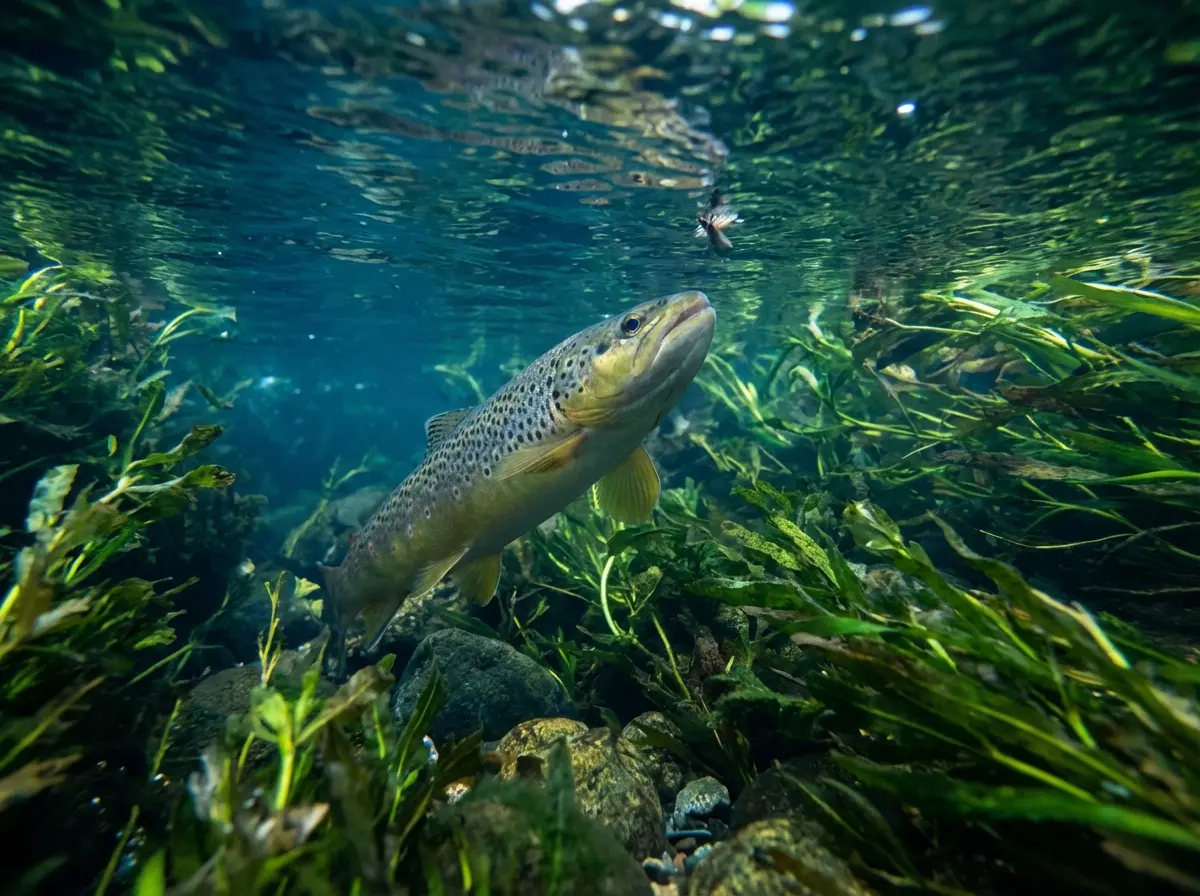
Trout, specifically rainbow trout and brown trout, are driven by two primary biological imperatives: conserving energy and acquiring food while avoiding predators.
In a river, these needs force fish to find specific locations where they can access drifting food without battling the full force of the current. They typically face upstream, waiting for the water to bring insects and other nutrients directly to them.
You will often find active fish in “seams,” which are the visible lines where fast water meets slower water. Sitting in the slow water allows the trout to rest, while the adjacent fast current delivers a steady stream of food.
Identifying these energy-efficient feeding lanes is the first step in locating your quarry. Large trout will rarely expend more calories chasing food than they gain from eating it.
Temperature also plays a massive role in how aggressive or lethargic trout behave on any given day. They are cold-blooded, meaning their metabolism slows down significantly in water temperatures below 45 degrees Fahrenheit or above 70 degrees.
The optimal window for feeding activity generally falls between 50 and 65 degrees, which usually dictates when you should be on the water.
- Trout prioritize locations that offer maximum food intake with minimal energy expenditure.
- Seams between fast and slow currents are prime holding spots for feeding fish.
- Water temperature dictates trout metabolism and their willingness to chase lures.
Reading the Water: How to Catch Trout in a River
A river is not a uniform body of water, but rather a collection of distinct hydraulic features that serve different purposes for trout. Learning to identify these features helps you eliminate unproductive water and focus your efforts where fish are most likely to hide.
Riffles, runs, and pools are the three main components you need to recognize immediately.
Riffles are shallow, fast-moving sections where water flows over a rocky bottom, creating a choppy surface that oxygenates the water. This environment acts as a food factory where aquatic insects live and hatch, drawing trout in to feed. While the water may seem too shallow, the broken surface hides the fish from predators, making them feel secure enough to feed aggressively.
Runs are usually deeper than riffles and possess a smooth but steady current, often connecting a riffle to a pool. These areas provide excellent holding water because the depth offers protection while the current maintains a steady supply of food. You should drift your bait or fly through the center of the run and along the edges where the current slows down.
Pools are the deepest parts of the river where the current slows dramatically, allowing trout to rest and hide from danger. Large fish often claim the prime spots at the head of the pool where the fast water dumps in. However, the slow, clear water in the tail of a pool gives trout ample time to inspect your lure, making them difficult to fool.
Essential Trout Fishing Gear and Tackle
Selecting the proper equipment depends largely on whether you choose to use fly fishing techniques or spin fishing gear.
For fly fishing, a 9-foot, 5-weight fly rod serves as the industry standard for most trout rivers across the United States. This setup offers enough backbone to fight a decent fish while remaining delicate enough to present small dry flies or nymphs accurately.
Spin fishing requires a light or ultralight rod between 5 and 7 feet in length to cast lightweight lures effectively. You should pair this with a high-quality spinning reel spooled with a 4-to-6-pound test monofilament or fluorocarbon line.
Heavy lines are visible to trout in clear water and will drastically reduce the number of strikes you receive.
Waders and wading boots are necessary for accessing the best spots, as bank fishing often limits your casting angles. Felt-soled boots offer superior traction on slippery river rocks, though some states ban them to prevent the spread of invasive species.
Always check local regulations and consider rubber soles with metal studs as a versatile alternative.
Never underestimate the power of river currents, even in water that appears shallow or calm. Always wear a wading belt to prevent your waders from filling with water if you slip.
Effective Presentation Tactics and Fly Fishing Techniques
The concept of a “dead drift” is the cornerstone of successful river fishing, regardless of the best trout lures or tackle you use.
A dead drift means your bait or fly travels at the exact same speed as the current, appearing completely natural to the fish. If your line pulls the lure faster or slower than the bubbles on the surface, the trout will likely reject it as artificial.
When fly fishing, you achieve a dead drift by “mending” the line, which involves flipping the excess line upstream to counteract the current’s drag. You must constantly adjust your line management to permit the fly to float naturally through the target zone.
Even a micro-drag that is barely visible to you can be enough to spook a wary trout.
Spin anglers using trout lures like spinners or spoons rely on a different trigger, appealing to the trout’s predatory aggression rather than imitating drifting food.
Cast these lures slightly upstream and retrieve them across the current, allowing the blade to spin and flash. The goal is to swing the lure in front of the fish’s face, provoking a reaction strike before the trout has time to analyze it.
The Stealth Approach to Successful River Fishing
Trout possess excellent vision and are extremely sensitive to vibrations transmitted through the water and the ground. Stomping along the bank or wading clumsily sends shockwaves that warn every fish in the pool of your presence.
Successful anglers move slowly and deliberately, treating the river approach like a hunting expedition.
You should always wear clothing that blends with the background, avoiding bright colors that stand out against the trees and sky. Keep a low profile when approaching the water’s edge, using bushes or rocks as concealment whenever possible.
If you can see the trout, they have likely already seen you and will not eat.
How to Approach a New Spot
Observe Before You Enter
Stand back from the bank and watch the water for 5 to 10 minutes to identify rising fish or feeding lanes.
Plan Your Wading Path
Choose a safe entry point downstream of where you intend to fish so you do not send debris into the target zone.
Fish the Closest Water First
Cast to the water immediately in front of you before trying for the far bank to avoid lining over fish near your feet.
Conservation Ethics and Catch and Release Practices
Responsible angling practices protect trout populations and maintain the quality of the fishery for future generations.
Trout have a protective slime coating on their skin that prevents infection, and handling them with dry hands or rough gloves removes this barrier. You should always wet your hands thoroughly before touching a fish you intend to release.
Using barbless hooks significantly reduces the time it takes to unhook a fish and minimizes physical damage to its mouth. Pliers or forceps allow you to remove the hook quickly without squeezing the fish, which can damage internal organs.
If a fish is hooked deeply in the throat, it is often better to cut the line and leave the hook rather than attempting a difficult extraction.
Proper release techniques involve holding the fish gently in the current, facing upstream, until it regains its strength and swims away on its own.
Never toss a fish back into the water, as the shock can be fatal to an exhausted trout.
Respecting catch limits and local regulations is a fundamental requirement for anyone participating in the sport.
- Wet your hands before handling fish to protect their slime coat and prevent infection.
- Barbless hooks facilitate quicker releases and reduce injury to the trout.
- Revive fish by holding them facing upstream in the current until they swim away.
Conclusion
Catching trout in a river is a pursuit that rewards patience, observation, and respect for the natural environment.
Success rarely comes from luck, but rather from a systematic application of knowledge regarding fish behavior and hydrology.
By focusing on the drift and understanding where fish hold, you will see your catch rates improve dramatically.
Time on the water is the best teacher, so use these fundamentals as a starting point to build your own experience.

- Why the Best Fishing Kayaks for Beginners Offer the Perfect Starting Point - April 16, 2026
- Best Weather for Fishing That Trigger Feeding Frenzies - April 13, 2026
- Walleye Night Fishing Tips: The Biology of Nighttime Walleye Feeding - April 9, 2026