
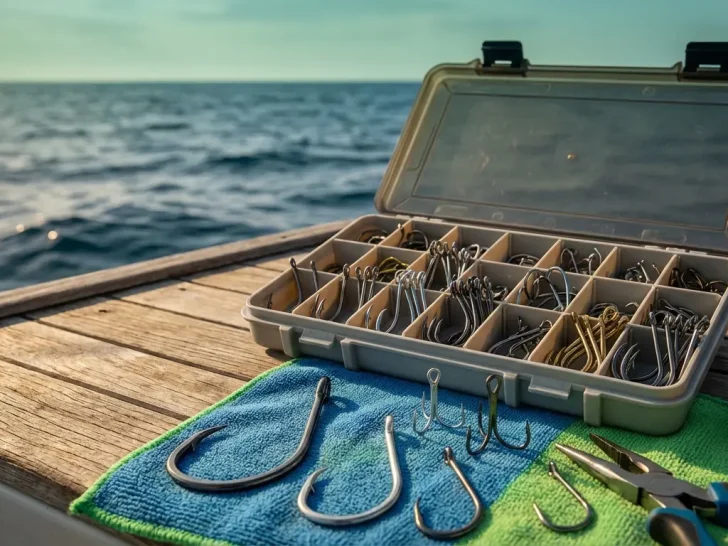
Saltwater fishing places immense physical stress on every single piece of gear you bring on the boat. A weak piece of metal will quickly bend or break under the crushing jaw pressure of a mature tarpon. Selecting the best hooks for saltwater fishing directly impacts your landing ratio and your overall success on the water.
You need durable saltwater fishing hooks that withstand highly corrosive environments while maintaining a razor-sharp point over multiple fishing trips. Tackle manufacturers produce hundreds of different patterns, sizes, and protective materials specifically designed for serious ocean anglers. Choosing the right saltwater hooks requires a solid understanding of fish anatomy, specific bait types, and strict local regulations.
Using the wrong bait holder will result in missed strikes, damaged baits, and lost fish at the side of the boat during saltwater angling. This comprehensive guide breaks down the best hooks for saltwater fishing available for your next coastal fishing trip. You will learn exactly how to match your fishing gear to the specific conditions you face on the water.
What Makes Saltwater Fishing Hooks Unique
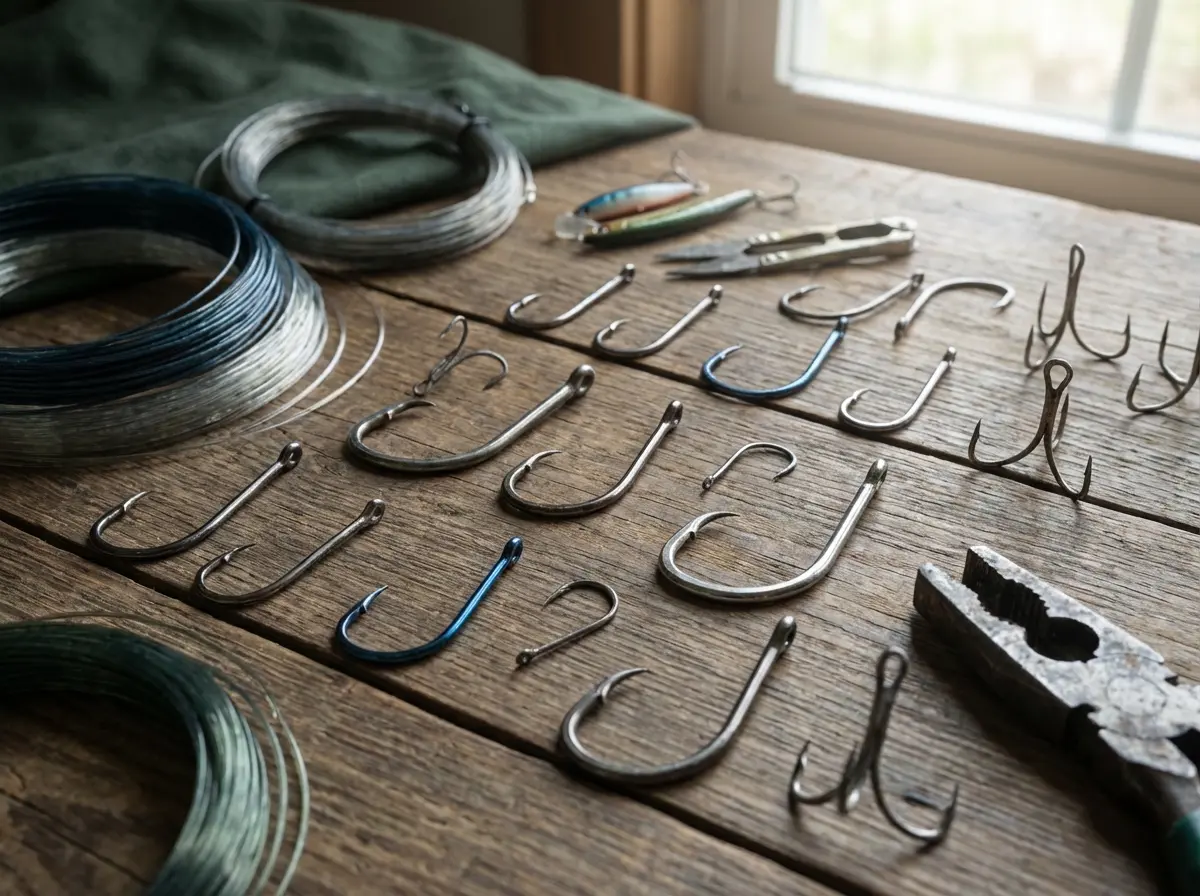
Freshwater models rust rapidly and bend easily when exposed to harsh marine environments and powerful ocean tides. Ocean species generally possess much harder mouths and fight with significantly more raw power than their freshwater cousins. Therefore, manufacturers build saltwater-specific models using robust materials and highly specialized forging techniques.
Corrosion Resistance in Saltwater Fishing Hooks
High-carbon steel provides excellent overall strength but oxidizes almost immediately in salty coastal environments, requiring corrosion-resistant coatings. To combat rapid oxidation, companies coat these carbon steel cores with thick protective layers of tin or black nickel. These chemical coatings add valuable lifespan to your fishing gear, though they eventually wear off after repeated use.
Stainless steel offers superior rust resistance without the need for any exterior chemical plating. Many offshore fishing anglers prefer stainless options because they remain bright and structurally sound after weeks in a tackle box. However, stainless steel often proves more brittle and can snap cleanly under sudden, violent strikes from heavy fish.
Selecting Wire Gauge and Strength for Saltwater Angling
Wire thickness determines how much physical force a piece of metal can handle before bending out of shape. Standard wire works exceptionally well for targeting speckled trout or flounder in shallow coastal estuaries and bays where terminal tackle stealth is paramount. The thinner metal easily penetrates soft tissue and keeps fragile live baits swimming naturally in the current.
Heavy-duty wire becomes necessary when targeting powerful pelagic species like yellowfin tuna or wahoo during offshore fishing. These thicker models resist straightening even when you apply maximum drag pressure during a prolonged, strenuous fight. A thicker wire does require significantly more hook-setting power from the angler to penetrate a hard, bony jaw.
- Saltwater models require specialized coatings or stainless steel to prevent rapid degradation in marine environments.
- High-carbon steel provides maximum strength but relies heavily on protective tin or nickel plating.
- Thicker wire gauges prevent straightening but demand significantly harder hook sets to penetrate bone.
Top Hook Styles for Effective Saltwater Angling
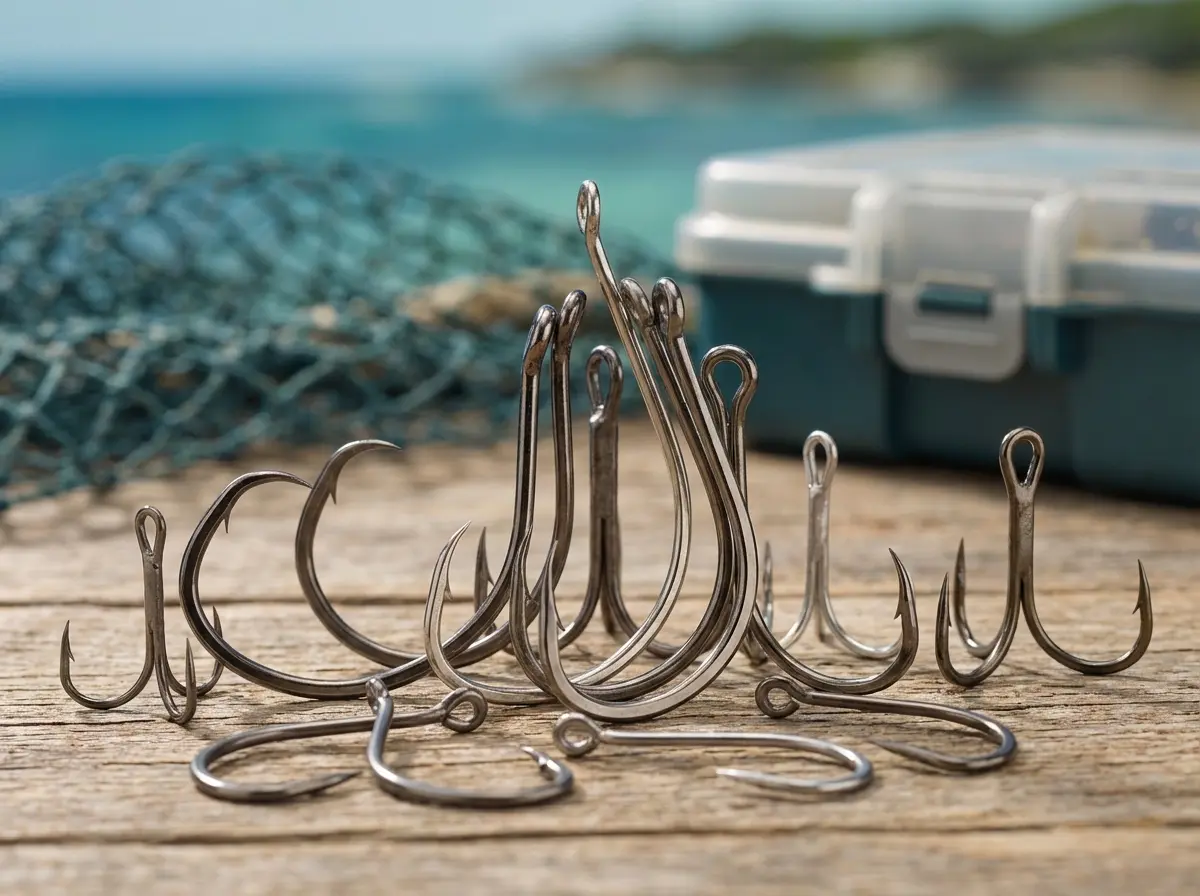
Different fishing techniques require distinct metal shapes to maximize your hook-up ratio on the water. The profile of the hardware dictates how the point enters the fish and holds securely during the fight. Selecting the appropriate shape reduces the number of fish you lose near the boat.
Circle Hooks for Conservation-Minded Catch and Release
Circle hooks feature a point that bends backward, pointing directly at the main shank of the metal. This specific design allows the fish to swallow the bait and swim away before the fishing line pulls tight. As the line tension increases, the metal slides out of the stomach and catches securely in the corner of the mouth.
Many coastal states now strictly mandate these circle hook models for specific reef fish to reduce release mortality rates. They eliminate the need for a forceful rod jerk, requiring the angler to simply reel in tight as the fish swims. This passive setting technique takes practice, but it reduces the number of deeply hooked fish during catch and release.
Traditional J Hooks for High-Speed Trolling and Casting
Traditional J hooks remain popular for active fishing techniques where the angler sets the hook immediately. The straight point easily pierces the jaw when you jerk the rod tip aggressively backward upon feeling a strike. These models excel when rigging artificial plastics or trolling large ballyhoo behind an offshore sportfishing boat.
You must maintain constant contact with your bait when utilizing these traditional straight-shank models. Fish can easily swallow them deep into their vital organs if you leave the rod unattended in a holder. They remain the standard choice for most artificial lure applications where the strike is sudden and aggressive.
Versatile Treble Hooks for Multi-Point Lure Presentations
Treble hooks consist of three distinct points fused around a single central eye for maximum exposure. You will find them primarily attached to hard plastic crankbaits, topwater walkers, and heavy metal casting spoons. The multiple sharp points increase the chances of snagging a striking fish that aggressively slaps at a fast-moving lure.
Many conservation-minded anglers routinely replace these factory trebles with single inline models to minimize unnecessary tissue damage. Single inline replacements offer a much safer catch and release process for both the fish and the angler handling the catch. They also collect significantly less floating seagrass when you cast over shallow coastal flats.
Always match your hardware size to the physical dimensions of your bait rather than the size of your target fish. A massive hook will kill a small pilchard instantly, destroying your presentation and scaring away wary predators.
Matching the Best Hooks for Saltwater Fishing to Your Bait
Your bait presentation looks highly unnatural if you pair it with the wrong size or style of hardware. Predatory fish possess excellent vision and will refuse offerings that appear stiff or weighed down by heavy metal. You must perfectly balance the necessary strength of the gear with the natural movement of the forage.
Live Bait Presentation and Hook Selection
Live baitfish need to swim freely and erratically to attract nearby predators effectively in clear water. A heavy piece of metal restricts a delicate pilchard or mullet, causing it to tire and die very quickly. Short-shank live bait styles allow for nose-hooking or dorsal-hooking with minimal interference to the swimming action.
The wide gap provides enough physical clearance to stick the predator even with the baitfish occupying the bend. You should always select the thinnest wire gauge possible that will still handle the expected size of your target catch. This careful balance keeps your offering lively while providing enough backbone to turn a running fish.
Cut Bait and Chunking Hook Applications
Dead bait and cut chunks do not require natural swimming action to draw aggressive strikes from scavengers. You can confidently utilize larger, heavier models because the oily scent trail does the primary attracting in the water. Long-shank styles work exceptionally well with strip baits because they provide a straight, rigid spine for the meat.
This extended shank prevents the chunk from spinning wildly in the current and twisting your main fishing line, improving your hook-up ratio. The longer metal profile also provides some vital protection against the sharp teeth of mackerel or small sharks. You can easily remove a long-shank model because the eyelet typically remains visible outside the mouth of the fish.
How to Choose the Right Hook Size
Evaluate the Target Bait
Measure the width and weight of your live or dead bait before selecting a hook size. The metal gap should easily clear the bait profile without overwhelming it.
Assess the Target Species
Consider the mouth structure and jaw strength of the saltwater species you plan to catch. Hard bony mouths require different point angles than soft-tissued species.
Match the Wire Gauge
Select standard wire for light tackle applications or heavy wire for heavy braided fishing line setups. This prevents straightening under heavy drag pressure during the fight.
Regional Saltwater Hook Strategies for US Coastal Waters
Anglers face vastly different challenges depending on their specific geographic location along the United States coastline. Tactics that produce massive catches in the Gulf of Mexico might fail in the cold waters of the Northeast. Adapting your terminal tackle to local environmental conditions improves your strike rate dramatically on every trip.
Gulf Coast Redfish and Trout
Florida and Texas anglers spend countless hours pursuing red drum and spotted seatrout on shallow coastal grass flats. Light wire weedless models allow fishermen to pull soft plastics through heavy vegetation without constantly snagging the bottom. When using live shrimp under a popping cork, a size 1/0 or 2/0 Kahle style proves incredibly effective for these saltwater species.
Trout possess very fragile mouths, so the wide gap helps distribute the pressure and prevents tearing during the fight. Anglers must check their points frequently, as oyster bars will quickly dull even the highest quality steel. The wide circular bend accommodates the natural shape of the shrimp perfectly while providing a high hook-up ratio.
Northeast Striped Bass Regulations
Fishermen from New Jersey to Maine target striped bass using heavy surfcasting gear and large natural chunk baits. State laws now strictly govern the specific type of gear allowed when targeting these migratory fish with natural forage. Anglers must use non-offset circle hooks to prevent deep hooking and protect the vulnerable breeding population.
A 7/0 to 9/0 size matches exceptionally well with adult menhaden or large clam bellies used in the churning surf. You must leave the point completely exposed when threading these large baits to achieve a proper corner-of-the-mouth connection. Hiding the point inside the bait will cause the metal to slip cleanly out of the fish without grabbing hold.
Pacific Coast Kelp Beds
California anglers face a rugged environment filled with thick kelp forests and jagged rocky outcroppings. Fishing for calico bass or yellowtail requires heavy drag settings to pull fish away from these dangerous physical obstructions. Anglers utilize heavy-duty live bait styles that will not bend when appl