
Stepping onto a frozen lake for the first time presents a thrilling challenge for outdoor enthusiasts seeking to master ice fishing basics. Mastering these foundational skills requires a combination of preparation, respect for the elements, and specific techniques. Many anglers hesitate to transition from open water to hard water fishing because they lack clear guidance on essential winter fishing tips.
This comprehensive guide provides the foundational knowledge necessary to start catching fish through the ice safely and effectively. You will learn how to select the proper ice fishing gear, locate active fish, and apply proven jigging methods. Grasping these fundamentals transforms a cold winter day into a highly productive fishing experience.
Safety must always dictate your actions on a frozen body of water. The Minnesota Department of Natural Resources clearly states that ice is never entirely safe. Anglers must evaluate the conditions constantly before walking away from the shoreline to ensure total ice fishing safety.
Ice Thickness Guidelines for Safe Hard Water Fishing
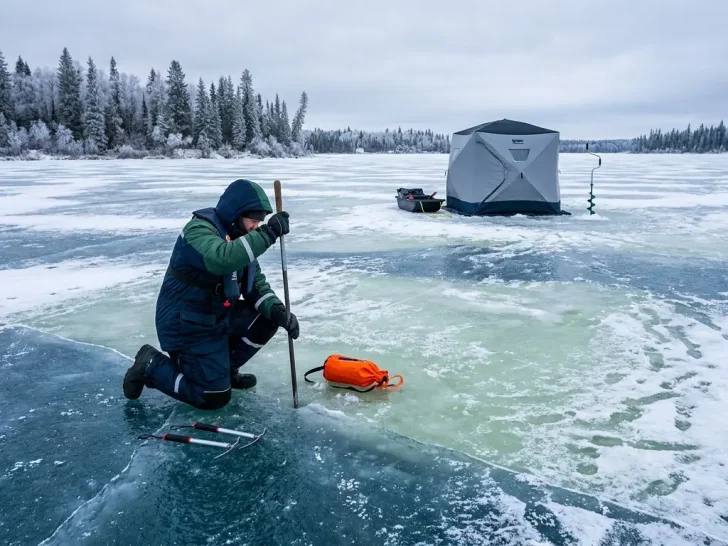
How do you know if the ice can support your weight safely? Clear, solid ice provides the best support for human weight and heavy equipment. You need at least four inches of ice thickness to support a single person walking, while snowmobiles require five to seven inches.
White ice, which forms from melted snow freezing on top, holds significantly less weight than clear ice. You must double the thickness requirements if the ice appears cloudy or white. Carrying a heavy metal spud bar allows you to test the ice thickness with every single step you take.
Essential Ice Fishing Safety Gear and Equipment
Falling through the ice presents an immediate, life-threatening emergency for any angler practicing ice fishing safety. Wearing a buoyant flotation suit provides critical extra minutes to escape the freezing water. You must also wear ice picks around your neck for immediate access if you accidentally break through the surface.
These simple handles with metal spikes allow you to grip the slick ice and pull yourself out. A throwing rope is another vital tool to keep readily available for rescuing others in distress. Preparing for the worst scenarios allows you to focus entirely on catching fish with peace of mind.
- Always verify you have at least four inches of clear, solid ice before walking on a frozen lake.
- White or cloudy ice is only half as strong as clear ice, requiring double the thickness for safety.
- Never step onto the ice without wearing a flotation suit and carrying accessible ice picks.
Essential Ice Fishing Gear and Tackle for Your First Trip
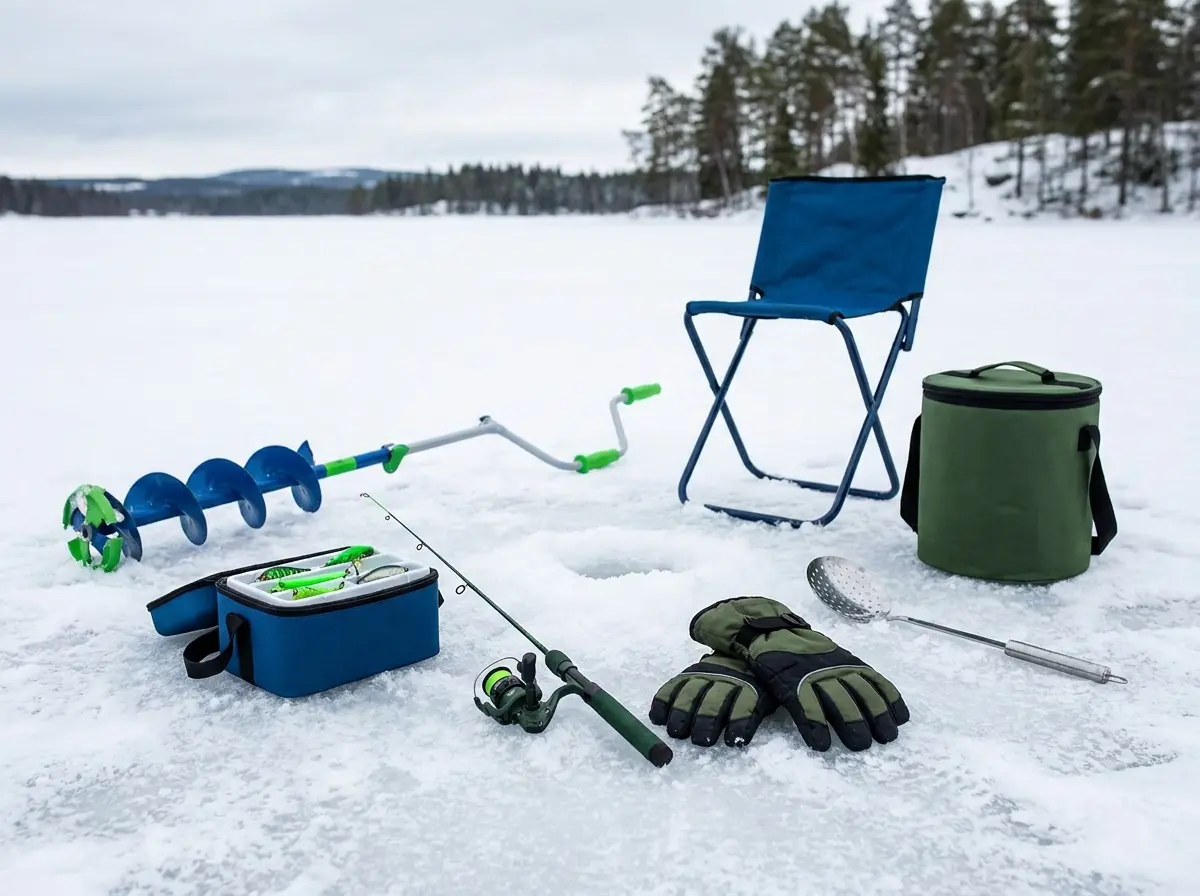
Your equipment dictates your comfort and success during a winter fishing expedition. Choosing specialized gear helps you stay warm and present your bait effectively to lethargic fish resting below the surface. Successful ice fishing for beginners starts with the right tools to make the process much more efficient and enjoyable.
Winter Clothing and Portable Ice Shelters for Warmth
Staying warm begins with a high-quality moisture-wicking base layer worn directly against the skin. Cotton absorbs sweat and holds it against your body, making you dangerously cold very quickly. You should rely on merino wool or synthetic materials to pull moisture away from your core.
A portable ice shelter, often called a flip-over or hub-style tent, blocks the biting winter wind. Portable propane heaters inside these shelters make long days on the ice remarkably comfortable. Always maintain proper ventilation inside any heated shelter to prevent deadly carbon monoxide buildup.
Ice Augers and Specialized Ice Fishing Tackle
An ice auger serves as your primary tool for accessing the water below the frozen surface. Manual hand augers work well for thin early-season ice, but power augers dominate mid-winter fishing. Modern lithium-ion electric augers cut through thick ice quickly without the frustrating mess of gasoline.
Ice fishing rods run much shorter than standard open-water rods, typically measuring between twenty-four and thirty-six inches. This short length allows you to sit directly over the hole and detect incredibly subtle bites. Pair these short rods with small, specialized reels spooled with cold-weather fishing line that resists freezing.
Keep your live bait containers inside your heated shelter or an insulated cooler bag. Freezing temperatures will quickly kill minnows and wax worms, making them far less effective at attracting fish.
How to Find the Right Ice Fishing Location and Hotspots
Why do some areas of the lake hold massive schools of fish while others remain barren? Fish do not randomly wander around the lake during the bitter winter months. They congregate in specific areas that offer structural advantages and adequate oxygen levels to sustain life.
Reading Lake Maps for Hard Water Fishing Success
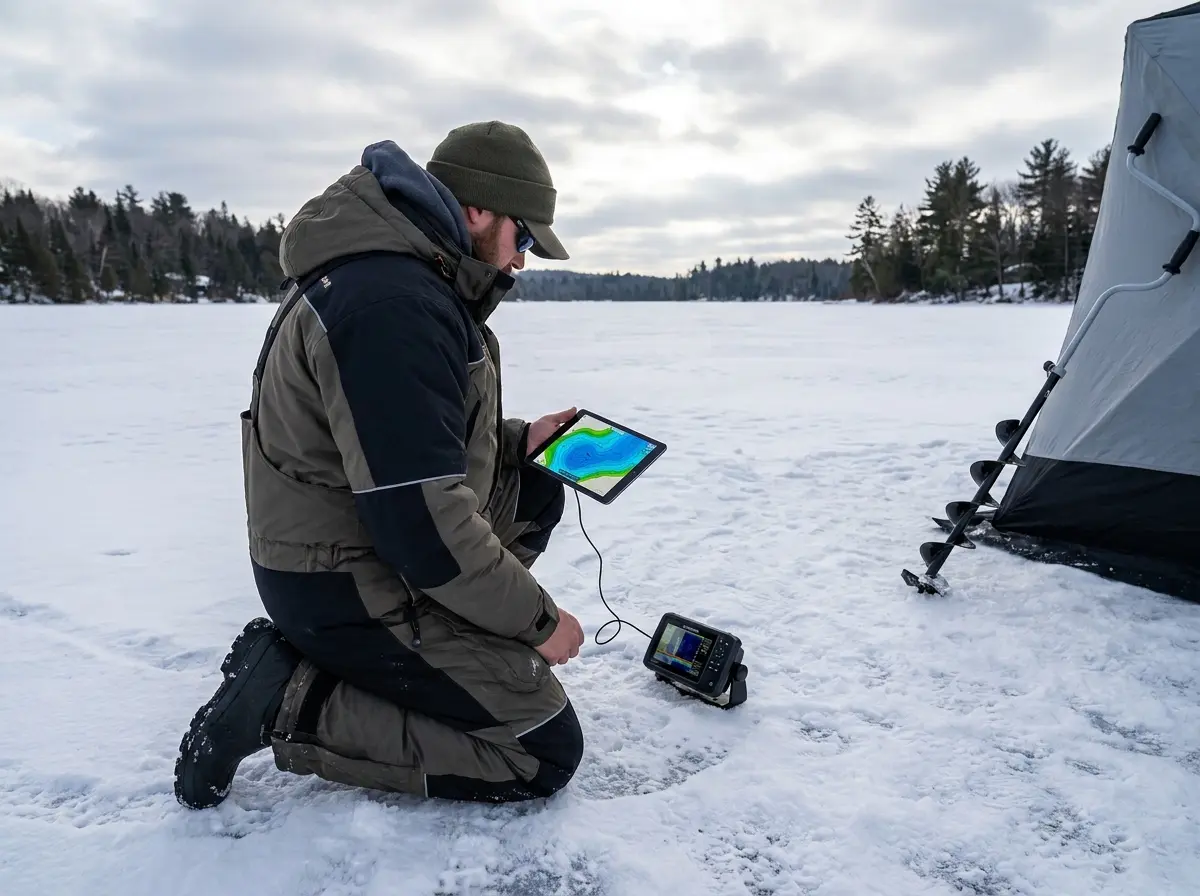
Topographical lake maps provide the ultimate roadmap for your winter fishing strategy. Look for steep drop-offs, underwater points, and sunken islands where fish naturally gather to feed. The US Fish and Wildlife Service recommends targeting the edges of remaining weed beds early in the season.
Modern GPS applications on your smartphone make finding these hidden underwater structures incredibly easy. Utilizing a fish finder or sonar unit helps you confirm the presence of fish before you even drop a line. These ice fishing electronics provide real-time data on depth and fish movement, which is crucial for locating active schools.
Target Species Habitats and Winter Fish Behavior
Different species of fish prefer completely different environments during the long winter season. Panfish like bluegills and crappies often suspend in deep basin areas or hide in remaining green vegetation. Walleyes typically hunt along rocky reefs and transition zones where a hard bottom meets soft mud.
Understanding the preferred habitat of your target species dictates exactly where you set up your shelter. Northern pike aggressively patrol shallow weed lines looking for an easy ambush meal passing by. Researching local lake reports helps you identify which species are currently active in specific locations.
How to Drill Your First Ice Hole
Clear the Surface Snow
Remove all snow from your chosen spot to create a completely flat, stable surface for safe drilling.
Position and Dril
Hold the auger perfectly vertical and apply steady downward pressure as the sharp blades begin to cut.
Clear the Slush
Use a plastic ice skimmer to remove all floating ice chunks from the open hole before fishing.
Vertical Jigging Techniques and Ice Fishing Lures That Produce Bites
Presenting your bait effectively requires a completely different approach than casting in open water. Ice fishing basics rely entirely on vertical presentations dropped straight down the drilled hole. Mastering a few specific jigging cadences with effective ice fishing lures dramatically increases your catch rate on the ice.
Active Jigging for Predatory Hard Water Fish
Active jigging involves lifting and dropping your rod tip to impart erratic action to your artificial lure. This sudden movement mimics a wounded baitfish and draws predatory fish in from a considerable distance. You should experiment with the height and speed of your jigging strokes until you find what works for hard water fishing.
Watch your electronic sonar closely to see exactly how fish react to your presentation. If a fish approaches on your screen, you might need to slow down your aggressive movements. Sometimes a subtle quiver triggers a strike much better than an aggressive upward rip.
The Dead Stick Method for Lethargic Winter Fish
The dead stick method relies on a live minnow doing all the necessary work for you. You place the rod in a stationary holder and allow the live bait to swim naturally. This highly passive approach often works best for heavily pressured or completely lethargic fish.
Many anglers utilize a two-rod strategy where permitted by local state regulations. They aggressively jig one rod to attract fish into the area while keeping a dead stick nearby. Fish drawn by the aggressive jigging often choose the easy meal waiting patiently on the dead stick.
Avoid over-jigging your bait when fish appear on your sonar screen. Unnatural, rapid movements will easily spook cautious fish and push them away from your hole.
Managing Your Catch and Local Ice Fishing Regulations
Responsible angling requires strict adherence to local fishing regulations and proper fish handling techniques. The cold environment presents specific challenges for releasing fish safely back into the freezing water. You must understand the specific laws governing the body of water you intend to fish to ensure ice fishing safety and conservation.
Freezing temperatures can severely damage a fish’s fragile gills and eyes within seconds of leaving the water. Keep the fish in the hole as long as possible if you intend to release it safely. Anglers aiming to harvest fish should place them directly on the bare ice to freeze quickly.
Check your local regulations regarding the number of lines allowed and specific slot limits for harvest. Wildlife agencies constantly update these important rules to protect fragile winter fish populations from overharvesting. In-Fisherman experts emphasize that practicing selective harvest preserves the high quality of the fishery for future generations.
- Use topographical lake maps to locate underwater structures where fish naturally gather in winter.
- Combine aggressive jigging with a passive dead stick setup to maximize your chances of catching fish.