
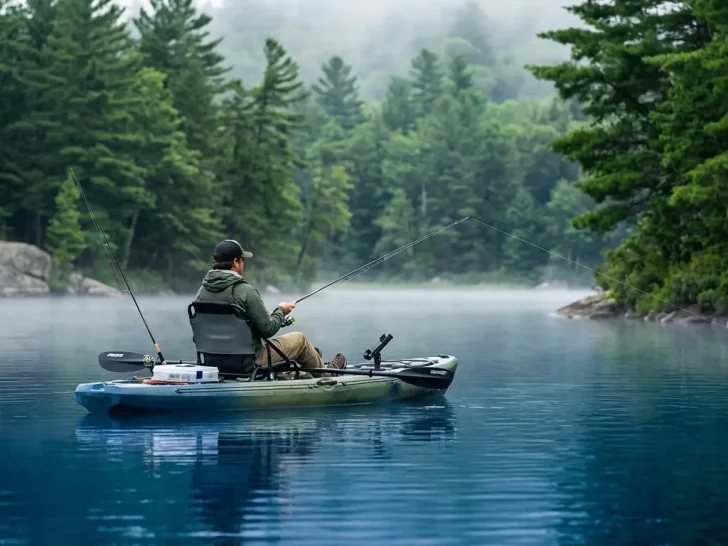
Embarking on your first journey with kayak fishing opens up incredible opportunities on the water without requiring a massive financial investment. Finding the best fishing kayaks for beginners requires balancing hull stability, seat comfort, and overall retail price to ensure a successful experience. Manufacturers recognize this growing demand by releasing excellent entry-level fishing kayaks that perform beautifully on local lakes and slow-moving rivers.
Traditional motorized bass boats often demand high monthly payments, expensive insurance policies, and significant ongoing maintenance requirements for new owners. An affordable fishing kayak offers an accessible entry point into water-based angling without sacrificing your access to prime fishing spots. You can easily launch a kayak from almost any shoreline, public beach, or primitive boat ramp found in local parks.
This incredible accessibility allows you to reach shallow coves and heavy timber where larger boats simply cannot operate effectively. Natural stealth plays a major role in your early fishing success because kayaks glide quietly across the water surface. You can cast right into the strike zone without a loud outboard motor spooking the bass or trout in the area.
Storage and transportation also present far fewer hurdles for new anglers buying their first vessel for weekend adventures. You do not need a dedicated boat trailer or a heavy-duty towing vehicle to transport your new equipment. Most high-quality beginner fishing kayaks fit easily in a pickup bed or securely strapped to a standard vehicle roof rack.
- Kayaks eliminate the high costs and maintenance associated with traditional motorized fishing boats.
- The stealthy nature of a kayak allows you to approach easily spooked fish without detection.
- Transportation requires only a basic roof rack or truck bed rather than a dedicated boat trailer.
Essential Features to Look For in a Stable Fishing Kayak
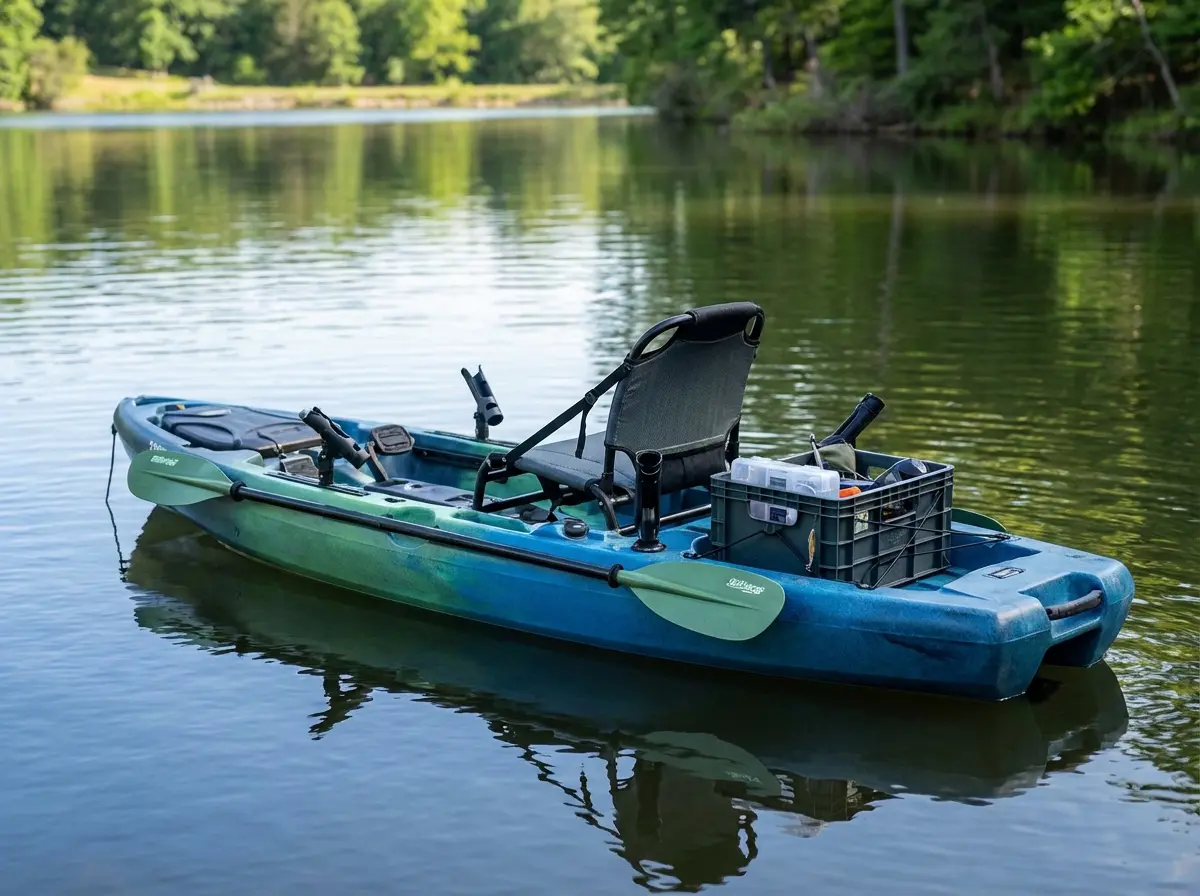
First-time kayak buyers often get distracted by flashy rod holders, bright colors, and excessive kayak fishing gear tracks that may not be necessary. You should instead prioritize the fundamental design elements that dictate how the kayak actually handles on the water surface. A poorly designed kayak hull will quickly frustrate you and potentially ruin your early fishing experiences entirely.
Evaluating Hull Stability for Beginner Fishing Kayaks
Primary stability remains the absolute highest priority for anyone new to the sport of kayak fishing and paddling. You need a solid platform that feels secure while you cast, reel, and land a thrashing fish. Pontoon-style hulls and modified V-hulls generally offer the best hull stability for inexperienced paddlers.
Initial stability refers to how steady the kayak feels while resting flat on calm water during your fishing trip. A highly stable kayak prevents accidental flips and builds your confidence during those critical first trips on the lake. You can focus entirely on your fishing technique rather than worrying about keeping the boat upright at all times.
Understanding Weight Capacity Limits for Entry-Level Kayaks
Every entry-level fishing kayak features a maximum weight capacity listed directly by the manufacturer on the specification sheet. You must calculate your total body weight plus the weight of all your gear, tackle, and essential accessories. A kayak performs poorly and sits dangerously low if loaded past seventy percent of its maximum rated capacity.
If you weigh two hundred pounds and carry fifty pounds of gear, you need a high capacity rating. You should look for a kayak rated for at least three hundred and fifty pounds to remain safe. Exceeding this performance threshold compromises your stability and makes the kayak incredibly difficult to paddle over long distances.
Always factor in the weight of water that might splash into the hull during your trip. Leaving a thirty percent buffer on your weight capacity keeps you riding high and dry.
Prioritizing Seat Comfort in Affordable Fishing Kayaks
Many entry-level models cut manufacturing costs by including thin, unsupportive molded plastic seats that cause fatigue. You will likely spend four to six hours sitting in the same position while fishing for bass. Framed, lawn-chair style seats elevate your posture and prevent severe lower back pain during long trips on the water.
Upgrading to a kayak with a framed, breathable mesh seat is always worth the extra financial investment for beginners. A comfortable seat keeps you on the water longer, which directly translates to catching more fish over time. You can easily remove most framed seats to use as camp chairs during your lunch breaks ashore.
Choosing Between Sit-On-Top vs. Sit-In Kayaks for Beginner Kayak Angling
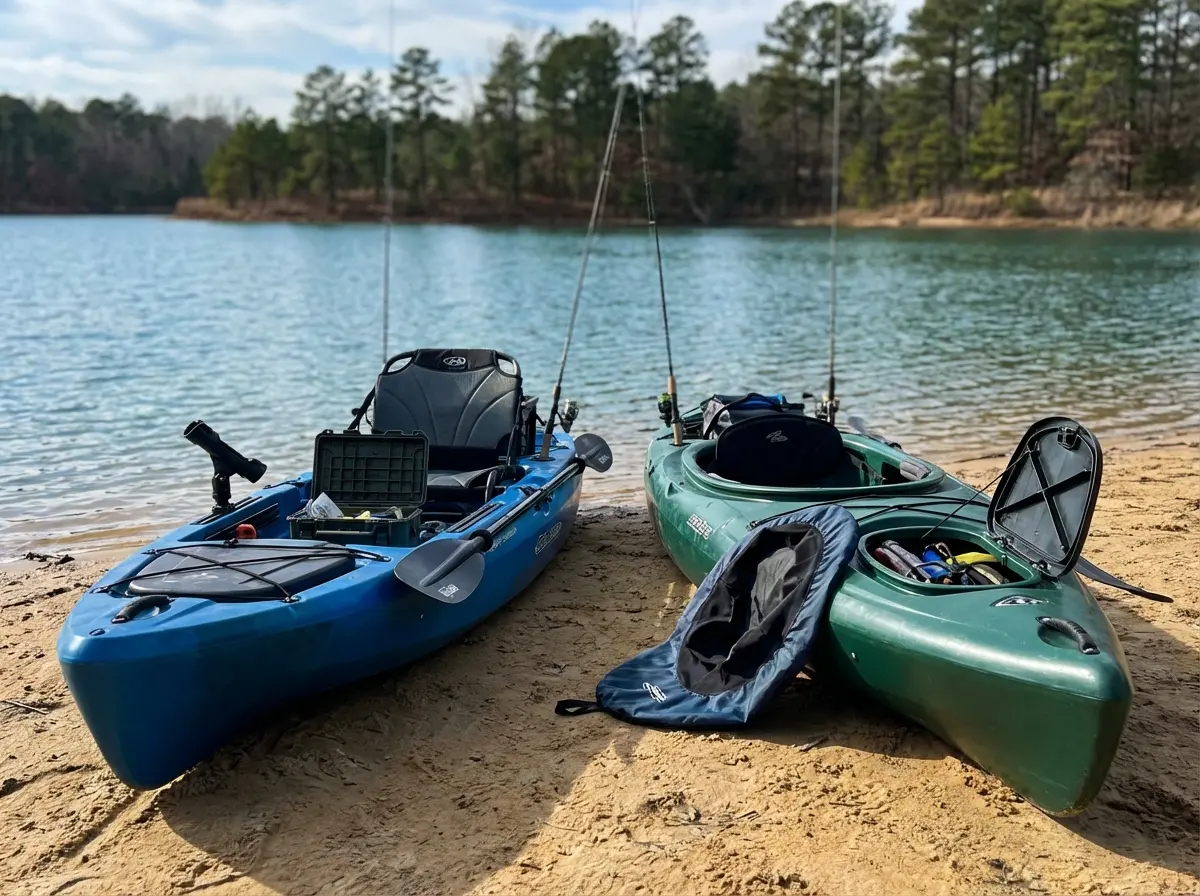
The current market features two primary kayak designs, but only one truly benefits those seeking the best fishing kayaks for beginners. Sit-in kayaks feature an enclosed cockpit that surrounds your lower body and legs during the paddling process. These models work extremely well for recreational paddling in cold water, but they severely restrict your movement while fishing.
If a sit-in kayak flips, the hull fills with water and becomes incredibly difficult to recover without assistance. Sit-on-top fishing kayaks represent the modern gold standard for anyone interested in serious kayak angling and stability. The open deck design allows you to easily swing your legs over the side or stand up quickly.
Scupper holes built directly into the floor automatically drain any water that splashes onto the deck during your trip. This self-bailing feature makes sit-on-top kayaks inherently safer and much more user-friendly for beginners in the sport. You also gain significantly more rigging options with the flat surfaces provided by a sit-on-top configuration.
Top Recommendations for Your First Beginner Fishing Kayak
Selecting a specific model requires you to evaluate your personal budget and your primary fishing environments to find the most affordable fishing kayaks. The best fishing kayaks for beginners typically fall into the ten to twelve-foot size range for optimal handling. This specific length provides an ideal balance between straight-line tracking and maneuverability in tight, restricted spaces.
Here are three proven kayak models that consistently deliver excellent performance for complete beginners. Each of these boats provides a fantastic starting point without requiring a professional-level budget for your hobby. You can easily find these models at local sporting goods stores or through specialized online retailers.
Pelican Catch 100: A Stable Fishing Kayak Option
The Pelican Catch 100 stands out as an incredibly stable platform for first-time buyers looking for reliability. At exactly ten feet long and weighing only fifty-four pounds, you can easily load it by yourself. The specialized tunnel hull design provides enough stability for most average-sized anglers to comfortably stand and cast.
It features a highly comfortable framed seat and a retail price that remains extremely competitive for new buyers. This lightweight construction utilizes a specialized thermoforming process that creates a durable yet easily manageable vessel. You can read more about various hull materials at the Paddling.com gear guide.
Perception Pescador 10.0: A Versatile Entry-Level Kayak
Perception has built a strong industry reputation for producing durable, high-quality rotomolded plastic kayaks for all skill levels. The Pescador 10.0 offers a sleeker hull design that paddles much faster than wider, pontoon-style stable fishing kayaks. This increased speed helps significantly if you plan to cover longer distances on large lakes or coastal bays.
The molded-in gear tracks and built-in rod holders provide excellent value right out of the factory for beginners. You do not need to drill any holes or install aftermarket accessories to start fishing immediately. This kayak tracks exceptionally straight in windy conditions, which reduces paddler fatigue during long days on the water.
Vibe Yellowfin 100: Feature-Rich Best Fishing Kayak for Beginners
The Vibe Yellowfin 100 packs numerous premium features into a compact, highly beginner-friendly package for new anglers. It includes an aluminum framed seat, multiple gear tracks, and four convenient flush-mount rod holders for your gear. Vibe also includes a high-quality paddle with the purchase, which saves you an additional upfront expense.
This versatile kayak performs exceptionally well on slow-moving rivers, sheltered lakes, and calm coastal inlets. The compact size makes it incredibly responsive when dodging rocks or moving through thick aquatic vegetation. Check out the American Boating Association for excellent guidelines regarding safe river travel.
Avoid ultra-cheap recreational kayaks sold at major grocery or discount stores. These models lack the primary stability and structural integrity required for safe kayak fishing.
How to Set Up Your First Beginner Fishing Kayak Rig
Buying the kayak represents only the very first phase of your new kayak angling hobby. You must properly configure your vessel before you ever launch it into the water for the first time. A disorganized kayak leads to tangled fishing lines, lost gear, and immense frustration on the water.
Following a structured fishing kayak setup process makes your first fishing trip significantly more enjoyable and productive. You should practice reaching for your essential gear while sitting in the kayak on dry land. This simple practice routine builds muscle memory and prevents awkward movements while floating on the water.
How to Configure Your New Kayak
Install the Seat and Foot Braces
Make sure your seat locks securely into its track and adjust the foot braces to match your leg length. Proper foot placement gives you leverage for efficient, powerful paddling strokes.
Position Your Rod Holders
Mount your primary rod holder in front of you within easy reach of your dominant hand. Keep your backup rods secured behind the seat so they do not interfere with your casting motion.
Organize Your Tackle Storage
Place your most frequently used lures in a small tackle tray directly under your seat. Store heavier gear in the rear tank well and secure it tightly with bungee cords.
Essential Kayak Fishing Gear and Accessories to Add Later
New kayak anglers often feel tempted to buy every available piece of kayak fishing gear before their first launch. You should resist this urge and keep your initial setup as simple as possible for better maneuverability. Adding too much gear clutters your deck and makes the kayak much harder to paddle effectively.
After you complete a few successful trips, you will better understand what gear you actually need for your style. A high-quality fish finder represents the most popular upgrade for anglers wanting to locate underwater structures. These electronic devices help you spot drop-offs, submerged timber, and schools of baitfish with incredible accuracy.
An anchoring system also provides immense value when fishing in windy conditions or moving currents. A simple anchor trolley allows you to adjust your boat positioning without constantly picking up your paddle. You can slowly add these upgrades over time as your skills and budget allow for more advanced equipment.
Many modern fishing kayaks come pre-wired for fish finders. Check your specific model to see if it includes a dedicated transducer scupper hole before purchasing electronics.
Essential Safety Gear for New Kayak Anglers and Beginners
Water safety must remain your absolute highest priority regardless of your physical swimming ability when operating beginner fishing kayaks. Many beginners make the critical mistake of purchasing a cheap, restrictive recreational life jacket. You need a Type III Coast Guard-approved Personal Flotation Device specifically designed for kayak paddling.
These specialized life jackets feature high foam backs that sit comfortably above your kayak seat during long trips. A sound-producing device is legally required on most public waterways throughout the United States for all vessels. Fasten a loud, pea-less safety whistle directly to the shoulder strap of your life jacket for easy access.
If a fast-moving powerboat fails to see you, a sharp blast from the whistle can prevent a collision. The U.S. Coast Guard boating safety division provides detailed checklists outlining all mandatory vessel equipment. Visibility on the water helps prevent severe accidents in low-light conditions at dawn or dusk.
You should mount a bright, 360-degree white light on a tall pole directly behind your seat for safety. Wearing bright, high-visibility clothing also helps motorized vessels spot your low-profile kayak from a great distance. Read our complete safety checklist for kayak anglers to verify you have everything required for your first launch.
- Always wear a Type III Coast Guard-approved PFD designed specifically for comfortable paddling.
- Attach a pea-less safety whistle to your life jacket to signal larger boats in emergencies.
- Install a 360-degree white light if you plan to fish during low-light conditions at dawn or dusk.
Conclusion: Starting Your Journey with the Best Fishing Kayaks for Beginners
Embarking on your first angling adventure is significantly easier when you choose a vessel designed for stability and ease of use. By prioritizing features like hull design and seat comfort, you ensure that your early experiences on the water are both safe and productive. Whether you choose a Pelican, Perception, or Vibe, the right entry-level fishing kayak will serve as a reliable platform for years of outdoor enjoyment.
