
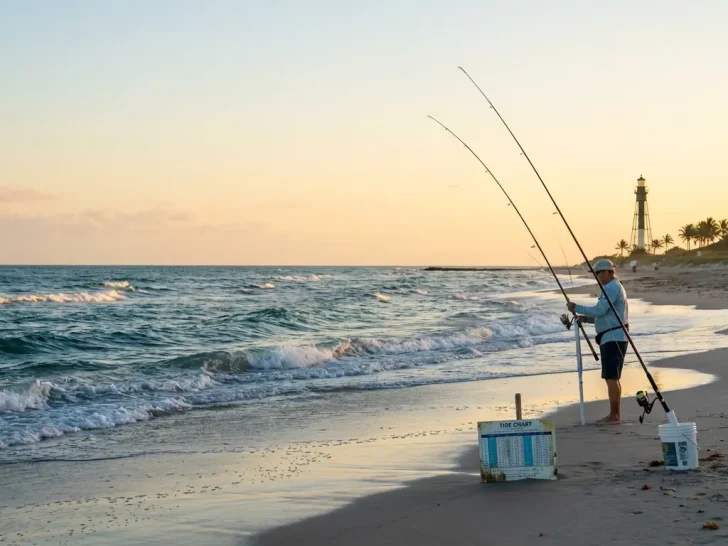
Florida offers 1,350 miles of coastline, creating an incredible environment for anglers casting from the sand. Surf fishing in Florida presents a dynamic challenge that tests your ability to read water patterns and adapt to coastal conditions. You can catch everything from acrobatic spinner sharks to prized pompano right from the beach while enjoying saltwater surf fishing.
Success on the sand requires preparation and a solid understanding of the marine environment to ensure a productive outing. You need to identify tidal movements, seasonal migration patterns, and the specific feeding habits of coastal species for Florida beach fishing. This guide breaks down the exact strategies, gear, and locations you need for a productive day on the water.
Dawn and dusk create low-light conditions that encourage predatory fish to feed aggressively in shallow water. Plan your trips around these specific windows.
Timing dictates everything during your pursuit of saltwater surf fishing species cruising the coastal troughs. Fish rely on tidal currents to flush baitfish and crustaceans out of hiding spots along the sandbars. An incoming tide generally provides the most productive window for Florida beach fishing, as rising water pushes gamefish closer to the shoreline.
Seasonal shifts drastically alter the species you will encounter on different coasts of the state. Winter months bring massive schools of pompano and whiting to the Atlantic beaches from Jacksonville down to Melbourne. Summer water temperatures draw snook and tarpon directly into the first trough right at your feet.
Many experienced anglers plan their trips so that a rising tide coincides with the early morning hours. This specific combination often triggers a feeding frenzy that leads to full coolers before the sun gets too high. You should always check local tide charts from reliable sources before packing your vehicle for a beach trip.
- Fish are most active during a rising tide when water pushes bait closer to the beach.
- Target pompano in the winter on the East Coast and snook during the summer months.
- Combine an incoming tide with early morning hours for the highest catch rates.
Essential Florida Surf Fishing Gear and Tackle Setup for the Beach
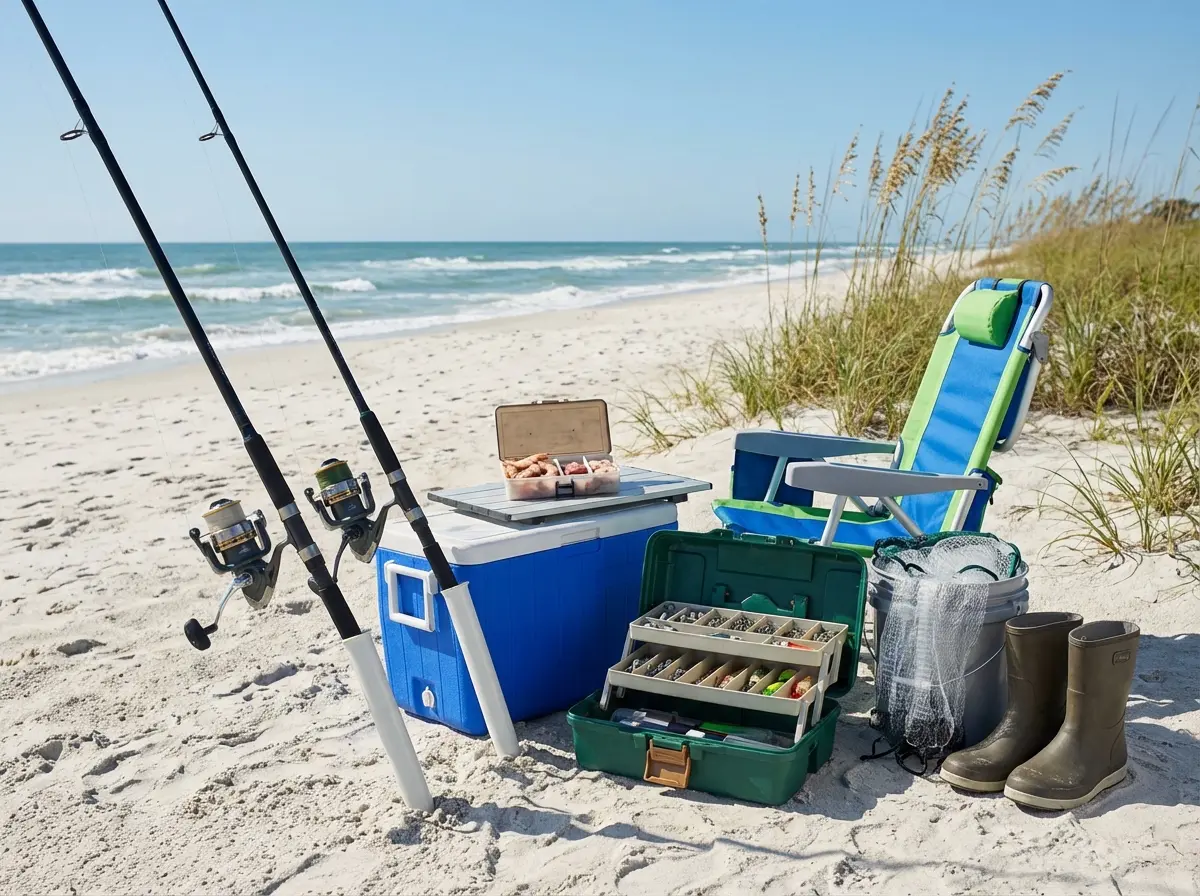
Proper tackle selection prevents frustration and lost fish during battles with strong ocean currents and abrasive sand. You need a surf rod long enough to clear the breaking waves and keep your line above the floating seaweed. Most experienced shore anglers prefer spinning rods ranging from 10 to 12 feet in length for maximum casting distance.
Pair your rod with a durable spinning reel in the 4000 to 6000 size range. Spool the reel with a 20-pound braided line to cut through the wind and provide maximum bite sensitivity. Braided line offers a thinner diameter than monofilament, allowing you to pack more yardage onto the spool for long runs.
Terminal tackle demands specific attention because it takes heavy abuse from the harsh saltwater environment. Pyramid sinkers ranging from two to four ounces hold your bait firmly on the sandy bottom amidst sweeping currents. Fluorocarbon leader material remains practically invisible underwater and resists the abrasive teeth of small sharks and bluefish.
You also need a reliable PVC or aluminum sand spike to hold your rod while waiting for a bite. Drive the spike deeply into dry sand, well above the high tide line, to prevent losing your entire setup. A sturdy sand spike frees up your hands to tie rigs, cut bait, or scan the water for activity.
How to Build a Standard Surf Rig
Tie the Main Swivel
Attach a size 7 barrel swivel to your main line using a palomar knot for maximum strength.
Create the Dropper Loops
Tie two dropper loops about 18 inches apart on a three-foot section of 25-pound fluorocarbon leader.
Secure the Weights and Hooks
Add a pyramid sinker to the bottom snap and attach 2/0 circle hooks directly to your dropper loops.
Top Prime Locations for Surf Fishing in Florida Along the Coast
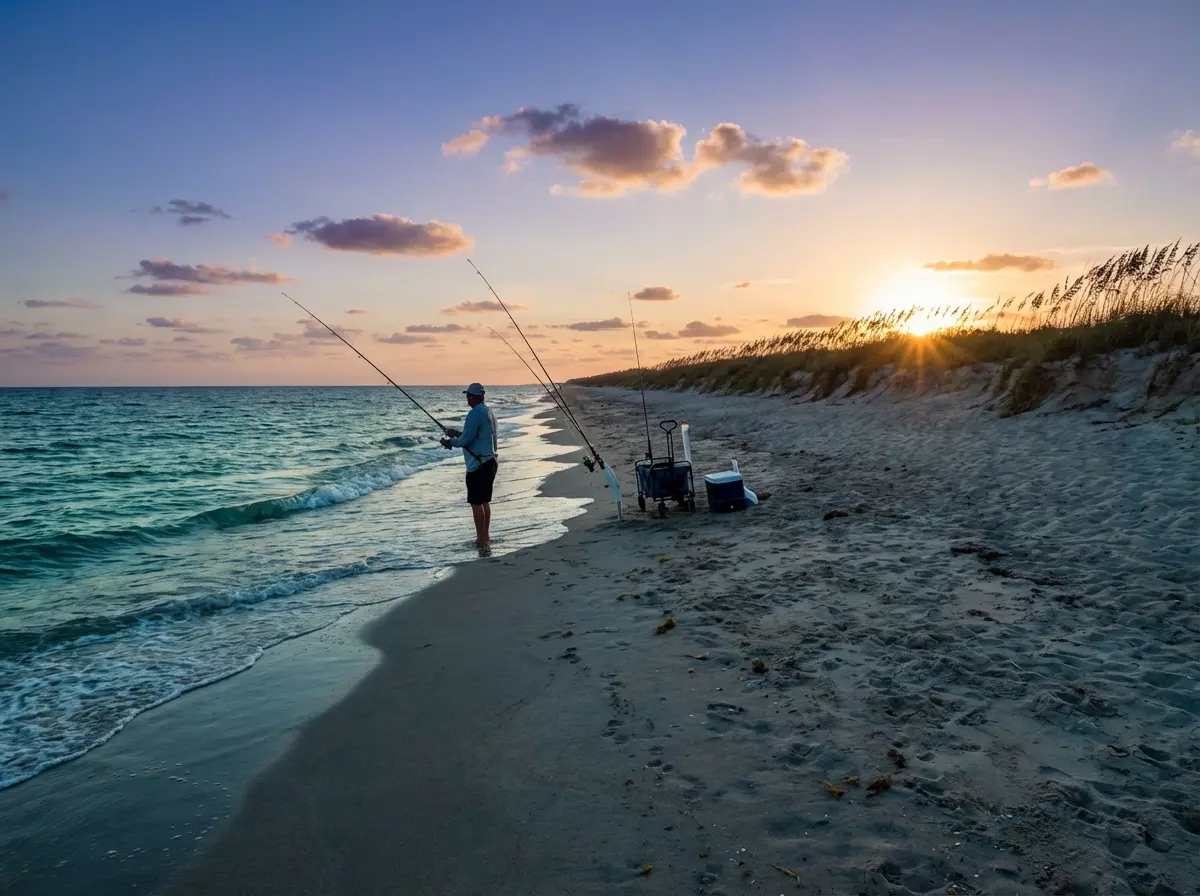
Florida features distinct coastal zones that each offer drastically different fishing experiences and target species. The East Coast features high-energy beaches with defined sandbars that attract aggressive pelagic fish throughout the year, making Atlantic coast fishing highly productive. Sebastian Inlet State Park and the surrounding beaches consistently rank among the top destinations for serious shore anglers.
The Gulf Coast provides a stark contrast with calmer waters, white sugar sand, and subtle bottom contours, perfect for Gulf coast surf fishing. Anglers fishing the beaches of Sanibel Island or St. Pete Beach often target redfish, speckled trout, and flounder. These calmer waters require a finesse approach, using lighter tackle and smaller baits to fool easily spooked fish.
The Florida Panhandle, stretching from Pensacola to Apalachicola, serves as a migration highway for massive schools of fish. During the spring and fall, you can intercept cobia, Spanish mackerel, and bull redfish cruising just off the beach. Keep your eyes on the water for diving birds, which frequently indicate predatory fish pushing bait to the surface. Explore our guide to Gulf Coast fishing spots
Expertly Reading the Surf Like a Pro for Florida Beach Fishing
Blindly casting into the ocean rarely produces consistent results for any shore-based angler seeking success in the waves. You must learn to read the water and identify the underwater structures where fish naturally congregate to feed. Sandbars, troughs, and cuts formulate the primary hunting grounds for almost every coastal predator.
Troughs are the deeper channels of water running parallel to the beach between the shoreline and the sandbar. Fish use these troughs as highways to cruise up and down the coast in search of trapped bait. Often, the most productive trough sits literally ten feet from the dry sand, requiring only a gentle lob cast.
Never wade past the first sandbar on a strong outgoing tide, as dangerous rip currents can easily pull you out to sea.
Cuts or runouts occur where water pushes back out to sea through a break in the sandbar. These narrow channels act like funnels, dragging helpless crabs and baitfish directly into the waiting mouths of larger predators. Casting your bait right on the edge of a runout creates a highly effective trap for ambush species.
You can spot these cuts by looking for areas where the waves stop breaking and the water looks churned. The surface often appears slightly muddy or sandy as the current drags bottom sediment out past the breakers. Positioning your baits on the edges of these muddy streaks yields excellent results for flounder and redfish.
- Read the water to locate troughs and sandbars instead of just casting as far as possible.
- Target the cuts in the sandbar where water rushes back out to the ocean.
- Look for muddy streaks and churned water to locate active feeding zones.
Effective Bait Selection for Saltwater Surf Fishing on Florida Beaches
Matching your bait to the natural forage of the specific beach dramatically increases your strike rate. Sand fleas, also known as mole crabs, represent the absolute gold standard for catching pompano and whiting. You can easily catch these small crustaceans right in the surf zone using a specialized metal rake. The Florida Fish and Wildlife Conservation Commission provides excellent resources on identifying and harvesting local crustaceans safely.
Fresh dead shrimp serves as an incredibly versatile bait that will catch virtually anything swimming along the coast. Always buy fresh shrimp from a local tackle shop rather than the frozen bags found in supermarkets. Thread the shrimp onto a circle hook, leaving the barb exposed to guarantee a solid hookset when a fish strikes.
Cut bait remains highly effective for targeting larger predators like redfish, bluefish, and small coastal sharks. Freshly caught mullet or ladyfish, cut into small chunks, releases a strong scent trail into the current. This scent draws fish from long distances, making it an excellent choice when the water is murky or rough.
Artificial lures also play a major role in surf fishing in Florida, particularly for aggressive pelagic species. Heavy metal casting spoons cut through strong onshore winds and mimic the flash of a fleeing baitfish perfectly. Work these lures quickly through the surf zone to trigger violent reaction strikes from fast-moving predators.
Understanding Florida Surf Fishing Regulations and Licensing Requirements
Staying compliant with state laws keeps your beach trip enjoyable and prevents costly citations from wildlife officers. The Florida Fish and Wildlife Conservation Commission heavily regulates shore fishing to sustain healthy fish populations across all coastal zones. You must possess a valid saltwater shoreline fishing license unless you fall under specific age or resident exemptions.
Size limits and bag limits vary drastically depending on the exact species you pull from the surf. For example, snook have strict slot limits and closed seasons that differ between the Atlantic and Gulf coasts. Always keep a current physical or digital copy of the state regulations in your tackle box for quick reference.
Shark fishing from the beach requires an entirely separate permitting process and educational course in Florida. The state implemented these extra steps to protect endangered shark species and promote safe catch-and-release practices. You must use non-offse