
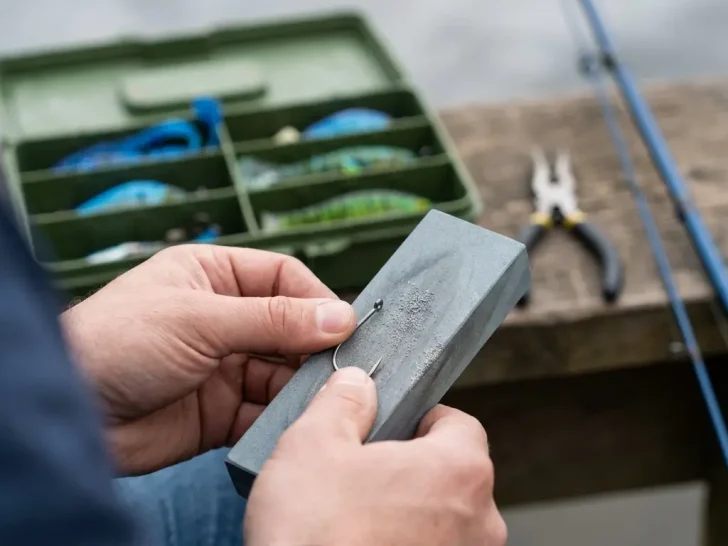
Have you ever lost a trophy catch right at the side of the boat because of a dull point? Many anglers spend hundreds of dollars on premium rods and reels, but completely ignore their terminal tackle maintenance. Learning how to sharpen fishing hooks gives you a significant mathematical advantage by ensuring maximum hook penetration on every strike.
Why Dull Hooks Cost You Fish
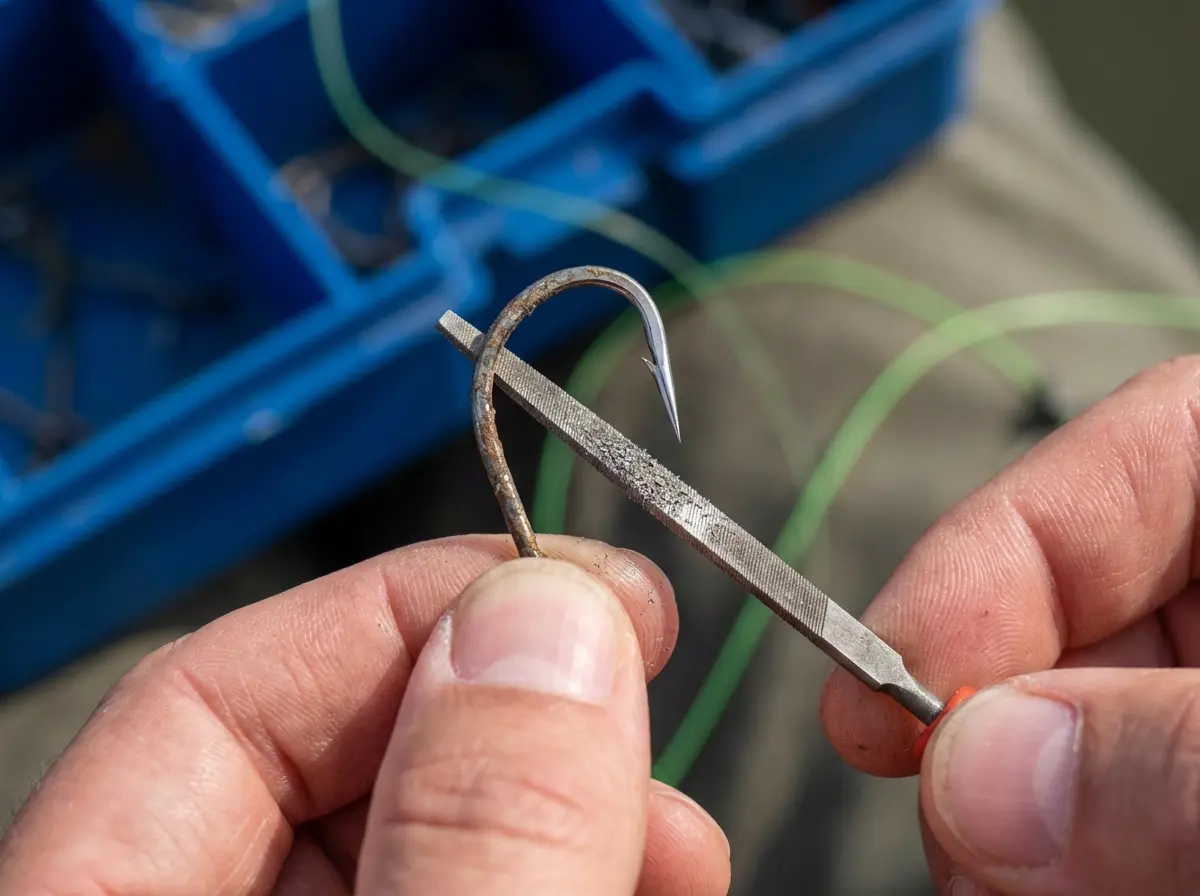
Most factory fishing hooks rarely arrive perfectly sharp straight out of their original packaging. Mass production facilities generally prioritize high volume output over creating a microscopic, razor-sharp hook point for serious anglers. Anglers must understand that a dull point requires substantially more physical force to penetrate solid bone and hard cartilage.
Consider the actual physics involved during a standard hookset while you are targeting aggressive species in the open water. Your fishing rod transfers kinetic energy through the stretched line directly to the point resting inside the fish’s mouth. If that piece of metal lacks a fine edge, the energy disperses harmlessly and the fish spits your bait.
Thick-jawed species like American largemouth bass or northern muskie demand maximum cutting power from your specialized terminal tackle. A properly filed point grabs the tissue instantly upon contact and slides deep into the tough, bony jawbone. This deep, secure hold prevents the metal from twisting or tearing out during a prolonged and stressful fight.
Essential Fishing Hook Sharpener Tools for the Job
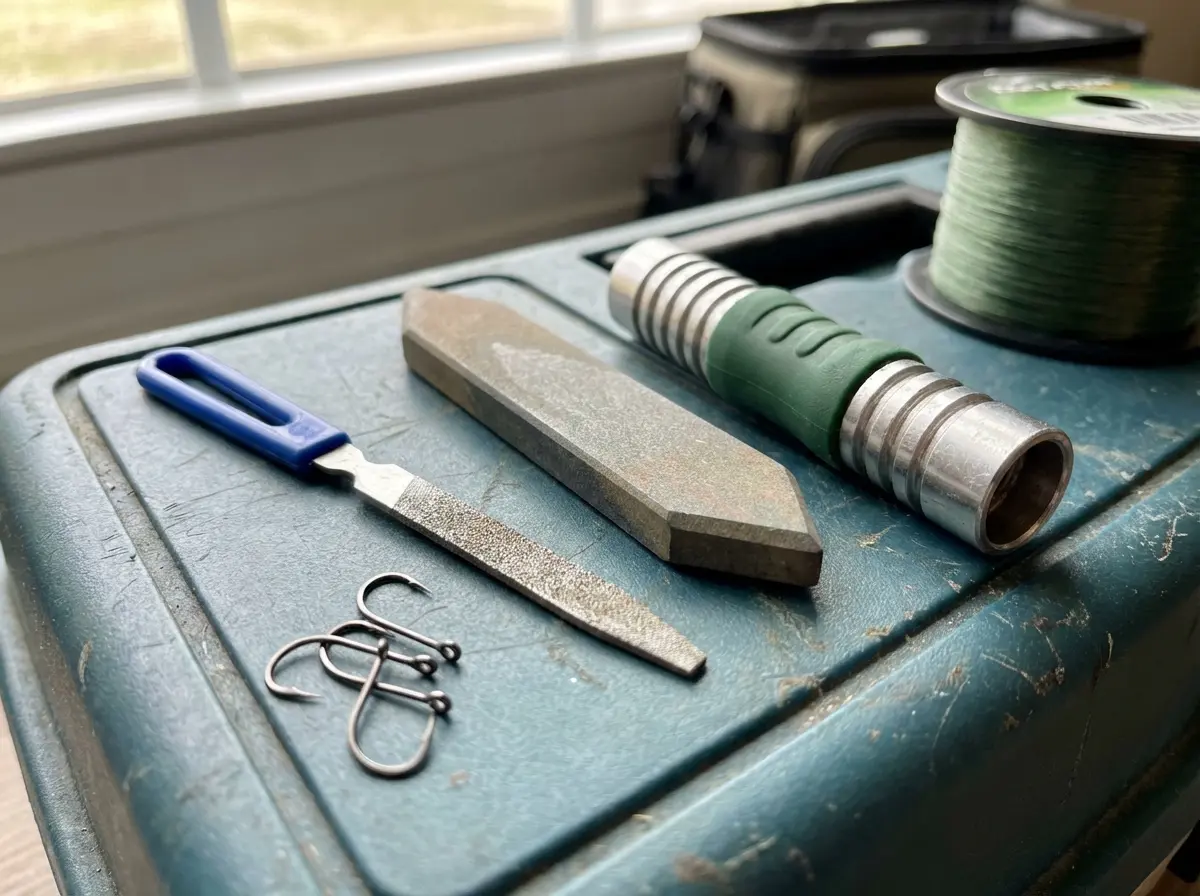
You need the right hook sharpening tool to effectively remove metal and create a reliable cutting edge for success. Standard hardware store tools often work just as well as expensive, specialized fishing gear found in high-end tackle shops. The primary objective involves finding a coarse enough surface to shape the metal quickly without removing too much material.
A small mill bastard file serves as the traditional favorite among professional tournament anglers seeking a perfect, consistent edge. These flat metal files feature single-cut teeth that shave away high-carbon steel with remarkable precision and consistent speed. You can find these affordable tools at any local hardware store for just a few dollars to start.
Diamond hones provide an excellent alternative for finishing the point and creating a smoother surface for better penetration. These specialized stones feature industrial diamond dust embedded directly into a flat or grooved base for maximum abrasive power. A grooved diamond hone helps guide the hook point and prevents your hand from slipping during the sharpening process.
Selecting the proper abrasiveness makes a significant difference in your final results at the workbench or on the boat. Coarse files remove material rapidly but often leave deep scratches across the delicate metal surface of your terminal tackle. Fine stones polish the edge beautifully but require significantly more time to shape a blunt or damaged tip properly.
- Factory hooks require additional sharpening with a quality tool to achieve maximum penetration power on every single hookset.
- A standard mill bastard file provides the best combination of metal removal and precision for most common fishing hooks.
- Dull points disperse hookset energy and directly cause lost fish during a fight by failing to penetrate the bone.
Mastering The Triangle Method for Sharpening Fishing Hooks
Many beginners make the mistake of filing their hooks into a perfect circular cone shape during their initial practice sessions. A cone might look visually impressive, but it lacks the structural integrity necessary to pierce hard, bony mouths effectively. Professional guides prefer the triangle method because it creates three distinct cutting edges that slice through tough tissue easily.
The triangle method involves filing the back of the point flat and tapering the two adjacent sides. This specific geometric shape reinforces the fragile tip and prevents it from rolling over upon hard impact with bone. As the point enters the fish, the three sharp corners actively cut a path for the thicker wire shank.
You will notice an immediate difference in your hookup ratio once you adopt this specific sharpening technique for your gear. The flat back acts as a stable foundation while the angled sides slice through the jaw rather than punching. This mechanical advantage helps you land more fish even when you execute a weaker hookset during a surprise strike.
Always hold your file at a 45-degree angle relative to the point to maintain the correct cutting geometry.
Step-by-Step Guide on How to Sharpen Fishing Hooks
Mastering the actual physical technique of hook sharpening requires considerable patience and a very steady hand for the best results. You should practice extensively on older, larger hooks before attempting to modify your expensive premium tackle for tournament use. Following a consistent, repeatable procedure helps build muscle memory and produces superior results over a long fishing season.
Preparing your workspace properly prevents accidental injuries and lost tackle during the filing process in your home or boat. Sit in a well-lit area where you can clearly see the microscopic changes happening to the metal point. Lay down a light-colored towel to catch any metal shavings and prevent dropped items from bouncing away into corners.
How to Apply the Triangle Method
Secure the Bend Firmly
Grip the bend tightly between your thumb and index finger to prevent any lateral movement during the sharpening process.
File the Flat Back
Place your file on the outside edge of the point and push forward in a straight line toward the tip.
Shape the Angled Sides
Turn the hardware slightly and file two intersecting angles on the inside of the point to create a sharp pyramid.
Testing Your Hook Sharpness
You must verify the quality of your work before tying the lure back onto your main fishing line. Visual inspections rarely provide accurate information about the microscopic edge you just created with your sharpening stone or file. Anglers have developed several reliable field tests to determine if a point possesses the necessary bite for a hookset.
The thumbnail test remains the most popular and reliable method used by professional fishermen to check their gear. Drag the point lightly across your thumbnail at a 45-degree angle using minimal downward pressure to check for sharpness. A properly sharpened point will instantly dig into the nail and hold its position without sliding across the surface.
If the metal scratches across the smooth surface of your nail, you need to continue filing with your tool. Some anglers prefer the skin drag test, where they pull the point lightly across their fingertip to feel the edge. The metal should catch the top layer of skin immediately, signaling it is ready for the water and fish.
Never apply excessive pressure during the thumbnail test, as a truly sharp point will easily puncture your nail bed.
Keeping Your Sharp Hooks Sharp
The abrasive filing process removes the factory protective coating and exposes raw, high-carbon steel to the corrosive elements. This bare metal will oxidize rapidly, especially if you fish in saltwater or brackish environments during the summer months. You must take proactive steps to protect your newly formed edge from corrosive rust and structural degradation over time.
Many professionals use a permanent marker to color over the exposed metal immediately after finishing the filing process. The ink provides a thin chemical barrier that blocks moisture without dulling the microscopic cutting edge of the hook point. You can also match the marker color to your lure to create a highly stealthy presentation for wary fish.
Applying a light coat of fishing gear maintenance oil also prevents dangerous rust from forming on your modified tackle. Keep a small bottle of oil in your tackle box and apply a single drop to each modified point. This simple maintenance routine extends the lifespan of your gear and saves you money over the long fishing season.
Common Mistakes to Avoid When You Sharpen Fish Hooks
Many anglers inadvertently ruin their gear by applying too much pressure during the initial filing process at the bench. Heavy hands remove excessive amounts of steel and severely weaken the structural integrity of the tip for future use. You should let the abrasive surface do the actual cutting rather than forcing the tool downward with your hand.
Another frequent error involves filing the metal by moving the tool back and forth in both directions rapidly. Dragging the file backward across the point creates microscopic burrs that hinder penetration during a strike on the water. Always push the file forward toward the eyelet, lift it completely off, and reset your starting position for consistency.
Ignoring the barb is another mistake that costs fishermen countless lost catches throughout the long and busy fishing season. While the main tip initiates the entry, a dull barb prevents the metal from locking firmly into the jaw. Give the outside of the barb one light pass with your stone to maximize its holding power and security.
When to Replace Instead of Sharpening Hooks
Even the most skilled angler cannot save every damaged piece of terminal tackle in their tackle box or boat. Metal fatigue occurs naturally over time, and repeated bending weakens the structural integrity of the steel wire significantly.
Inspect the main gap and the shank for any visible signs of bending or stress fractures in the metal. If pliers were required to extract the metal from a fish, the wire likely sustained invisible internal damage during extraction. A compromised shank will snap under the intense pressure of a heavy fish, resulting in a lost trophy catch.
Severe rust also indicates that the item has reached the absolute end of its useful lifespan for safe fishing. Surface oxidation can sometimes be removed, but deep pitting destroys the core strength of the high-carbon steel wire.
- Test your work using the thumbnail method before tying the lure to your line to ensure a razor edge.
- Always protect exposed steel with marker ink or oil to prevent rapid oxidation and maintain your hook point’s integrity.
- Discard bent or heavily rusted tackle rather than attempting to repair compromised metal that might fail under heavy pressure.
Conclusion
Mastering how to sharpen fishing hooks transforms a frustrating day on the water into a highly successful outing for any angler. A razor-sharp point guarantees that your hooksets transfer maximum energy and penetrate tough jawbones effortlessly during the heat of the battle. You will notice a decrease in the number of fish that spit your lure during a long fight.
The entire process requires minimal financial investment and only takes a few seconds of your time on the boat. Keeping a small hook file in your pocket allows you to touch up your gear after every snag or rock strike. This simple habit separates average weekend fishermen from highly successful, consistent professional anglers who land the biggest fish.
Check your tackle box today and test the points on your favorite lures and jigs. Apply the triangle method to any dull edges and protect the raw metal from destructive moisture and corrosive rust. Your preparation will pay off the next time a massive fish strikes your bait in the open water.
