
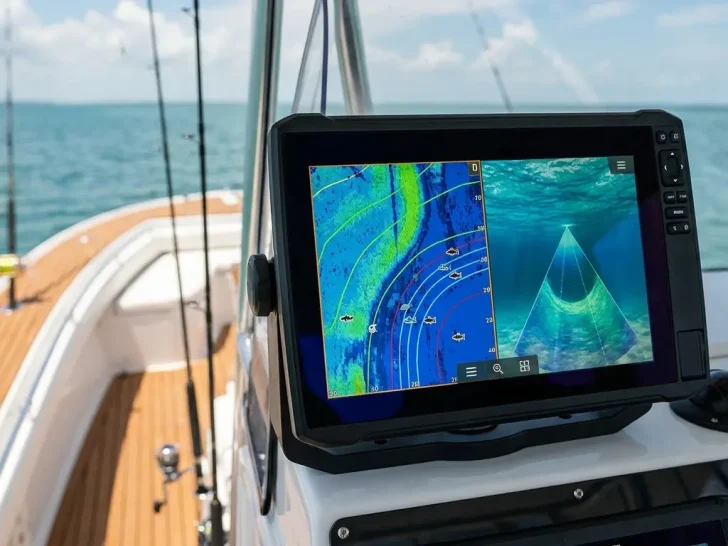
Learning how to interpret marine electronics transforms your fishing experience from blind guessing to strategic targeting. Mastering how to read a fish finder for beginners allows you to visualize exactly what lies beneath your vessel. Using modern fishfinders provides a detailed window into the aquatic environment, revealing structures and species with precision.
To interpret your display correctly, you must first understand how basic sonar works beneath the surface. The transducer sends electrical pulses that convert into sound waves, which travel down through the water column. When these acoustic signals hit an object, they bounce back and create a visual representation.
Different materials return signals at different strengths, which your device translates into various colors or shades. A hard bottom like solid rock returns a strong signal, while soft mud absorbs the acoustic energy. By paying close attention to these return strengths, you can easily map out the entire depth range.
To make your sonar work effectively, you must maintain an appropriate boat speed while scanning the area. Moving too fast creates turbulence and air bubbles that disrupt the signal and clutter your digital display. Maintaining a steady, moderate pace generates the most accurate readings of the aquatic environment beneath your hull.
Analyzing the Basics of How to Read Modern Fishfinders
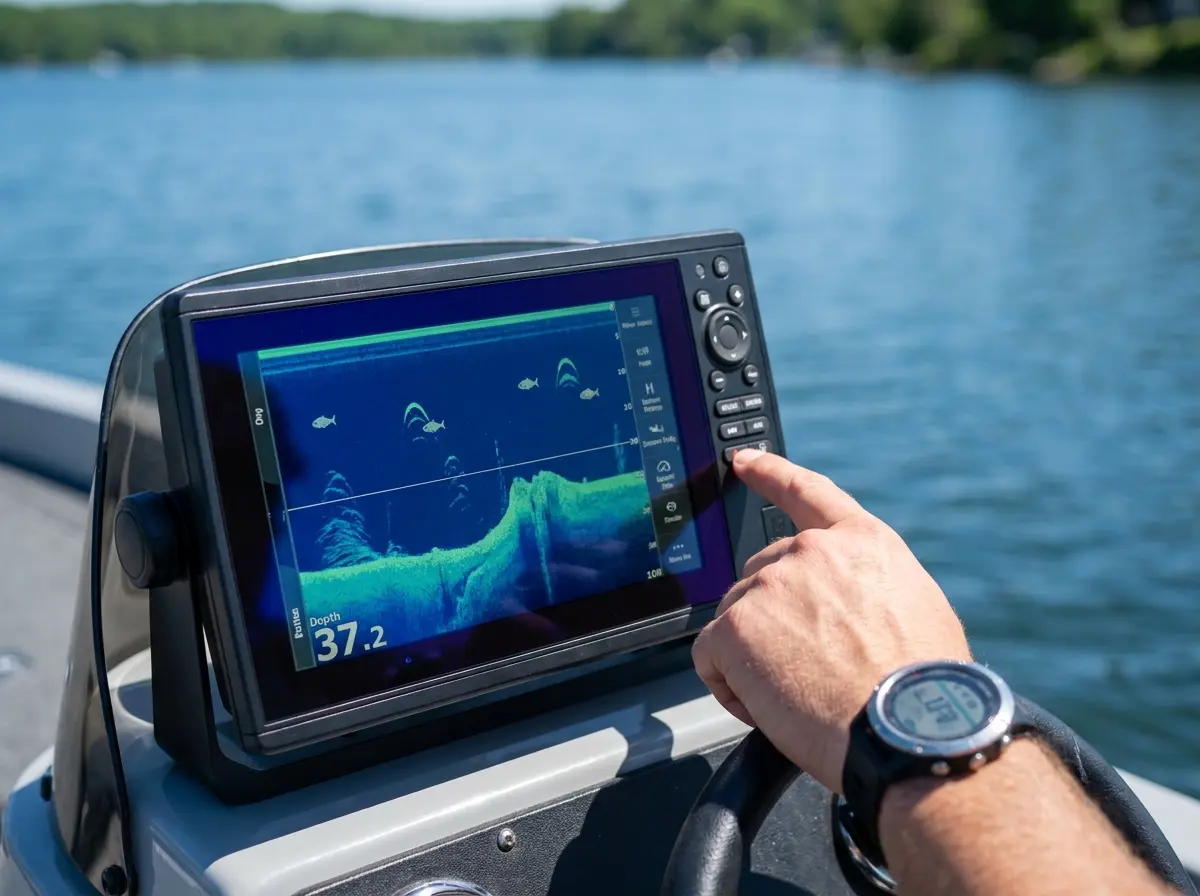
The fishfinder screen presents a continuous scrolling history of what your vessel has recently passed over. The far right side of the display shows the most current information happening directly beneath you. As time passes, this data moves across the screen before finally disappearing completely.
Your current water depth typically appears in large bold numbers at the top or bottom of the screen. Reading a sonar screen accurately requires you to remember that the image is strictly a historical record. Once you grasp this scrolling concept, maintaining a clear view of the underwater terrain becomes much easier.
Temperature readings and boat speed often display alongside the depth measurements on the main viewing panel. Knowing the surface temperature helps you locate thermal boundaries where predatory game species often prefer to hunt. Combining these basic data points gives you a tremendous advantage over anglers who fish completely blind.
- Sonar screens display a historical record of what you have already passed over, not a live video feed.
- The right side of your display shows current data, while older data scrolls off the left side.
- Harder bottom surfaces return stronger color signals than soft, muddy bottoms.
Identifying Fish with Modern Fishfinders
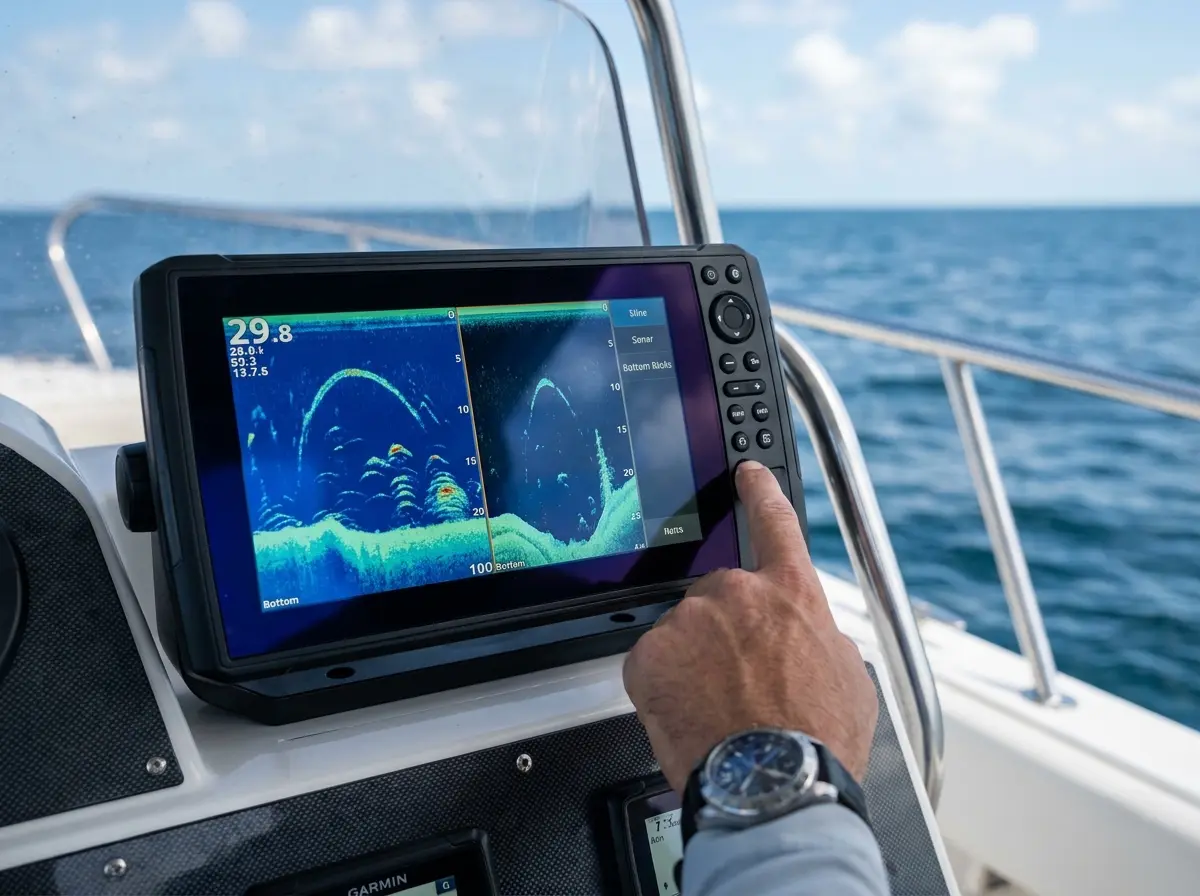
Marine electronics translate animal movements through the sonar beam into distinct shapes on your digital display. An individual fish usually appears as a distinct arch because it enters, crosses, and exits the cone. A large school of baitfish typically looks like a tightly packed blob or a cloud-like shape.
You can generally differentiate between small fish and a big fish by looking at the arch thickness. A bigger fish produces a thicker, more solid arch because its larger swim bladder returns a stronger signal. Identifying larger fish takes practice, but it’s pretty straightforward once you learn to recognize these specific shapes.
Some targets might appear as straight lines or half-arches if they sit near the edge of the cone. Fish holding extremely close to the bottom structure might look like small bumps rather than full arches. Interpreting these subtle variations correctly helps you catch fish that other boaters might completely miss.
Setting Up Your Fish Finder for Success
Proper configuration makes a massive difference in how well your fish finder performs on the water. Are you struggling to see distinct fish arches on your electronic display during your trips? Adjusting sensitivity is crucial because setting it too high creates screen clutter, while too low hides targets.
You want a clear picture that shows fish without overwhelming the display with microscopic debris or bubbles. When operating a trolling motor in shallower water, you should typically select a wider beam angle. This provides broader coverage, letting you see more area, though it limits your maximum depth penetration.
Conversely, deeper water requires a narrow beam to cut through the depths and maintain tight target separation. Many modern fish finders offer automatic modes that adjust these settings based on current environmental conditions. Taking control of your ping speed and chart speed maximizes the effectiveness of your marine electronics.
Always adjust your device’s chart speed to perfectly match your boat’s cruising speed for the most accurate underwater representation.
Comparing Different Types of Sonar Technology
Modern anglers have access to several different types of sonar, each serving a highly specific purpose. Traditional 2D sonar provides the classic arches and colorful displays that most fishermen recognize immediately. While traditional sonar works perfectly for basic depth and fish identification, newer technologies offer incredible supplementary details.
Down-imaging sonar uses high-frequency sound waves to create picture-like images of the structure directly beneath your boat. This view makes it incredibly easy to identify sunken trees, brush piles, and artificial reefs with precision. However, down-imaging is less effective at showing fish arches, making it a complementary tool rather than a replacement.
Side-imaging technology casts a wide signal to both sides of your vessel, covering massive amounts of water quickly. This allows you to scan shallow flats or locate structure without driving directly over the top of it. Combining all three sonar types gives you a comprehensive understanding of the entire aquatic ecosystem around you.
How to Read Sonar Arches Effectively
Interpreting arches is a fundamental skill for anyone operating marine sonar units on their vessel. The shape and thickness of the return tell you exactly what is happening below the boat. You’ll start recognizing patterns quickly if you dedicate time to studying the screen while actively fishing.
Many modern units offer fish ID symbols, but professional anglers usually turn this specific feature off. Raw sonar displays provide much more accurate information about target size, direction, and specific behavior patterns. Learning to read sonar data makes you a far more versatile and effective angler on the water.
You must remember that a perfect arch only forms when a fish passes directly through the center cone. If a fish clips the outer edge of the signal, it will likely display as a partial mark. Recognizing these partial marks prevents you from driving past productive areas that hold active game species.
How to Interpret Fish Arches
Locate the Target Depth
Look at the vertical scale on the right side of your screen to determine where fish are suspended.
Analyze the Arch Thickness
Focus on the center thickness of the arch rather than the overall length to judge the fish size.
Check Relationship to Structure
Observe whether the fish are holding tight to bottom cover or actively roaming in the open water.
Advanced Tips for Successful Anglers
Catching specific species often requires specialized knowledge of how they appear on your electronic devices. For example, tuna fishing offshore demands entirely different settings than hunting bass in a local pond. You must adjust your ping speed and chart speed to match your vessel’s specific cruising velocity.
High-end units like the Lowrance HDS offer sophisticated side-scanning capabilities that reveal structures far away. This technology is a helpful tool for locating fish that might be spooked by the boat overhead. Always pay close attention to structural transitions, as these areas consistently hold the most active predatory fish.
Once you locate a promising area, use GPS waypoints to mark the exact spot for future reference. Many beginners fail because they find fish on the screen but drift away before dropping their lines. Marking the location allows you to circle back and position your boat perfectly over the active school.
Managing Device Updates and Network Checks
Keeping your fish finder updated requires downloading firmware patches from the official manufacturer’s website. When accessing these portals, you might encounter a security service checking your browser connection. The website verifies your network to block malicious bots from overloading its critical download servers.
Why Performing Security Checks Matters
These digital protection measures prevent automated systems from stealing proprietary software or crashing the manufacturer’s databases. Performing security checks only takes a few seconds and protects the manufacturer’s infrastructure from coordinated attacks. Without these safeguards, legitimate customers would struggle to access the updates needed to improve their devices.
Performing Security Verification for Device Updates
Sometimes, basic security verification simply requires clicking a specific button or solving a quick visual puzzle. This brief interruption confirms you are a human customer rather than an automated script scraping the site. Once cleared, you can safely download the patch and transfer it to your marine electronics via SD card.
Conclusion and Final Thoughts
Mastering your fish finder takes patience, practice, and a willingness to learn how sound wave technology operates. By studying the display carefully, it becomes easy to distinguish between baitfish and your target species. You will dramatically improve your catch rates once you stop guessing and start reading the water scientifically.
Remember that all rights are reserved by the manufacturers who protect the advanced algorithms powering these incredible devices. Take the time to read your specific manual, as different brands utilize slightly different color palettes. Apply these foundational principles on your next trip, and you will transform how you approach fishing forever.
