
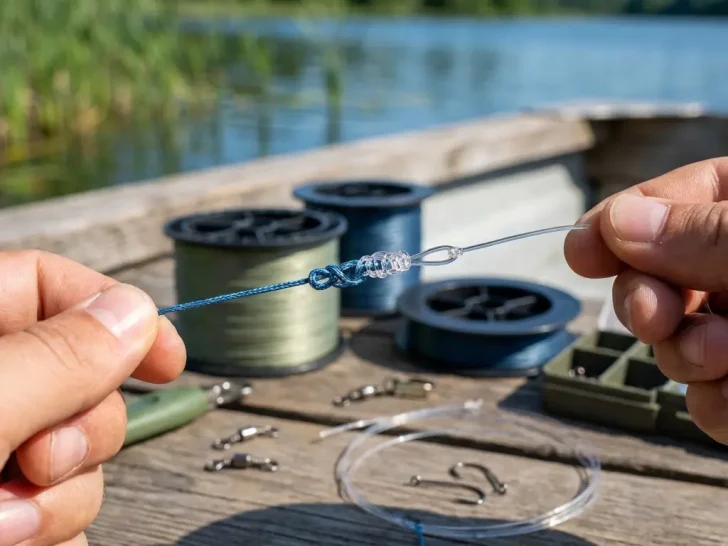
Every angler experiences the heartbreak of losing a massive fish right at the side of the boat. The line snaps suddenly, leaving you holding a slack rod and wondering exactly what went wrong. Mastering the specific fishing knots every angler should know eliminates the absolute weakest link in your entire tackle setup. Often, the failure points directly to the connection between your main line and your favorite lure. Have you ever inspected your line after a mysterious break to see if the knot works as intended?
Your choice of connection dictates whether you land a personal best or return home totally empty-handed. We will examine the essential fishing knots you need to know for consistent success on the water. Modern fishing gear handles incredible amounts of strain during intense battles with heavy game fish. However, even the most expensive braided lines fail if the connection point slips under heavy pressure. A single weak point compromises everything from your expensive rod down to your sharpest hook and fishing tackle.
When you tie knot configurations, you must ensure that the wraps are seated perfectly to avoid friction damage. These fishing knots cover every possible fishing scenario, from light freshwater streams to the heavy salt. A connection that is tied correctly will maintain the integrity of your fluorocarbon leader even under extreme stress. Understanding these mechanical connections is just as important as choosing the right lure or rod for the day.
Anglers must match specific connections to their chosen line material and their specific target species. Different fishing situations demand varying approaches to terminal tackle and complex leader construction out on the water. Understanding fundamental strong knot principles helps you make better decisions while actively fighting a heavy fish. These knots offer varying degrees of shock absorption and profile size depending on their internal structure.
Testing your connections at home prevents tragic failures during an expensive or highly anticipated fishing trip. You should practice tying knots in low light conditions to simulate early morning or late evening bites. This muscle memory pays massive dividends when you need to re-tie quickly during a heavy feeding frenzy. Using an overhand knot as a base for more complex wraps is a common starting point for beginners.
Understanding how different fishing knots perform under stress dictates your overall strategy for landing big fish. Some connections tighten down upon themselves, while others rely on multiple wraps to distribute the intense friction. You must select the right mechanical approach based entirely on the tackle you currently hold. Whether you are fly fishing or trolling, the physics of the connection remains the primary factor in success.
The concept of knot strength is critical because every twist and turn in the line creates a potential point of failure. When a line is knotted, it naturally loses a percentage of its original unknotted breaking strain due to compression. Professional anglers prioritize connections that maintain at least ninety percent of the line’s rated strength to ensure maximum reliability. Selecting a knot that matches your specific fishing line type is the first step toward technical proficiency.
- Match your connection choice to the specific line material and target species you are pursuing.
- Practice tying your connections in low light to build reliable muscle memory.
- Understand the mechanical differences between friction-based and tightening connections.
Essential Terminal Tackle Connections and Fishing Knots Every Angler Should Know
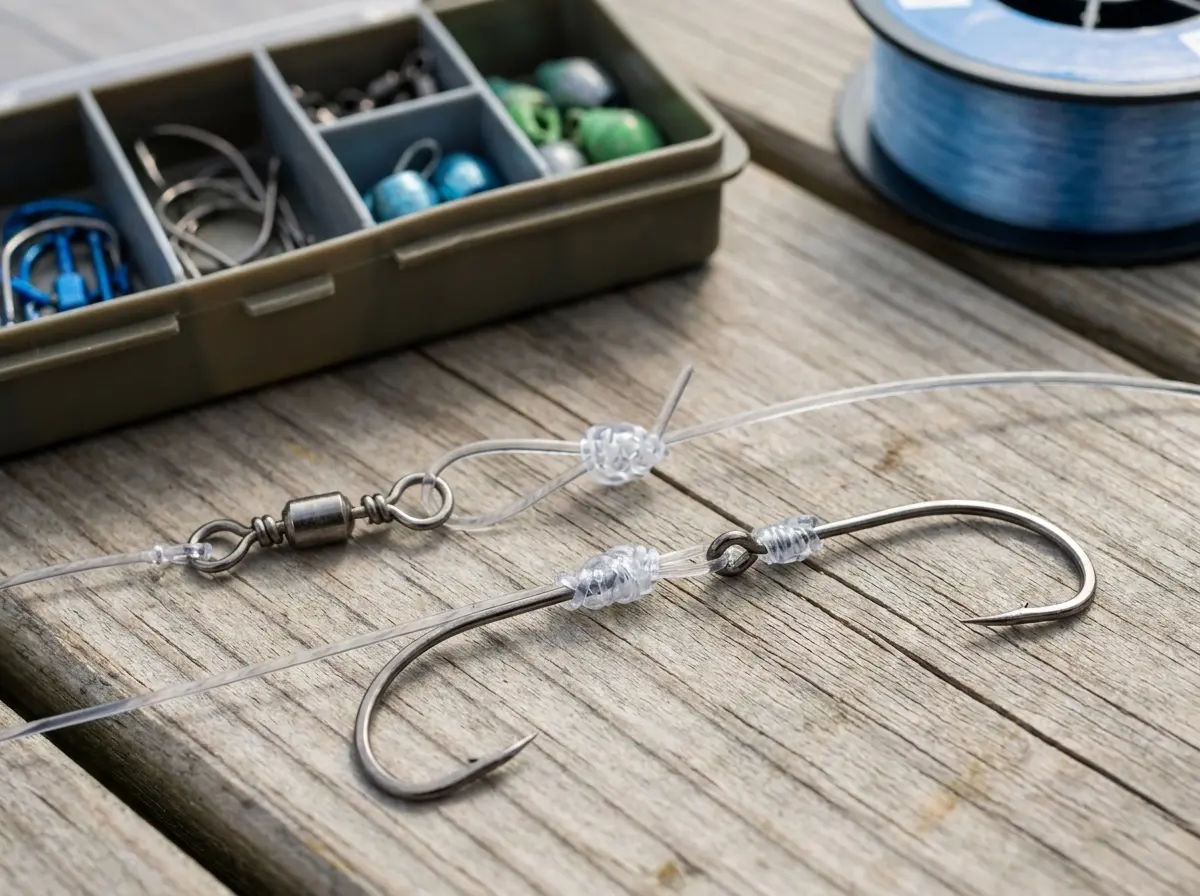
Attaching your line directly to a hook or lure requires maximum reliability and consistent structural integrity. These terminal connections handle the direct impact of a striking fish and the resulting violent head shakes. You need secure options that resist slipping while maintaining the original breaking strength of the line. These fishing knots cover the vast majority of lures found in a modern tackle box.
Upgrading your high-end rods means absolutely nothing if your terminal connections fail at the moment of truth. A poorly constructed connection severely limits the overall effectiveness of your expensive rods and precision reels. Let us examine the most reliable ways to connect your main line to your actual lures using the fishing knots every angler should know for maximum security.
The Dependable Palomar Knot
The palomar knot stands prominently as one of the strongest connections available to modern recreational anglers. This specific fishing knot retains nearly one hundred percent of the original line breaking strength. It performs exceptionally well with modern braided lines, stiff fluorocarbon, and standard monofilament leader materials.
You start this connection by doubling your line to create a manageable loop before passing it through the eyelet. Next, you tie a loose overhand knot with the doubled line, leaving the loop fully exposed. Finally, pass the entire lure through that loop and pull the main line tight to secure it. This is a great knot for those who need speed and strength combined.
The palomar knot ranks as an absolute favorite for heavy bass fishing because it resists slipping perfectly. Tournament professionals rely on this connection when pulling heavy fish out of dense, abrasive aquatic vegetation. Mastering the palomar knot gives you incredible confidence when setting the hook on a massive fish. It is also the preferred choice for drop-shot rigs where the hook must sit perpendicular to the line.
The Versatile Uni Knot for All Conditions
The uni knot is perhaps the most versatile connection in an angler’s repertoire because it works in almost any situation. Whether you are attaching a hook or joining lines, the uni knot provides a consistent and reliable hold. It is often referred to as the “universal” knot because of its adaptability across different line diameters and materials.
To tie it, run the line through the eye and fold it back to form a loop. Wrap the tag end around both the standing line and the loop several times before pulling it tight. This strong knot is easy to learn and performs well even when your hands are cold or wet. Many anglers prefer the uni knot because it is less prone to user error than more complex wraps. It excels in both freshwater and saltwater environments, making it a true utility player in your arsenal.
The Classic Improved Clinch Knot for Monofilament
The improved clinch knot has been a staple in the fishing world for decades, especially for those using monofilament. While the standard clinch knot is good, the improved clinch version adds an extra tuck that prevents the line from slipping. This improved clinch knot is often the first connection taught to young anglers because of its simplicity.
When tying the improved clinch, you wrap the tag end around the standing line five to seven times. After passing the end through the small loop near the eye, you tuck it back through the larger loop you just created. This clinch knot variation is highly effective for small lures and bait hooks. It remains a great knot for general purpose freshwater fishing where extreme tension isn’t the primary concern. However, be cautious when using it with braided lines, as the slick surface can lead to slippage.
The Heavy Duty San Diego Jam Knot
For those targeting larger species, the san diego jam knot offers incredible breaking strength and reliability. Originally popularized by the long-range tuna fleet, the san diego jam is designed to hold up under immense pressure. This san diego connection is particularly effective when using heavy fluorocarbon or monofilament lines.
The diego jam involves wrapping the line down and then back up through the loops, creating a very secure “jam” effect. This jam knot is often preferred over the Palomar when using very thick lines that are difficult to double over. The san diego jam knot is a must-know for offshore anglers who cannot afford a connection failure. Even the diego jam knot can be doubled for extra security, known as the double san diego jam knot.
The Double San Diego Jam Knot for Extreme Tension
When you need the absolute maximum security, the double san diego jam is the professional’s choice. By using a double san diego technique, you increase the surface area of the connection, which distributes heat and friction more evenly. This double san approach is essential when fighting pelagic species that make long, high-speed runs.
Tying the double san diego jam knot requires a bit more patience and precision than the standard version. However, the peace of mind it provides when a trophy fish is on the line is well worth the extra effort. This is one of the fishing knots every angler should know if they plan on venturing into deep blue water. It is widely regarded as one of the most bulletproof connections for heavy-duty saltwater applications.
The Trilene Knot for Maximum Strength
The trilene knot was specifically developed to maximize the strength of monofilament lines under heavy loads. It is very similar to the clinch knot but involves passing the line through the eye of the hook twice. This double pass through the eye makes the trilene knot exceptionally resistant to failure at the connection point.
By creating a double loop at the eye, you reduce the sharpness of the bend, which preserves the line’s integrity. It is a strong knot that many professional anglers use for crankbaits and topwater lures. If you find your standard knots are failing at the eyelet, switching to this method often solves the problem. It provides a significant boost in confidence when casting heavy lures repeatedly throughout the day.
The Snell Knot for Perfect Hook Sets
The snell knot is unique because it attaches the line directly to the shank of the hook rather than the eye. This orientation ensures that the hook remains at an optimal angle for a perfect hook set every time. The snell knot is a favorite among bait fishermen and those using circle hooks for catfish or saltwater species.
Because the pull comes from the shank, the hook point is driven upward into the fish’s mouth more effectively. It is an essential fishing knot for anyone using live or cut bait on a regular basis. Mastering this connection will significantly increase your hook-up ratio over time. It is particularly effective when using long-shank hooks for species like walleye or flounder.
Essential Line-to-Line Connections and Fishing Knots
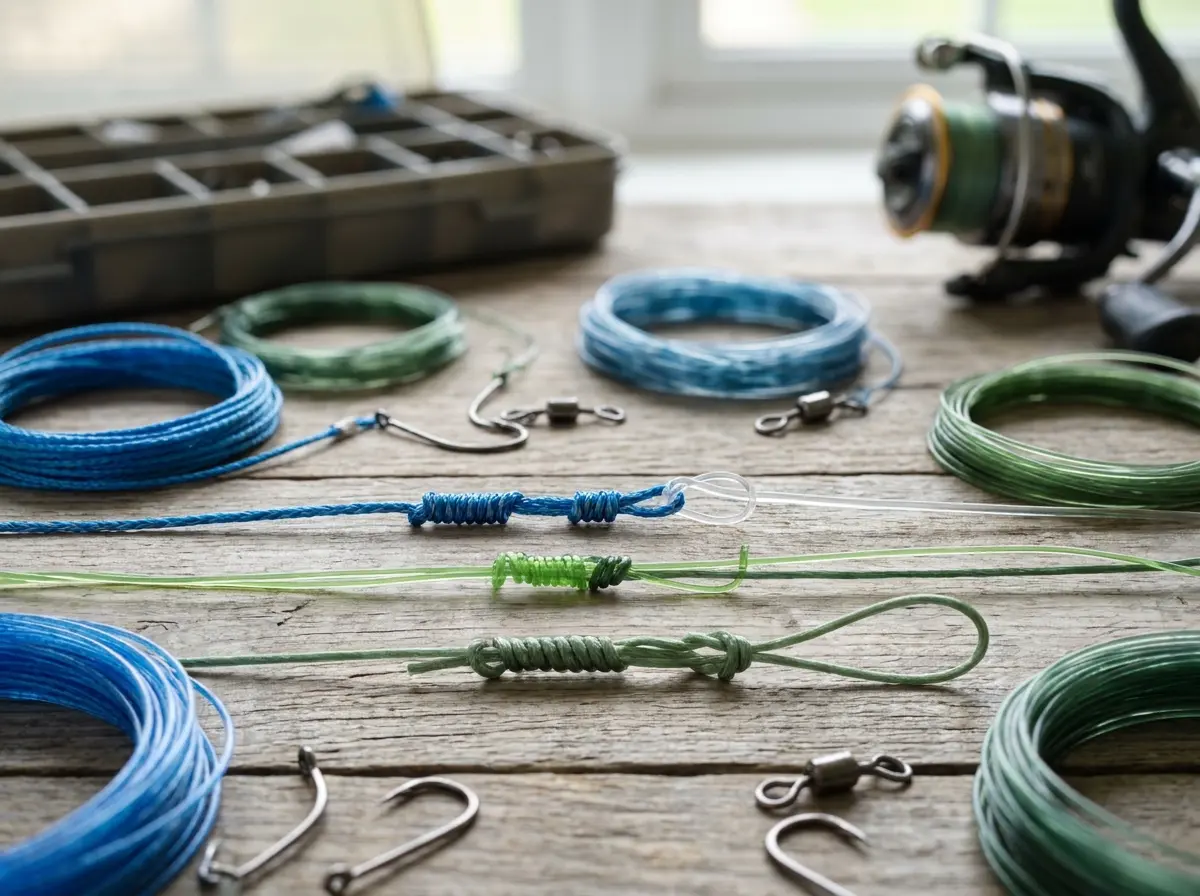
Connecting two different types of line is a common requirement in modern angling, especially when using braided main lines. These fishing knots must be slim enough to pass through rod guides without catching or causing damage. Joining lines of different diameters requires specialized techniques to ensure the thinner line doesn’t cut through the thicker one.
The Slim FG Knot for Braided Line
The fg knot is widely considered the gold standard for connecting a braided main line to a fluorocarbon leader. It has an incredibly slim profile, making it the best fg knot for casting through small guides on high-end rods. Unlike other connections, the fg knot does not involve a loop in the leader, which keeps the diameter as small as possible.
The strength of this connection comes from the braid “digging” into the leader material like a Chinese finger trap. While it can be difficult to tie in the wind, it is the strongest and slimmest connection available. Every serious angler should spend time mastering this fishing knot to ensure their gear performs at its peak. It is the preferred choice for inshore and offshore anglers who need to cast long distances without guide interference.
The Double Uni Knot for Joining Lines
If the FG knot is too complex for a quick on-water repair, the double uni is an excellent alternative. The double uni knot is created by tying two uni knots against each other and pulling them together. It is also known as the double grinner in some parts of the world and is very reliable for most situations.
While it has a slightly larger profile than the FG, it is much easier to tie in a hurry. It works well for joining lines of similar diameters and is a great knot for everyday use. Most anglers find that the double uni provides more than enough strength for standard freshwater and inshore saltwater applications. It is a versatile choice that every angler should have in their mental toolbox for emergencies.
The Reliable Blood Knot for Fly Fishing Leaders
The blood knot is a classic connection used primarily by fly fishing enthusiasts to build tapered leaders. It creates a very straight and symmetrical connection that helps the leader turn over gracefully during a cast. The blood knot is best used when joining two lines of relatively similar diameters.
To tie it, you wrap the two lines around each other and tuck the ends through the center opening. When pulled tight, it forms a very clean and secure bond that resists snagging on aquatic vegetation. It is a foundational fishing knot for anyone looking to master the art of the long rod. Its streamlined shape makes it nearly invisible to wary fish in clear water conditions.
The Alberto Knot for Braid-to-Leader Transitions
The Alberto knot is an improved version of the Albright knot, specifically designed for connecting braid to thick fluorocarbon. It involves wrapping the braid down and then back up the leader loop, creating a very secure and relatively slim connection. This knot is favored by surf casters and heavy cover bass anglers who need a connection that won’t fail during high-impact casts.
One of the primary advantages of the Alberto knot is its ability to handle significantly different line diameters with ease. It provides a smooth transition that glides through guides better than a double uni but is easier to tie than an FG knot. For many anglers, this represents the perfect balance between ease of use and technical performance on the water.
Loop Connections for Maximum Lure Action
Sometimes, a tight knot can dampen the natural action of a lure, making it look less lifelike to a predator. A loop knot allows the lure to swing freely, which is essential for walk-the-dog topwaters and certain jigs. Using a loop knot can often be the difference between getting a strike and being ignored by a wary fish.
The non-slip loop knot is the most popular choice for this application because it remains open even under heavy pressure. It starts with a simple overhand knot in the standing line before passing the tag end through the eye and back through the loop. This creates a permanent circle that gives the lure total freedom of movement. This strong knot is a favorite for